Category Archives: woman

The Elephant in the #PPDChat Community

Inferior without your consent

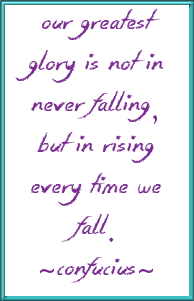
This past week, Katherine Stone over at Postpartum Progress announced the the Warrior Mom Leadership Team, an editorial team comprised of a diverse group of writers and advocates, who will help run her blog throughout the year. I am a member of this team along with several other fellow dedicated and amazing survivors who have battled through so much. Along our journeys, we all have been incredibly honest, dedicated, vocal, and driven to share our stories. Some of us started with the most basic of intentions but somewhere along the way, we became recognized advocates through hard work and repeatedly putting ourselves out there sometimes meeting with Fall Get Uprejection along the way. We brushed ourselves off and put ourselves back out there all over again.
Often, we did not even mean to put ourselves out there but had our stories noticed for whatever reason, forced into a higher level of publicity with our very personal battles than perhaps we were ready to deal with. So we rolled with it because we had to not because we wanted to.

One of my primary goals with my growth as an advocate was to develop an online network women and families could access 24/7. My goal with #PPDChat was not to develop a network to lift bloggers and advocates to higher popularity or to create popularity cliques within the community. My goal was to increase peer support for women and families to access whenever they need it, wherever they were. The worst aspect, for me, about a PMAD, is the overwhelming feeling of being all alone. That isolation, the fear that YOU are the only one stuck in this dark hell, is absolutely terrifying and what needs to be remedied first.

#PPDChat exists to create a sisterhood and community, yes, but it is not meant to cause divisiveness or jealousy of any friendships which may seem to net more opportunities or be more intimate than others. I realize these things will happen because this is the nature of humans in a group setting. We gravitate toward others like us. It’s hard-wired deep within us to do so.

The primary goal with #PPDChat was to create a safety-net. To move those who are hurting and isolated toward a place of healing, warmth, and eventually, a return of joy. One of the side-effects of this community has been the development of advocates as they have felt supported and buoyed by the community at large. Certain members have grown stronger in their advocacy voices as they have discovered they truly are not alone and witnessed the power of conjoined voices will do for a woman still fighting. Other members have continued along their own personal path of healing, not joining in the advocacy movement for their own personal reasons. But we have come this far together, as a community.

One of the definitions of community is: “a feeling of fellowship with others, as a result of sharing common attitudes, interests, and goals.” #PPDChat is definitely all of those and what keeps it fascinating is that even though PMAD has brought us together, our interests are broad and undefined – allowing for individual friendships to organically develop. Not once have I ever seen it as something which has intentionally excluded certain members. If anything, there have been multiple opportunities to include yourself with other members through guest posts, guest hosting within #PPDChat, and various other outreach situations. We all operate within our “circle of comfort” because of our various issues, something which may limit our exposure to the Social Media world at large, something which often moves faster than the speed of light. It can be exhausting to keep up and we are all moving at a different pace.

Regarding reaching out to involve everyone on an equal footing, Katherine has multiple opportunities for being involved at Postpartum Progress:

I, too, have offered to post guest stories and often highlight Postpartum Voices of the Week. I realize I have been slack over the past year but now that I am actively blogging, I plan to resuscitate this part of My Postpartum Voice. It is important to remember, however, that neither Katherine nor I nor every advocate can possibly read every single thing on the internet about PMAD’s. So we all highlight what we can when we can, which leads to some people feeling left out while others get a few minutes in the spotlight which may lead to other “opportunities”.

That said, those who have become more public and vocal are not any better than those who have not.

Repeat that.

Those who have become more public and vocal are not any better than those who have not.

This is where we return to the quote with which I started:

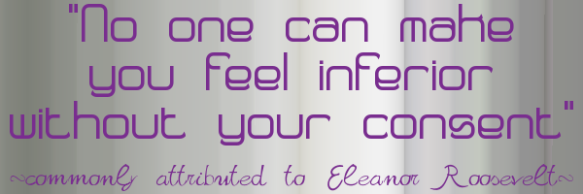
“No one can make you feel inferior without your consent” ~Eleanor Roosevelt~

When you allow a decision which seems exclusive to hurt you so deeply you lash out toward those who have been included, you are giving that decision power over you and thereby creating your own storm of emotions.

For those of us who ARE more public and vocal, opportunities are not viewed as something we covet or even necessarily seek out. For many of us, the “opportunities” may even be anxiety-inducing but we see them as an opportunity to educate, inform, and raise awareness so we charge forward. We do not see the opportunities as making us better than those who are not “chosen” for these opportunities – they are not a platform on which we place ourselves so others may look up at us and feel left out. Our words, our fight, our journey, for whatever reason, has included these turns and curves. As I emphasize ALL THE TIME:

EVERY JOURNEY IS DIFFERENT AND MUST BE RESPECTED AS SUCH.

I will not apologize for being a member of Katherine Stones’ Warrior Mom Leadership Team. No one should have to apologize for being a member of this team nor should Katherine be made to second guess the folks she has placed on the WMLT. Katherine is entrusting her blog, a blog she has worked tirelessly to develop a strong, ethical, and respected reputation for, to the members of this team. I get that she needed to choose people SHE felt she could trust to continue the tradition of the brand she has developed. I know I would be unable to trust my blog to just anyone. I respect her decision as just that – HER decision.

I feel I would be remiss if I did not also point out that this is not an award, this was not a contest, and we are not being paid to be on the WMLT. It is volunteer – and something we agreed to do because it promotes the community and it is going to help further reduce the stigma and misconception of PMAD’s.

Would I be saying all of this even if I were not on the WMLT?

Hell yes.

Because I GET that it’s her choice because it’s Katherine’s blog.

We cannot (and should not) internalize everything. We cannot expect every single door to open for us – the doors which open for us are the doors MEANT to open for us. Some may take more work, more drive, and some may seem as if they open easier for other people.

While it’s perfectly normal and acceptable to feel left out, the manner in which this has been expressed over the past 48 hours in reaction to Katherine’s announcement has greatly saddened me. The sub-tweets, the sub-textual expressions, and the chit-chat behind the backs of those chosen (and yes, I saw a good deal of this on Twitter) has broken my heart because for me, this defeats the very idea of a unified community.

We are all advocates. We are all responsible for dismissing stigma and fighting back against myths with our voices and our journeys. When we fail to support those who, for whatever reason, end up surging forward in the public realm, we fail the community as a whole.

Am I saying it is wrong to be upset?

Absolutely not.

What I AM saying is there needs to be honesty and respect in how we express these emotions. There needs to be the realization that your words WILL be read by those who have managed to not be “looked over” or become “it” girls. Words DO hurt. I get that you are disappointed and you are hurt, I do. I have felt that myself when yet again, my blog fails to gain any recognition or when #ppdchat fails to gain any recognition in an awards process. It’s frustrating as hell. But do I publicly denounce those who have won recognition? Hell no. I congratulate them with grace and deal with my disappointment privately.

BECAUSE THAT’S WHAT YOU DO. You support the community, you empower it, and you rejoice that the subject matter is receiving attention. It does not matter WHO is doing it, but WHAT is receiving the recognition. It is about furthering the cause, not about garnering individual attention. (Again, however, human nature celebrates when individual attention is received and deflates when it is not – hard-wired, not a faulty reaction at all).

The moment you make it about “ME” is the moment you are not advocating for “US” and that, in my opinion, is failing to kick stigma’s ass.

In that scenario, no one is a winner.

We all have different reasons for writing and when we summarily dismiss the achievements of those around us based on a personal negative reaction, we damage any progress we may make as a whole.

I write because I love to write and I will be damned if I let someone journey along this road alone. I do not write for glory or to be an “it” person, whatever the hell that is. I have never, ever considered myself to be an “it” person, in fact, I have always thought of myself as the complete opposite.

It’s okay for people to be sad and I’m not trying to fix it but at the same time, in expressing their feelings, they are dragging those who HAVE been chosen down and not expressing their disappointment in a healthy manner, which leads to divisiveness and guilt. “United we stand, divided we fall” and all that.

For me, accepting a place on the WMLT means Katherine can focus on doing more with Postpartum Progress, the non-profit which means she can make even MORE strides against PMAD’s. She’s been kicking ass for years with her blog and is already making waves with her non-profit. So if she asks for help, I will say yes as long as it doesn’t interfere with what I already have going on (because it is healthy to make sure you don’t overload your plate).

I’m speaking up because I do not want this recent decision to divide the community. I want us to remain supportive of each other. I want us to be able to express disappointment without attacking other members and without making other members feel guilt and/or shame for achieving something for which others feel they have been “overlooked.” When we drag one person down for achieving something, we impede EVERYONE’S progress toward a better tomorrow. Is that what we want?

We, all of us, are better than this.

We, all of us, know battling alone sucks.

We, all of us, want to win the fight.

We, all of us, are winning this fight, in our own little ways.

Let’s just make sure we do it together – as a team.

On Loving Motherhood

One of the phrases I hear a lot from parents who struggle with mental health issues after the birth of a child is that they didn’t feel an instant bond with their child. Or that they did but it was to the nth degree and they obsessed over every little thing that happened to their child, to the point of it interfering with day to day living. Instead of being the parent society leads us to believe every parent should be, they were either detached or over-attached. It’s the Goldilocks syndrome with none of us feeling that “just-right” level of attachment.

One of the most difficult aspects of experiencing a mental health issue after the birth of a child is that in addition to healing ourselves, we must develop a bond with a new person we hardly know and cannot communicate with in the normal manner because they are not yet capable of deep thought and expressive language.

Imagine that you’ve just met an amazing person. You want to get to know them, to give them all you have inside you, but you can’t. You don’t have the energy. So you worry about the effect this will have on the relationship -if they’ll end up hating you because you can’t quite reach out the way they need you too. You wonder how much emphasis they’ll put on the lack of affection from your end. Somehow, though, you manage to muddle through and they miraculously stay. They love you simply because you’re you, something you struggle to comprehend. Then you feel guilty because you haven’t put as much into it as they have (or perceive that you haven’t) and so you overcompensate, which fills you with intense guilt as the days go by. So you read books about what you should be doing. After awhile, it becomes habit but somewhere, deep inside, you always wonder if you’ve done enough. Or if they’ll bring it back up some day when you falter the least bit.

Or you remain detached, thinking that it’s just not worth the work, the stress, the anxiety. Things are the way they are for a reason, right? Why bother? They’ll either stay or go. The choice is theirs in the end.

Parenting can be hell.

It’s the toughest job on the planet, and no matter how much preparation we put into it while expecting a new little one, we’re all thrust into it, suddenly. It’s on-the-job training. When you add a mental health issue, it’s like on-the-job training at the Hoover Dam on a day when it’s sprung a leak. SO much is flung at you.

Every little thing means more than it should.

Bed seems really lovely.

Giving up seems like a fantastic idea.

Walking away – sheer brilliance.

In the past, I envied parents who seem to know exactly what they’re doing or really enjoy their kids. As a survivor of multiple PMAD episodes and issues and a relative introvert, it’s extremely difficult for me to relate to others who want to spend every waking minute with their children. It’s not that I don’t love my kids, I absolutely do. But for me, parenting is traumatic. My start was more of a train wreck with a hurricane thrown in for good measure. I fight for every second of what appears to be “normal” parenting.

What I forget in my battle to be “normal” is that no one is normal. We are all fighting our own battles, they are just a bit different from the battles of those around us. As I have moved toward healing, parenting has become more like breathing for me. Sometimes I still have to fight for breath but most of the time due to the necessity of mindfulness in my own survival, parenting has become easier as the years have gone by. The wounds have healed enough to not feel as if they are torn off with every single negative instance.

To those who are still in the trenches and still fighting for breath as they fight to parent their children and remain sane, (with or without a PMAD), my hat tips to you. To those fighting through a PMAD specifically as you parent your new one (and possibly even older children), I know how it feels to be where you are and I want to tell you that it won’t always be this way.

One day, things will just work. There will always be potholes and bumps as you navigate the road, but if you take the time to just breathe, ask yourself if what you’re about to explode over is really worth it, and then address the issue at hand (or not, depending on the answer to the second step), things will improve. Take time for yourself. See your child as just that – a child – take the time to see the world through their eyes, marvel at the little things right along with them, and let the world hold you close instead of crawling away into a cave. Baby steps.

You may remember all your faults but your baby will not. All your baby needs is you. They are not mini-adults, judging you for not knowing what to do. They aren’t the ones behind the myriad of research which blames parents for all that is wrong with adults. Let it go. We are our own worst critics. If we take the time to just be as humans instead of critiquing every single choice life flows so much better.

Stop judging.

Stop worrying.

Just be. Drink in life, drink in your child. Drink in the sunshine and the joy when you can. Store it up for the days short on both.

You can do this. Even Goldilocks found the right one eventually, didn’t she?

Your just right is out there, I promise. It’s just a bitch to find in the fog.

You are not alone, you will be okay, and your baby will be okay too.

In the interest of all honesty, recovery is not as easy as sitting out in the sunshine and drinking in life. For many, it takes a multitude of visits to a therapist, maybe a few medication changes, and a hell of an effort to reach the point where you CAN sit in the sun and drink in life. It certainly took all of that for me, and more. But the fight is worth it in the end and that fight will make the sunshine even brighter once you’ve evicted the fog.

If you find yourself struggling with a Perinatal Mood & Anxiety Disorder, you can find hope and help through Postpartum Support International or over at Postpartum Progress. If you are feeling down and struggling with suicidal thoughts, reach out to Lifeline, the National Suicide Hotline here in the United States.

Question From A Reader: “Will I Ever Feel Like This Is The Best Thing That Ever Happened to Me?”

A reader emailed me earlier this morning to thank me for my “fabulous blog.” But she also had a question about her current experience with her journey through Postpartum Mood & Anxiety Disorders.

Below is her question and my response:

Her Question:

“I’m over three months into recovery – having therapy and taking anti-depressants. Although I have much improved – I’m more bonded with my son, my sleep and appetite is better, my anxiety attacks are reduced etc – I can’t help wondering if I’ll ever feel that true elation, true joy that despite everything becoming a mum is the best thing that’s ever happened to me?

Should I still be hopeful that this will come as part of full recovery or should I be finding a way to accept that although, I now know I love my son, life is always now going to be a little more miserable?”

My reply:

“Sending hugs, first and foremost.

Second, I’m glad to read that your symptoms have lessened just three months into your recovery and you’re feeling more bonded with your son and your appetite and sleep have improved as well. Those are HUGE things.

Think of recovery this way – first, we have to take care of the essentials – the basic things which keep us going – like eating, sleeping, etc. After those things have sorted themselves out, we can then focus on secondary things, such as mood, etc. Mood can absolutely disrupt the primary but as we heal from mood issues, we must heal the primary first.

It took me a long time to get back to being able to truly feel elation and joy, but that journey and the length of it is different for every person, just as physical recovery is different for every person.

Just as with a broken bone or a severe injury, there will always be a “scar” or “phantom pain” but eventually you regain full use of the complete spectrum of emotions, even if it takes some time.”

Add your thoughts, experiences, or support below. Time to rally!

Sticks and Stones Will Break My Bones But Words….

I started this post the other day after a comment was left on a post I promoted on Facebook. Then I had to walk away because I started down a path I did not want to go down. This was a difficult post for me to write as it forces me to revisit a meeting which left me both enraged and shaken. I’ve calmed down quite a bit and the following is a much more polite response than the one I started the other day.

The post is a wonderful interview of Dr. Katherine Wisner by Walker Karraa. The interview, found here, focuses on Postpartum Mood Disorders, of course, but also addresses the challenge and controversy of screening mothers for the presence of Postpartum Mood Disorders.

Screening is a hot topic and has been for quite awhile. There are a lot of unknowns regarding when to screen, how to screen, what happens after a positive screen, liability for care of the patient, when to refer, etc. Bottom line, I feel, is that we need to screen in order to start the dialogue about Postpartum Mood Disorders with care providers in every field that comes in contact with both expecting and new mamas. We also need to work more diligently to create supportive nets of care for women in our communities – coalitions of OB’s, Midwives, Pediatricians, IBCLC’s, Psychiatrists, Psychologists, therapists, doulas, and other various caregivers for pregnant women and young children. It needs to be comprehensive.

Those of us who advocate for the care and support of families battling Postpartum Mood Disorders must be well-versed in all things relating to pregnancy and postpartum. Our scope of knowledge must include a basic grasp on the rights of the expectant woman and as a new mothers. This is in addition to the psychiatric knowledge we also hold and are constantly researching in order to better arm new and expectant mothers.

It is exhausting sometimes, to read all of this information. I myself have suffered from information overload. But, empowering new and expectant mothers to make healthy and better decisions for their care and therefore for their families, is what I have been called to do so read I must.

In the past couple of years I haven’t been reading as much, I’ll admit, but prior to that, I read voraciously. I dove into all things birth related. So when there was a chance to go see Henci Goer at a local get together on August 26, 2010, I went.

Henci, a well-known author and advocate for Lamaze birth and healthier women-empowered births, was someone I admired.

Until the night I met her and discussed my experiences which led to my own advocacy with her.

Henci, after discussing at length, her new project, completely shot down my experience with a very dismissive sentence, the gist of which was left in a comment at Karraa’s interview with Dr. Katherine Wisner I referenced above.

Here was a woman, who seemingly was all about empowering women and improving their birth experiences, failing to even acknowledge the difficulties I experienced after my own. I didn’t experience Postpartum Depression, according to Goer, my experiences were directly related to my birthing experience and therefore weren’t my fault but that of the system’s.

While I agree there are far too many interventions in the modern birthing realm for many mothers and it’s sad that organizations like Solace for Mothers even have to exist, to shoot down the experience of another and how she has worked through it in one dismissive sentence is almost as bad as what my first OB did to me.

PTSD QuoteTrauma is about perception. It’s not about what happened to you, it’s about how you perceive what happened to you. This perception is shaded by our own personal experiences and baggage. These experiences and this baggage also directly affects how we process our experience after our brush with trauma.

No one has the right to question a woman’s perception of her birth experience.

No one has the right to re-frame her experience FOR her. It is hers and hers alone to process. It is hers to share as she feels necessary, with whatever details she deems necessary.

The comment Henci left on Karraa’s interview with Dr. Wisner reads as follows:

I am extremely concerned that the focus on screening for postpartum depression using an instrument solely designed for this purpose will miss diagnosis of childbirth-related post-traumatic stress symptoms and full-blown PTSD altogether or will mislabel women experiencing post-traumatic distress as depressed. PTSD symptoms are fairly common–as New Mothers Speak Out found, 18% of women were experiencing symptoms and 9% met the diagnostic criteria for PTSD–and while some symptoms overlap with depression, the treatment differs.

Furthermore, on-site mental health services would be of little use to women suffering from childbirth-related emotional trauma because one of the prime protective responses is avoidance of environments and personnel that re-trigger traumatic memories.

I have as well a philosophical issue with making depression the preeminent postpartum mood disorder. Depression centers the problem in the woman, and therefore the cure is centered in her as well. PTSD, however, is centered in the system, and therefore its cure depends on systemic reforms. The incidence of emotional trauma can be minimized by reducing the overuse of cesarean surgery and other painful and invasive treatments, by implementing shared decision-making, and by providing physically and emotionally supportive care. So long as postpartum mood disorders are primarily seen as an issue of depression, little or no attention will be paid to the all too common glaring deficiencies of medical model management in this respect.

I have several issues with Henci’s comment.

She seemingly assumes that the Postpartum Mood Disorder community is unaware of the difference between Postpartum Depression and Postpartum Post-traumatic Traumatic Stress Disorder. I can assure her that we are indeed not unaware. Most providers and advocates I know work diligently to go beyond the EPDS to dig deeper for possible birth trauma. The EPDS, while yes, not designed to pick up specifically on PTSD, is a starting point for a conversation about emotional issues during the perinatal period. Henci’s issue with this illustrates exactly why we work to educate providers about the many aspects of Postpartum Mood and Anxiety Disorders.

The discussion with a mother who had a traumatic birth experience is wildly different than with one who did not. Not all mothers who experience a Postpartum Mood Disorder necessarily experience PPTSD. Nor are their issues rooted in an issue with the so-called system. May I remind you, Henci, that PMD’s have existed since the time of Hippocrates. It is not some new fangled “too-many interventions” kind of disorder.

Not all of us are not “victims” at the hand of the system as you would have us believe, Ms. Goer. I’ve held discussions with mothers who had home births or natural births in a birthing center and still gone on to experience a Postpartum Mood Disorder. While it’s certainly not as common and there is a seeming correlation to interventions during the birth experience, there simply isn’t enough evidence to claim interventions (particularly cesarean sections) are the definitive root of all Postpartum Mood & Anxiety Disorders as Henci claims in her comment. (See article “Is there a link between C-sections and Postpartum Mood Disorders?)

We, the advocates for care and empowerment of women who do experience emotional trauma during and after birth, are working diligently to bring to light the additional issues on the Postpartum Spectrum such as Postpartum Post-Traumatic Stress Disorder, Postpartum Obsessive Compulsive Disorder, Postpartum Anxiety, and others. We no longer focus solely on depression. If we do, it is only because Postpartum Depression has been used as a catch-all phrase for so very long.

In the past six years I have been blogging, the term has graduated from Postpartum Depression to Postpartum Mood Disorders to Perinatal Mood Disorders to Postpartum Mood and Anxiety Disorders. In fact, I’m often at a loss as to which one to use. Postpartum Mood and Anxiety Disorders covers it most thoroughly, I believe.

There are researchers who focus on nothing but birth trauma and Post-Traumatic Stress Disorders – such as Cheryl Tatano Beck. I had the pleasure of meeting Cheryl at the 2010 PSI Conference in Pittsburgh. That meeting was so much different than my meeting with Henci. Cheryl was warm, accepting, and thanked me for my work in bringing my experience to light and fighting for others who had been through the same thing.

I do not hide that my first birth was a rough one. I know there are other mothers out there who had even more horrific experiences. But I talk about it because negative birth experiences do happen. I talk about it so that other women will read it, and know that it’s okay to talk about their experiences. If I simply dismissed the experiences of all the women who reached out to me, well, I’d be doing a huge disservice to the community around me. To women in general. In essence, I’d be traumatizing them even further.

With wisdom and knowledge comes power. With that power, comes great responsibility. I hold that responsibility as if it were a fragile ball of glass. My goal is to keep it from shattering. My goal is to create a safe and soft space for it as it grows stronger.

If only Henci Goer saw the birthing world the same way.

The Scorpion Tale of Perinatal Mood Disorders

Last night, I had a rather in-depth discussion with Addye over at Butterfly Confessions. We’ve discussed the same topic before and we’re finally doing something about it because we both think there’s not enough out there about this subject. Her blog post went up last night, discussing the role her antenatal depression, postpartum mood disorders, and other mental health struggles have played in her son’s recent diagnosis of being on the autism spectrum. While our children’s diagnoses are different, our story is the same, and it begins with a long hard look at the stinging guilt with which we now carry along our paths of Motherhood.

******************************

It’s taboo, really, more so than admitting you struggled with a Postpartum Mood Disorder. It’s a secret locked in a trunk hidden in a house deep in the woods where no one will find it. It’s the poison-tipped tail of a scorpion, the thing that gets you after the initial reaction of having a scorpion land in front of you. It’s the nagging feeling you get in your throat every damn time you look at your kid and think, even for a brief second, that you did that to them. It’s YOUR fault.

I’ve been there. I still am, sometimes. Not as much as before, but it’s something that I will always carry with me. A small part of my heart will always be tinged with guilt and a depth of sadness I’ll never shake. I’ve learned to accept it instead of fight it, to give it space to just breathe, knowing I’ll never get rid of it as long as I live. Right next to it though, now, is a space that is filled with a peace I’ve worked very hard to achieve – a peace that cancels out that guilt and sadness…as long as the see-saw is working that day, that is.

I struggled with Postpartum OCD after the birth of my first daughter. I’ve made no secret of that. I sought help but was shot down by my OB, an integral part of this story. I had to fight on my own to heal. Looking back, I didn’t do a great job at healing. What I excelled at was shoving all of the darkness down and faking it until I felt like I made it. Only by the time I got there, I was pregnant again and my hormones became the scorpion.

They flowed into my pregnancy, along with severe morning sickness. There were days I had to choose between eating or my prenatal vitamin. I often chose eating because I knew the vitamin would make me vomit whereas I might be able to keep the food down. One day, I lived on just one powdered donut. Other days, less. I couldn’t tolerate food for almost four months, if memory serves correctly.

I remember thinking I didn’t need the prenatal vitamin. I’d be okay, baby would be fine. Or so my hormone rattled brain said so. I didn’t want to get up, I would lay on the couch as our oldest, just a little under a year and a half, begged me to play with her. I couldn’t move or I’d vomit. So she learned to play by herself.

The pregnancy progressed, everything seemed fine, I didn’t have Gestational Diabetes again, the baby measured fine, all was good.

Until my baby shower. I went into labor that evening. I was 35wks and 6 days pregnant. (Women with untreated antenatal depression are more likely to go into labor early….or so says the research). At the time, I didn’t relate the two. I just knew I wasn’t full term and contracting. I labored at home until the next morning when we finally saw the doctor. I was dilated enough for them to send me to the hospital. Baby was on her way. Instead of happy, I was nervous. What was wrong? Why was she coming early? We were close enough to full term, really, less than a week away. But still, she was early.

After 42 hours of grueling labor, my daughter was born. She looked perfect. 10 fingers. 10 toes, screaming, a perfect squishable pink human all mine. I made her. As I tried to latch her to nurse, she wouldn’t latch. Just kept screaming. I didn’t know why. I tried for 30 minutes. Then we called the Lactation Consultant. I knew what I was doing, damn it, I had nursed our first for 16 months. Why wouldn’t she latch?

The Lactation Consultant swept her mouth as soon as she got to our room.

That’s when shit got real.

My darling perfect little squishable baby was rushed away from me, the word “cleft palate” left hanging in the air.

There I lay, in a hospital room, epidural still wearing off, all alone, no staff, no husband, nothing to show for almost 2 full days of labor except for the echoing of my heart shattering, insidious voices flooding my head with the phrase, “It’s your fault.”

I did that to her. She grew inside of me, imperfectly.

I lost it that night, brushed my hair for 10 minutes in front of the mirror. Ugly cried on the phone a lot that week, so much so that my ex-husband couldn’t even understand me at several points. In front of nurses. I cried a LOT. This? Wasn’t the way things were supposed to go. Why had I failed?

She was in the NICU for 21 days, undergoing one major surgery for her jaw at just 9 days old. Seeing your 9 day old infant on apparatus breathing FOR her… yeah.. um… yeah. “I did that to her.”

The kicker? The geneticist at the hospital asked me if I took my prenatal vitamins. I lied. I didn’t need any more guilt. I really didn’t. In my fog, I failed a lot.

People told us if we made it through the first year….we’d be scot-free.

They lied.

She’s seven now. Is one of the bubbliest personalities you could ever hope to meet. She’s perfect in every possible way. But she’s struggled so much and her struggles are far from over. Because of me.

She fights for every word she says. It could be worse, I tell myself. She could have so many other issues kids with her same condition have – texture issues, an additional syndrome, etc. Aside from her Pierre Robin Sequence at birth, she’s fine. She has speech therapy, and has had additional surgeries to help with her speech. Before she was 2, she’d been through three times as many surgeries as I have in my entire life.

I did that to her.

What if I’d taken my prenatals? Would she have been born this way? What if I’d fought harder for myself in seeking help for my depression after the birth of her sister?

Intellectually, I KNOW it’s not my fault. But still, the sting is there, long after the scorpion has faded out of sight.

It’s there, just a tinge of it, every time we talk. Every time I have to decipher what she’s said to me based on the context of the words I am able to understand because I still can’t understand every single thing she says. I recently won $200 headphones. They help me immensely in understanding her when we Skype. The ear-buds I had before just weren’t high enough quality to do so. Even now, I have to make her slow down and repeat what she’s said because she’s seven and well, seven year olds get excited.

She will need a lot of orthodontic work. She has the risk of giving birth to a child with similar issues. Kids will tease her because of the way she talks. She was born a fighter without having a say in the matter. While I know this will serve her well later in life, it is something with which I struggle.

Some mothers have Postpartum Depression, Anxiety, PTSD, etc, and they heal, with no adverse affect on their children. But there are those out there who experience issues with their children. And because of what we’ve been through, we draw that line from point PPD to point whatever Alphabet Soup DX with our kids. There’s research to back most of it up. There isn’t research (that I’ve found) to back up PPD related to cleft palate but a “Friend” of mine once tried to draw a line to the type of med I may have taken to my daughter’s cleft palate. Punch.IN.THE.GUT.

Moms like me need a gentle hand. We need to be heard, not dismissed. We don’t need to hear that “It’s not your fault” because in our heads? It is. It always will be no matter how much you tell us that it’s not. It just will be. We need you to stand with us, to be there when we need to scream, cry, vent, and shake our fists at the sky. To understand that our truth is a hard truth and sometimes it will break us but we will rebuild, a constant practice in our lives shattered by this spike of unexpected blow-back from our already complex, shame, and stigma-riddled experiences.

We are women made of glass. Under that glass, yes, we are steel, because we have to be, but on the outside, we are glass and we shatter. We need you to be someone who lets us shatter, someone who helps put us back together and take another step forward as we walk toward processing our new truth.

It’s time for us to come out of the darkness and speak up, to be honest about the role we feel we played in the issues affecting our kids, and to find support, REAL support, not dismissive attitudes, in our search for the light both we and our children need to thrive. We seek out the research drawing the lines from Mom to our kid’s issues, whatever they may be. Sometimes, the line tracing back to Mom is real, worth exploring, and worth understanding. Without it, we’re just left wondering why. I, for one, don’t like hanging out in the middle of nowhere with no answers.

Any answer, even a horrible one, is better than no answer at all.

It’s something. A direction in which we can begin to move forward from, a new beginning from which we can start to walk toward solace. Even if we never reach it, walking toward it is often enough. It has to be, right?