Life of a Wife writes about her Second PPP Experience

Over at Life of a Wife, Nicole shares about her second time around with PPP and asks for advice. If you have any to offer, I know she’d appreciate it. I’ve already emailed her and am keeping her in my prayers.

Here are a few of her thoughts:

Of course when I came home things went back to normal. Bill went back to work, I went back to full time mom. So other than getting meds I’m not quite sure what it helped. I see a therapist and a psychiatrist and I’ve changed my meds around a bit because I was like a zombie. My therapist said that I’m one step away from winding up back in the hospital for three weeks this time so that’s not good. But I just don’t have the help.

Anyone that has ever been through PPD knows how awful it is, anyone who has been through PPP knows how devastating it is. If there is anyone out there who has been through it more than once, I’d really love to talk to them, this is an ongoing struggle. I am not out of the woods yet. I have my good days and my bad and people who haven’t been through it can be helpful but can’t completely understand. I’m looking for any advice here.

Sharing the Journey with Teresa Twomey

Teresa Twomey is a fellow Coordinator with Postpartum Support International. Over the past couple of years we’ve emailed back and forth about a few various issues and I’ve really enjoyed my exchanges with her. More often than not, we’ve shared our mutual frustration regarding the mis-conceptions about Postpartum Psychosis vs. Postpartum Depression.

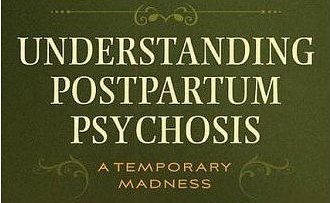
This past Tuesday, her book, Understanding Postpartum Psychosis: A Temporary Madness, released. I immediately scooped her up for an interview this week. Teresa is a survivor of Postpartum Psychosis and other PMD’s as well. In her book she hopes to present a realistic portrait of PPP and aid in removing the stigma so often associated with this misunderstood condition. With no further ado, here is Teresa’s interview. I am honored to share the journey with her!


Click here to purchase Teresa's book

Click here to purchase Teresa's book

Tell us about yourself – who is Teresa when she’s not a mom or a Postpartum Advocate?

Before I had children I was a litigation attorney and a professional mediator. I am now beginning to re-enter the workforce as a professional mediator. I also do some business consulting. I am currently working on a turnaround project for a packaging company.

I also enjoy writing – I have several writing projects going at any given time. Right now I have three children’s stories finished and another two I’m working on. I also am doing some more non-fiction writing that I plan to develop into a book. (In addition to my postpartum book, I co-wrote a chapter on mediation in a newly-released textbook on Employment Law and have had several academic articles accepted as proceedings or for publication in journals.)

I am active in our PTA, our Newcomers Group, our church and I co-lead two Girl Scout troops.

I enjoy doing new things and my latest “hobby” is working with stained glass (the soldered with lead type). I enjoy designing and creating a variety of pieces.

Sometimes I teach as an adjunct at a local university. I’ve taught Business Law, Business Communication, and Introduction to Women and Gender Studies.

As many of the moms who visit this blog, you’ve traveled down the dark road of Postpartum Mood Disorders. Share your experience with us.

After the birth of my first daughter I began to experience many strange things – I had nightmares, hallucinations, I could not read, I was paranoid. I did not know something like that could happen to someone like me – I was totally blindsided. I did not get treatment at the time, although I told everyone who would listen that I could not cope. I had physical complications and I think those around me thought that was the basis for my frustration and complaints. And I think that even the medical professionals did not understand that something like postpartum psychosis could happen to someone like me (educated, smart, capable, personable, and dynamic). After the psychosis I went into a depression. But still I did not identify it and did not receive help. I did not learn the name for my experience until I was on bed rest during my second pregnancy (with twins!) I was frustrated about the lack of information and misinformation. But I was fortunate – I did not have postpartum psychosis following the birth of my twins. Then when Andrea Yates killed her children and I heard many hurtful and ignorant comments, I decided to do this book. (The more detailed version of my story is in the book.)

At what point in your journey did you realize you needed professional help?

I knew I needed some kind of help almost immediately – but I did not know there was help for what I was experiencing. I did not know there was a name for it. I thought maybe I was going crazy. I did keep telling people I could not cope – that I was a terrible mom – that I wanted someone there to help me all the time – but I was afraid (and paranoid) so I didn’t actually describe in detail what I was experiencing. I just remember telling myself “just hold on – just hold on.”

What roles did your husband and family members play in your recovery? How did they handle your diagnosis?

I was better by the time my family learned of it. They expressed shock, dismay, some denial, and concern — all in a loving way.

My husband, mom, dad and brothers have all been very supportive of my work with Postpartum Support International.

You’re now a Coordinator with Postpartum Support International. What made you decide to become an advocate?

I recognized a need. Plus I was profoundly grateful that we had not suffered any loss of life. It felt right to express my gratitude for that by turning around and helping others. Plus, Jane Honikman asked me to be a coordinator. (I sometimes joke that she roped me in – and am usually met with a response like “you and everyone else at PSI,” or “join the club!”) I am honored to be a part of such an amazing organization.

Earlier this week your book, Understanding Postpartum Psychosis: A Temporary Madness, released. Tell us about this book and the concept behind it. What is your hope for this book?

I was dismayed about how little information there is about the actual experience of women with postpartum psychosis and the amount of misinformation most of us have. I believe those contribute to the ongoing mental anguish many women have as a result of this disorder as well as the occasional loss of life. I passionately believe that professionals and the general public need to know more about this disorder. It strikes so seemingly randomly that if people do not become informed until faced with this disorder it may be too late.

Public ignorance and mis-perceptions lead to:

  • Failure to identify and warn women (and their families) who are at high risk of having this disorder
  • Failure to take measures to prevent the illness
  • Failure to properly identify the illness
  • Failure to provide adequate care
  • Failure to take the steps necessary to prevent tragic outcomes
  • Mistreatment at the hands of police and other law enforcement professionals
  • Inequitable treatment by the legal system based on discredited science and societal myths
  • Misinformation and inaccurate portrayals in the media
  • Oppressive social stigma even for those who do not do any harm

In the short term my hope is twofold: First, I hope that this book will educate medical and legal professionals and the public to effect change regarding how we approach this illness. That this change will lead to aggressive steps to identify those at risk, to prevent the illness and when prevention fails, to adequately treat it and protect the woman and those around her. In the long term I hope this book helps to eradicate postpartum psychosis. I believe that could happen in my lifetime.

Secondly, I hope this book helps women (and their families and friends) who have had PPP to heal. I always say there are two levels of healing from this illness: There is the recovery from the psychosis and then there is the recovery from having had this illness — the learning to trust yourself again, dealing with the fear of a recurrence, being tormented by questions of “why me?” and so on. The illness is temporary – women recover from it relatively quickly. However, the emotional pain from having had this illness can last a lifetime. Just as these stories helped me to heal, to know I was not alone, to believe I could be completely well, I want them to be available to help others heal as well.

Name three things that made you smile today.

My girls singing.

Joking with the ladies in my aqua-aerobics class.

Seeing the sunshine.

I know my advocacy has affected those around me and increased their knowledge and understanding of Postpartum Mood Disorders. Have you found the same to be true about your loved ones?

Oh my, yes!

What do you find the most challenging about parenting? The least?

Most challenging: consistency and discipline.

Least challenging: loving, enjoying and genuinely liking my children.

If you had one chance to speak with an expectant mother (new or experienced) about Postpartum Mood Disorders, what would you tell her?

I would tell her that, unless she has a medical history that would indicate otherwise, it is unlikely that she will have a PPMD. But if she does, there is NOTHING she could experience that other women have not thought or felt and that ALL postpartum mood disorders are treatable. So if she does not feel right in any way, she should tell her doctor and contact me OR someone else through www.postpartum.net for peer support and information.

Thank you for this opportunity Lauren.

NIMH & Postpartum Support Virginia offer training conference

ppsvaheader

NIMH & Postpartum Support Virginia are offering a two day training conference on May 7th & 8th. This is the certified course from Postpartum Support International. Early registration has been extended through April 15th. Download the word document that includes more information and registration form by clicking here.

Congressman Bobby Rush’s Statement about HR 20

Congressman Bobby L. Rush makes a statement on the House Floor about the MSB MOTHER’S Act.

You can also read reactions to the passage of the bill at Coping with Life by Tom Davis and Postpartum Progress by Katherine Stone.

ONTO THE SENATE WE GO! (Have you called your Senator yet?)

Congressman Bobby Rush’s Statement on H. R. 20 the Melanie Blocker Stokes Mom’s Opportunity to Access Health, Education, Research and Support for Postpartum Depression Act of 2009

Monday March 30, 2009

Madame Speaker, today I rise in strong support of the Melanie Blocker Stokes Mom’s Opportunity to Access Health, Education, Research, and Support for Postpartum Depression Act of 2009.

I would like to thank Chairman Waxman, Ranking Member Barton, my colleague Congressman Frank Pallone, and the Members of the Energy and Commerce Committee who unanimously supported this legislation’s passage out of the committee.

After eight long years, today marks an important step forward in the journey for Congress to fully recognize postpartum depression as a national women’s health priority.

This bill comes to the floor today with strong, bipartisan support. No longer will postpartum depression be dismissed as mere “baby blues.”

Madame Speaker, today, 60 to 80 percent of new mothers experience symptoms of baby blues while the more serious condition, postpartum depression, affects up to 20 percent of women who have recently given birth. Experts in the field of women’s health like Susan Stone, Chair of the President’s Advisory Council of Postpartum Support International, says that these statistics do not include mothers whose babies are stillborn, who miscarry, or who are vulnerable to these devastating disorders which raises those at risk into the millions. The most extreme form, postpartum psychosis, is exhibited in about one percent of all new mothers.

At what should be the happiest time in a woman’s life these mood disorders result in feelings of despondency, tearfulness, inadequacy, guilt and fatigue. In the worst case scenario, if left untreated or not treated properly, postpartum depression and postpartum psychosis has resulted in suicide and infanticide. The consequences of untreated maternal depression in the mother range from chronic disability to death of the infant as well as learning and behavioral disabilities that can negatively impact a child’s development.

In light of all these sobering facts, sadly, I was finally compelled to author H.R. 20 in December 2007 after watching the news accounts of the missing Melanie Blocker Stokes. This bright, vibrant woman who loved life was a first time mother, a successful business woman and my constituent. Despite her family’s valiant interventions, Melanie’s psychosis was so severe that she slipped away and ended her life in solitary agony.

As news of her death swept throughout Chicago, I reached out to Melanie’s mother, Carol Blocker, who told me her daughter’s diagnosis and suicide was the result of postpartum psychosis.

And, sometime later, Dr. Nada Stotland of the American Psychiatric Association, also a constituent of mine, also reached out to me. Dr. Stotland detailed the value of additional research and discussed the under-reporting and misdiagnosis of postpartum depression and psychosis in our country.

There is no denying the fact that the need for resources to combat postpartum depression grows more and more each and every year. Here are the facts:

H. R. 20 will finally put significant money and attention into research, screening, treatment and education for mothers suffering from this disease. Research indicates that some form of postpartum depression affects approximately 1 in 1,000 new mothers, or up to 800,000 new cases annually. This data does not include the additional cases of women who may be vulnerable to these illnesses even after they’ve miscarried or who deliver stillborn infants.

Of the new postpartum cases this year, less than 15 percent of mothers will receive treatment and even fewer will receive adequate treatment; however, with treatment over 90 percent of these mothers could overcome their depression.

Every 50 seconds a new mother will begin struggling with the effects of mental illness.

Madame Speaker, these facts are profound and, in the words of Carol Blocker, “…hundreds of thousands of women, who have suffered from postpartum depression and psychosis are still waiting for Congress to act eight years after legislation was first introduced.”

Madame Speaker, thank you for this day because, today, Mrs. Blocker and hundreds of thousands of mothers will not have to wait any longer for Congress to act!

By passage of H.R. 20, today, we will put mother’s first.

When this bill becomes law, my legislation will:

– encourage the Secretary of Health and Human Services to continue: (1) activities on postpartum depression; and (2) research to expand the understanding of the causes of, and treatments for, postpartum conditions

– express the sense of Congress that the Director of the National Institute of Mental Health may conduct a nationally representative longitudinal study of the relative mental health consequences for women of resolving a pregnancy in various ways

– amend the Public Health Service Act to authorize the Secretary to make grants for projects for the establishment, operation, and coordination of effective and cost-efficient systems for the delivery of essential services to individuals with a postpartum condition and their families.

– Direct the Secretary to ensure that such projects provide education and services with respect to the diagnosis and management of postpartum conditions.

Moreover, this bill is an affordable approach to research and services.

This is good policy, good politics and a good public health bill!

Before I close, I’d like to take a moment to remember and honor the hundreds of thousands of women-women who have lost either their ability to “mother” or, in far too many cases, their lives to postpartum depression.

Madame Speaker, this bill, this day and this moment would not be a reality had it not been for a beautiful, young Chicago native, the late Melanie Blocker Stokes, and the valiant effort her husband and her family made to save her lift but to no avail.

And, even though Melanie did not survive her battle with postpartum psychosis, Melanie’s battle and her ultimate sacrifice will never be forgotten because of our efforts, here, today.

I would like to thank Carol Blocker, my friend, constituent and fellow activist, who with grace and dignity found a way for her daughter’s memory to live on.

I would also like to thank all the groups who support this legislation. Groups like, Postpartum Support International, the Family Mental Health Foundation, the American Psychological Association, the American Psychiatric Association and the American College of Obstetricians and Gynecologists.

I’d also like to acknowledge the tremendous work of groups like the Children’s Defense Fund, the Melanie Blocker Stokes Foundation, Suicide Prevention Action Network, Planned Parenthood Federation of America, Depression and Bipolar Support Alliance, Mental Health America, NARAL, National Alliance for Mental Illness, Community Behavioral Healthcare, the March of Dimes, The National Association of Social Workers, National Organization for Women and North American Society for Psychosocial Obstetrics and Gynecology.

I thank these groups and various activists for their relentless efforts to address this issue including calling their congressional representatives and mailing or faxing letters in support of H.R. 20. Our work will not be done until this bill is signed by the President. And, the good news is, this time we have a friend and fellow Chicagoan in the White House.
And, finally, let me once again thank the hundreds of thousands of unsung women, and their families, who have battled postpartum depression in silence or isolation, in some form, for far too long. To those women and their families I say, you will never suffer in silence again.

And, with that, I proudly urge my colleagues to vote “yes” on H.R. 20.

Thank you.

Ginger Tea with Tiffani starts tomorrow!

pampered-pregger-logoJoin Tiffani from Pampered Pregger & Beyond tomorrow morning @ 10a EST as she talks with Dr. Diana Lynn Barnes, Psy.D MFT. They’ll be discussing some of the Good Mother myths and how they can hamper the development and growth of a new mom.

Participation is free (long distance phone call is required though) and you can find further information about this event by clicking here.