Tag Archives: mental health

PANDA Perinatal Depression Video

I just watched the most amazing trailer for a Perinatal Depression Video, entitled “Behind the Mask: The Hidden Struggle of Parenthood.”

It’s done brilliantly, respectfully, and you HAVE to watch it. And then you have to share it with every single person you know.

This DVD is part of an initiative to get people talking about Perinatal depression in Australia. According to their profile at YouTube, PANDA is a national, not for profit organisation whose helpline provides confidential information, support and referal to anyone affected by depression and anxiety during pregnancy and after childbirth, including partners, family members and friends.

Thank you, PANDA. Thank you.

Go here to watch the video. Now. Why are you still here?

Enhanced by Zemanta

An Exercise Program Selling Point: Not losing baby weight leads to Postpartum Depression

I happened across a website for a Mom and Baby fitness routine yesterday. As I scrolled down the page, I got angry. And then I got pissed off.

Here’s one of their selling points from about 2/3 of the way down the page:

If you need help getting back in shape after baby, if you have postpartum depresssion, if you need creative ways to bond with baby, if you need to lose the baby weight —

Okay, so yes, exercise helps with Postpartum Depression. In fact, some studies have proven that exercise has an almost anti-depressant effect.

But do you need THEIR product to achieve that effect? No. All you need is yourself, some clothes, decent shoes, and somewhere to walk or run. Bam.

What got me really pissed off was the sidebar section. I took a screen-shot of the most offensive section to share with you. I have blacked out the company’s name as I sure as hell am not advertising for them. You also will not find a link to them here either.

Clearly, these folks know something about Postpartum Mood Disorders I have never heard:

“Gaining pregnancy weight and struggling to get back in shape after birth can lead to post pardum depression and difficulties bonding with baby.”

First of all, you are SUPPOSED to gain weight during pregnancy. Here’s a breakdown of weight gain expectations as found at the March of Dimes website:

If you began pregnancy at a healthy weight
You should gain 25–35 pounds over the nine months. Assuming you gain between 1 and about 4 ½ pounds in the first trimester, you should put on about one pound every week in the second and third trimesters

If you began pregnancy underweight
You should probably gain a little more than women who are at a healthy weight. That’s because underweight women are more likely to have small babies. A 28- to 40-pound gain is usually best. Assuming you gain between 1 and about 4 ½ pounds in the first trimester, try to gain slightly over a pound a week in the second and third trimesters.

If you began pregnancy overweight
You should gain only 15–25 pounds over the nine months. Assuming you gain between 1 and about 4 ½ pounds in the first trimester, you should put on slightly over ½ pound every week in the second and third trimesters. While you don’t want to gain too much weight, you should never try to lose weight during pregnancy because that could harm your baby.

If you were obese at the start of your pregnancy
You should gain only 11–20 pounds over the nine months. Assuming you gain between 1 and about 4 ½ pounds in the first trimester, aim for gaining slightly under ½ pound every week in the second and third trimesters.

If you’re expecting twins
You should probably gain between 37-54 pounds over the nine months if you began pregnancy at a healthy weight. If you began pregnancy overweight, aim for gaining a total of 31-50 pounds. If you were obese at the start of your pregnancy, you should gain between 25-42 pounds over the nine months. (That means gaining about 1 ½ pounds a week in the last two trimesters.

Another important thing to note here is that if you have a history of eating disorders, you are at a higher risk for developing a Postpartum Mood Disorder.

It’s also important to know that Thyroid issues may also be at the heart of abnormal weight loss or weight gain.

That population is exactly who this spam page is targeting. Get thin. Be happy. Avoid Postpartum Depression. Stay perfect.

Want to know something interesting?

This company has a spammy blog to go along with their website. Postpartum Depression is nowhere to be found when a quick search was done for the term at their blog.

For this company, Postpartum Depression is merely an SEO term they tossed onto their page in order to garner more hits and target an entire at-risk population.

Companies like this make me absolutely sick.

They pray on women who are at their most vulnerable. Granted, this particular company’s product is not insanely priced, but price is not the issue here. The issue is that they are insinuating that their product, not exercise in general, will help you fight off depression. You NEED their product to avoid Postpartum Depression and bond with your baby. Truth be told? You don’t.

Here are the things you may need to battle Postpartum Depression:

  • Professional support
  • Personal/peer support
  • Family support
  • Exercise (any kind will do)
  • Therapy/medication/supplements – IF prescribed and or/approved by your Professional support

Things you do NOT need to battle Postpartum Depression:

  • Products which promise to cure or ward off Postpartum Depression
  • Negative People/Support
  • Sparkly Unicorns (although they are awesome)
  • Leprachauns
  • Wizards
  • The Trix Bunny

Depression happens. There’s a right way to go about getting help and a wrong way. Ending up on a page like the one I have just blogged abut is the wrong way. Unfortunately, many, many people prey on at-risk populations so that they will spend money they don’t have on products they do not need. So how do you tell the difference between a good, solid, and helpful website vs. a bad, for profit, grubby website? Educate yourself starting with these two posts:

The reprehensible spammification of PPD

Tips on Identifying Reliable Health Information on the Internet

Then make sure to involve a medical professional in your Postpartum Mood Disorder care to help keep you safe and well as you travel toward recovery.

Enhanced by Zemanta

Postpartum Voice of the Week: @ksluiter’s Secret Mommyhood Depression Confession


background stock from http://www.sxc.hu/photo/510010

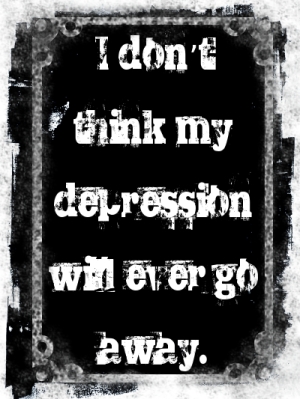
One of the hardest questions a mom with Postpartum Depression harbors somewhere deep within her is “When will this be over?”

A couple of months? A few? More? A year? When? How will I know I am better?

When?

When a doctor prescribes antibiotics, we take them, usually for 5-10 days. And then we’re supposed to be better.

Depression does not work that way. Mental illness does not work that way.

For some of us, just as with any illness, we may heal faster.

For others, it may take some time for our minds to bounce back from the issues we are facing. If we’re on the longer end of the expected time frame, it does not mean there is something wrong with us. It doesn’t mean that we have done something to deserve to continue to suffer. Our road is just longer. We may have more baggage, more to work through, continued external drama, less support, struggling to find the right meds, therapists aren’t working well, etc. There are a whole host of reasons for our road to be longer. Reasons we may not understand in the here and now as we scream for a shorter road. Scream to be able to sit down and rest, to stop fighting with this beast of depression.

We just want it all to go away.

But when on a long road toward recovery, it may not seem as if it will ever go away.

That’s when it gets tough all over again.

Katie Sluiter of Sluiter nation is there. She’s there and struggling with thoughts that her depression may never go away.

This past Friday, as part of Secret Mommyhood Confession, she wrote about her continued battle against Depression. She shared that it may well have gone from Postpartum to full blown depression. This post is worth reading for a few reasons.

One – sometimes Postpartum continues into a full blown depression or other mental illness. Sometimes it doesn’t go away as quickly as we would like it to and sometimes it morphs into a tenacious little monster we are unable to get off our backs. And it sucks.

Two – Katie, once again, approaches this issue with a raw honesty that is absolutely the essence of the Postpartum Voice. Honesty, above all else, is an important element toward recovery. It garners positive support from your doctor, important support from your peers, and it allows you to work through some pretty hard stuff in a very clear cut manner. Once you are honest with yourself, it is hard to be dishonest with others.

With no further ado, I give you Katie Sluiter of Sluiter Nation and her Secret Mommyhood Depression Confession.

Enhanced by Zemanta

Zombies, Celebrities and Postpartum Depression

Earlier this morning, an article over at People was brought to my attention via Twitter.

Gwyneth Paltrow has once again opened up about her experience with Postpartum Depression after the birth of her son, Moses. She described her experience as very zombie like, telling Good Housekeeping in her interview,

“I felt like a zombie. I couldn’t access my heart. I couldn’t access my emotions. I couldn’t connect.”

Who among of us have not felt like a Zombie as a new mom struggling with a Postpartum Mood Disorder?

What grabbed my attention in this particular piece was that she included insight into the fact that it was her husband, Chris Martin, ColdPlay front man, who insisted things were not quite right. His insistence helped to “burst the bubble” of denial in which Gwyneth found herself and allowed her to seek the help she needed.

I appreciate this tidbit of information. It speaks volumes to how important the involvement of a spouse is for the successful treatment and recovery of a Postpartum Mood & Anxiety Disorder.

Support starts at home. It’s our Ground Zero. We need our partners to hold us up and back us up as we fight to recover ourselves.

Thank you, Chris Martin, for your attentiveness as a spouse and partner. I can only hope more men follow your lead.

Sticks and Stones will break my bones but Words…..

Who among us hasn’t heard this childhood chant?

I used to chant it at my brothers. At others on the playground as they attempted to say mean things to me.

Why do we say it when it is not true?

Words.

Words are more powerful than any stick, any stone.

I have scars on both knees from bicycle and running falls as a child. A couple of them still have dirt and rocks from New Jersey embedded deep under my skin because it was easier for the doctors to leave it in than to take it out. That gravel? That dirt? Has never bothered me a day in my life. Not one ache, not one infection, nothing.

But the chilling echo of the teasing I endured in elementary school because my family did not cough up the cash to belong to the local Yacht club? The teasing because our Green & White Dodge Ram Charger backfired whenever Mom drove us to school? The teasing I endured because my family did not own a Limo or a Porsche? Lingered in my heart and made it heavy. Achy.

The words written by a 10th Grade English teacher on a paper I had written about losing my Grandmother to ovarian cancer – the words which questioned whether I had really not had a chance to say goodbye or if I had just not taken the time to do so? Chilling. Enraging.

The words scribbled on all of my Creative Writing class assignments? Nearly impossible to read without invoking some sort of impassioned response. Sometimes the criticisms of my fellow classmates were even harder to read than the Professor’s words scrawled in blood red ink across every single line.

Words.

Words are the world in which we live these days. They surround us every day. At Twitter, at Facebook, on our cell phones as we text friends, read the news, browse the internet, read billboards, as celebrities attempt to use them to achieve fame.

In our lives, it is not only our actions of which we need to be mindful. It is our words as well. For our words may spurn another into action. Our words may speak to another in a way we are not even capable of fathoming. Our words – if chosen poorly – may even end a life.

If chosen wisely, with care, with love, with respect, our words may snatch that same life deep out of the pit in which it has wallowed. Our words, wisely and carefully chosen, may prove to be the helpline just one person has been seeking. Our words should always be love.

Sometimes this means tough love. Even then, our words should be chosen with respect. With earnest and honest warmth. Our words should always extend an olive branch into another person’s soul even if we do not agree with them. Even if all we want to do is tell them to go to hell. Seal your lips. Do not let such harsh words tumble forth from them. There are those among us who have – and they have gone on to regret those harsh words. Walk away. Breathe. Think. Reflect. Many times the anger you feel is not worth it. Many times the anger you feel is the other person’s Karma, but not yours.

Your words are your reputation, your heart, your very soul.

Recently, a well known Twitter account, @TheDailyLove, operated by Mastin Kipp, tweeted a message which set off a flurry of reaction, including a post at BlogHer by Morgan of @the818.

This tweet included the following words:

“Depression exists in selfish people. Step outside yourself, helps others [sic] & you will feel better!”

Martin has since posted a message of apology and deleted the Tweet. But the damage of his words will lurk forever on the Internet.

I left a comment at his post thanking him for his apology and acknowledging the courage it takes to own up to such an action.

Depression for me was anything but selfish. It was because of the intense expectation to be suddenly selfless, to suffer in the face of caring for others in an intense and unexpected environment that I fell from my white horse of dreamy motherhood into a slathering messy pit of despair. I had no clue what to do, I had no support, I struggled, sought help, was turned away. Here I was, hurting, doing everything right to try to improve my situation yet found myself shot down at every turn. No one tells you at the baby showers about the sleepless nights. No one gifts you a case of coffee. No one warns you that your butt and your couch will become one for three months. No one tells you about the weeks for which you’ll go without a shower. No one tells you about the maddening thoughts that may drift through your head or how the sleepless nights will make your mania that MUCH WORSE.

No one uses their words to tell you, in love, how damn hard motherhood will be for you.

No one tells you that once you fall off that white horse, it IS possible to get back on. Granted, you’ll be a wreck, the horse may have a busted hoof or two, but it won’t matter. Because you’ll be back on the horse dammit. Grass in between your teeth, mud stains on the side of your face, on your satin nightgown, but grin dammit. This is motherhood. You’re required to be happy. Right?

We are all in this together. All of us, all of humanity.

Without love, without mindful awareness of those who struggle beside us, we will be forever lost.

So I ask you. Fill your words with love.

If something angers you, ask why. Respond accordingly but for love’s sake, do not respond in anger. If you must respond in anger, be sure to use it to bring about positive change. Do not lose yourself to hate.

It is simply and utterly not worth it.

Social Media moves quickly. We read, we browse, we share. We often do not think before we type. Just as Social Media can damage a fragile person, it can also build a fragile person up. The reason I started #PPDChat at Twitter was to provide a safe space in which women and families could discuss their issues with others. To talk about Postpartum Mood & Anxiety Disorders in a very public manner with no sense of shame as we chatted and created a warm community full of love, acceptance, yet free of hate, judgment and stigma. I am amazed on a weekly basis as to the level of participation and amount of sharing which goes on at #PPDChat. These mothers, fathers, friends, and loved ones openly share their challenges with each other. Often from private Twitter accounts, personal Twitter accounts, openly talking about the difficulties of motherhood and the complications a Postpartum Mood & Anxiety Disorder bring into that equation. I love my #PPDChat family. I do not think any of them selfish. I do not think any of them as wanting to suffer. But what I have seen is that knowing they can reach out to others, to be VALUED by others and validated by others has helped them immensely. That said, many are also involved in additional Professional care.

Depression is not selfish.

Depression is helped by reaching out to others.

But as we reach out to others, we must be aware of our own fragile states. We must know when to say no, when to take care of ourselves and be okay with not helping others. If we fail to first help ourselves, we are unable to help others. And yes, THAT is selfish. But it is necessary for us to be selfish in order to improve the help we provide to those around us.

Above all else, we must first mother ourselves.

What will YOU do to mother yourself today? How will you show the world love? How will you be hope? How will you be the light at the end of the tunnel for someone else?

Do not blow out their candle. Ignite their candle. Empower them with words of love chosen warmly, wisely, and carefully.

YOU have it within you to be the spark. Pass it on.

Enhanced by Zemanta