
Tag Archives: depression

Just Talkin’ Tuesday 11.17.09: When did your fog lift?

base photo credit "water droplet with fall reflection" by mahalie @ flickr

All the cliches you hear about not being happy are profoundly true. The grass is a dull shade of green – khaki almost, for me at least. The trees filled with sorrow, the birds didn’t chirp as cheerily, the leaves waved as if mourning, the air filled with the weight of the entire world as the clouds swooped down and swarmed around my mind, fogging my vision of anything in front of me. My grandfather called those infamous fogs “pea souppers.”

I remember the day my Pea Soupper existance finally lifted. It was a bright spring day. The trees stood ready to burst forth brand new leaves still wrapped tightly in buds, rain had rushed through – not drenched us but rather left just enough behind for everything to sparkle a bit. I can still smell the rain of that day if I close my eyes and think long enough. THIS is the day I want to hold close to my heart forever when I think of my PPD.

Sure, I remember the bad stuff. I remember the cold sleep room where I first checked out. I remember all too well the smell of the soap from the NICU. I remember the cold hard plastic and mechanical whirring of my breast pump, the flat pillow at the psych ward. But when I think of my PPD, I want to remember that spring day. The day that not only Mother Nature birthed yet another child of spring but I found myself reborn as a complete person – myself and motherhood all rolled into one – ready to take on the very world which waited at my feet. Had it still been raining I may have pulled over and danced a little jig.

So tell us – when did your fog lift?

Let’s get to just talkin’.
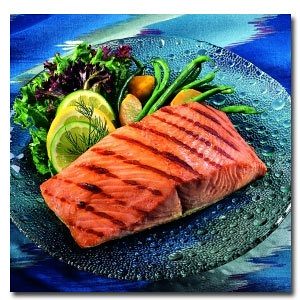
 

Low Omega-3 Fatty Acid Intake from Fish correlates with High Levels of Depressive Symptoms in Pregnancy

Published in the July issue of the Journal Epidemiology, researchers put to the test the relationship between fish intake and depression based on the observation that “Although common in western countries, depression appears to be virtually absent in countries with high seafood intake.” (Abstract, High Levels of Depressive Symptoms in Pregnancy with Low Omega-3 Fatty Acid Intake from Fish)

The researchers collected data from women as they progressed in their pregnancy during 1991-1992. At 32 weeks, the women then completed a questionnaire which included symptoms of depression as well as a food frequency questionnaire from which the amount of Omega-3 Fatty acid from fish was calculated.

The results? Both adjusted and unadjusted analyses showed that lower maternal intake of omega-3 from fish was associated with high levels of depressive symptoms.

So just how much fish do you have to eat in order to achieve these results? Women consuming more than 1.5g of Omega-3 from seafood vs. those consuming none were less likely to have depressive symptoms. And how much fish equals 1.5g of Omega-3 fatty acids? FDA guidelines suggest women and children eat up to 12 oz of fish per week. Some of the healthier fish to eat (in order to avoid mercury build-up) are: Anchovies, Catfish, Crab, Herring, Mackerel, Mussels, Wild Salmon (Alaskan), Sardines, and Whitefish (source: Fish Intake During Pregnancy, Dietriffic.com)

What if you don’t like fish? You can take a supplement and there are non-fish sources of Omega 3 such as walnut, kiwi-fruit, flax seeds, pecans, hempseed, hazel nuts, and butternuts. Eggs and milk from grass fed chickens and cows are also higher in levels of Omega-3 fatty acids than other eggs and milk. But remember this particular study dealt specifically with Omega-3 from fish.

You can also check out the following blog, Rebuild from Depression, for additional sources and information regarding Omega-3 fatty acid sources.

I have been taking Omega 3/6/9 for quite some time now as part of my regular routine. I can tell when I forget to take my supplement as well. (So can my husband!) Make sure you talk to your physician before adding a supplement to your routine though. Also discuss adding more fish to your diet as well to make sure it fits with your particular situation.

Powered by ScribeFire.

Just Talkin’ Tuesday: Religion/Spirituality & Perinatal Mood and Anxiety Disorders

Just talkin tuesday logo

(Yes, I know it’s Monday. Realized that AFTER promoting at Twitter & Facebook. I was just so darn excited about this post I had to put it up an entire day early!)

Welcome to the very first “Just Talkin’ Tuesday!” Glad you could make it.

Have a seat! Share some thoughts!

Over the past few years, I have come to embrace my own Christian faith as what has carried me through my experience with Postpartum Obsessive Compulsive Disorder. A favorite quote of mine is by Mother Theresa – “God will never give you more than you can handle. I just wish he didn’t trust me so much!” (I paraphrased so not sure if that’s the precise wording or not!) And over the past few years, somehow, I’ve managed to earn a LOT of God’s trust. I don’t quite know how I achieved such a feat but alas, I did and here I am.

The past week has had a couple of interesting things tossed my way. The first was the inclusion of a link to an Islamic forum post dealing with postpartum depression. It’s specifically about a woman who’s husband has recently passed away but someone used the term Postpartum Depression in one of their discussions so Google quickly catalogued it for me. (Ain’t I lucky?!) You can read the post here. I found it quite fascinating because there is not a lot of information out there for the general public in relation to Islam and Depression. In fact, one of the posts includes a link to a PDF version of a book entitled Don’t Be Sad written by Aid ibn Abdullah al-Quarni. I skimmed through the table of contents and the introduction. Seems fascinating.

The other topic I found fascinating was coming across Stacey’s blog. Stacey is an atheist, a belief she has every right to hold, but I find personally hard to understand, especially given the role that faith and God has played in my own recovery. It’s really got me thinking about some things. (You can learn more about atheism via wikipedia by clicking here.)

And that brings us to the topic for today.

As you (or a loved one) journeyed through Postpartum Mood or Anxiety Disorder, what role, if any, did your faith/spiritual belief play in your recovery? Was it minimized or maximized? Did you completely change course? What are some of the sentiments your faith expresses about mental illness? Were you outcast because of your struggle or decision to treat with medication? How were you expected to treat your illness?

Let’s get to Just Talkin’ here!

11th Annual Welcome Back Awards honor PMD Expert Diana Lynn Barnes

Lilly established the Welcome Back Awards in 1998 to fight the stigma associated with depression and to promote the understanding that depression is treatable. Each year, an independent panel of national mental health leaders recognizes five individuals for their outstanding achievements, and Lilly awards donations ranging between $10,000 and $15,000 to the not-for-profit organization of each winner’s choice.You can read more by clicking here.

Lifetime Achievement: Diana Lynn Barnes, Psy.D., Tarzana, Calif.

Diana Lynn Barnes, Psy.D., is an internationally recognized expert on the assessment and treatment of perinatal mood disorders who has used her own three-year struggle with postpartum depression to help educate others through media interviews, speaking engagements and as an author. In addition to her private practice, she is a nationally known forensic expert in women’s reproductive mental health and works with defense counsels in cases of infanticide, pregnancy denial and neonaticide. She is a past president of Postpartum Support International and continues to work with the group to raise awareness of postpartum depression. In 2007, she wrote her first book “The Journey to Parenthood: Myths, Reality and What Really Matters.” Additionally, Dr. Barnes has been involved with the Henry Mayo Newhall Memorial Hospital in Valencia, Calif. for the past two years to implement a comprehensive pregnancy and postpartum screening program.

Mother’s criticism causes distinct neural activity in formerly depressed women

Not too many research articles make me say “Whoa!”

This one is a very interesting exception and it’s not even directly linked to Postpartum Mood Disorders.

Via fMRI, researchers examined the brain patterns of formerly depressed v. non-depressed women as they listened to their mothers speak. These recorded statements varied from praise to criticism.

After listening to the statements, both groups had similar verbal reactions.

But their brain patterns revealed a much different story.

As the formerly depressed women listened to the criticisms, something interesting happened.

Individuals who had never been depressed showed increased activity in the dorsolateral prefrontal cortex and the anterior cingulate cortex, which are brain areas involved in the cognitive control of emotion. The formerly depressed individuals did not show activity in these areas, but instead showed increased activity in the amygdala, a part of the brain that is responsive to potentially threatening stimuli. Previous research has shown similar activity in these neural systems among individuals who are currently depressed.

Researchers aren’t sure if this reaction is a “scar” from depression or if the brain reacted this way prior to depression.

So if Mom’s criticism is a little harder to take in the midst of a Postpartum Mood Disorder, it’s really not your fault. (And no, she’s really not out to get you)