iPhone App Sad Scales includes Edinburgh Postnatal Depression Scale

(Note: This is post does not imply an endorsement or recommendation of this particular application. As with any evaluation, please be sure to see a professional for final diagnosis)

This morning I discovered an iPhone app which includes the Edinburgh Postpartum Depression Scale along with three other depression scales.

While I have not used it myself, it seems like a really neat concept considering how prevalant iPhones are in our society today. Chances are many new moms either have an iPhone or know someone who does. What’s really cool about this app is that it stores the last 30 entries so you can take the results straight to your doctor.

Speaking of doctors – if you’re a professional, you too can get this app for your iPhone as well so if you’re faced with a new mom who doesn’t seem to be doing very well, you can screen on the spot without having to hunt down a screening tool in your office.

Pretty cool, huh?

You can read more about the app here and no, I’m not getting a cut by referring you to the store – it’s just the best description I found of the application.

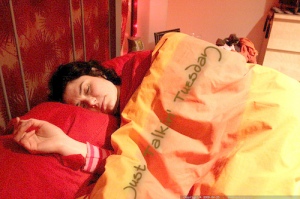
Just Talking Tuesday 07.07.09: Anti-depressants or Not?

original photo by thegirlsmoma @ flicker

original photo by thegirlsmoma @ flicker

Today’s topic was inspired by a post over at Postpartum Progress: You don’t NEED Anti-depressants, Do You?

In this post, Katherine discusses the lack of stigmatization regarding pharmeceutical treatment for medical conditions in response to a ScienceBlogs post you can find here.

Anti-depressants are stigmatized. Period. Nitro-glycerin or insulin? Not so much. Why? Just as Anti-depressants may work for me, they may not work for you. And if you have the wrong heart condition and take nitro-glycerin, things may not go your way either. But you don’t hear people judging others for being on nitro-glycerin, now do you? And insulin? Many Diabetics require this life-saving medication. Even pain medication after an injury – do you question that prescription? Most don’t and certainly aren’t stigmatized for taking it because let’s face it – a broken leg hurts – something we all understand.

Mental illness hurts too. It hurts the person suffering. It hurts the people around them. And if the right medication is paired with the right therapy, it can make a world of difference. Why then, are we stigmatized or accused of not understanding informed consent for deciding (of our own free will) to take medication as we heal? What makes the scaffolding of Anti-depressants any different than pain medication as a broken leg heals?

So I’m posing a pretty big question today. And I expect there will be a bit of debate about it – which is good…our different opinions are what keep us interesting! Just keep things polite. No hateful, judgemental or fear-centered comments will be approved.

Do/did you or don’t/didn’t you take Anti-depressants? Why? Why not?

And more importantly – IS it your place to tell someone else they absolutely SHOULD not take them if you don’t believe in them or have had a bad experience? Or should you calmly refer them to research that explains the risks vs. benefits and let them make the decision on their own WITH a professional on board?

Let’s get to Just Talkin’!

PPD may aggravate already impaired sleep quality

Hang on folks – put your seatbelts on and make sure you keep all arms and legs inside the vehicle at all times.There’s another shocking study involving sleep and Perinatal Mood Disorders.

It IS important to be aware of your sleep patterns during the postpartum period as sleep deprivation can certainly make you grumpy. It can also cause a number of other issues if not corrected quickly.

That said, a new study published in the July 1st issue of the Journal SLEEP, states that Postpartum Depression may aggravate already impaired sleep quality.

Huh. Really?

What does that mean exactly?

It means that if you’re already not sleeping well, your visits with dear Mr. Sandman may become even more insignificant if you develop a Perinatel Mood Disorder.

Interestingly enough, 21% of the moms involved reported depression during pregnancy while 46% had experienced a previous bout of depression prior to conceiving.

The risk factors discovered by the researchers involved “Depression, previous sleep problems, being a first time mother, not exclusively breastfeeding or having a younger or male infant were factors associated with poor postpartum sleep quality.”

They also discovered that “Better maternal sleep was associated with the baby sleeping in a different room.”

I find it interesting that not exclusively breastfeeding was a factor in poor postpartum sleep quality. Many times mothers feel that if they could just stop nursing and give a bottle so others in the family could help with the feedings, they would be able to sleep better. I know I finally got rest when I stopped pumping and/or nursing. I do concur with the baby sleeping in a different room – all three of my children slept in their own room in a crib from the day we brought them home from the hospital. We did not want to wean the child from our room at a later date. Those who choose to co-sleep should seriously consider this particular risk, especially if depression is an issue.

The lesson here?

Moms – if you’re not sleeping well, tell your care provider. EMPHASIZE that this is not normal for you.

Caregivers – If a new mom tells you she’s tired, LISTEN. Don’t brush it off as just a new mom thing. Dig beneath the surface. She may be trying to tell you she’s depressed and doesn’t know how else to put it.

You can click here to read the entire article about this study.

Just Talkin’ Tuesday 06.30.09

With last week’s debut so full of seriousness, I thought it’d be best to balance things out a bit with a lighter topic.

Sleep!

sleeping mamaAs parents, we all know how meaningful sleep can be – it’s precious lifeblood which lets us function – and when we don’t get it, World watch out! Unfortunately, those of us who struggle with a Postpartum Mood Disorder on top of the common parental experience of dazed consciousness are really in trouble. You see, it’s been proven over and over in research that sleep has something to do with our psyche. And guess what – lack of sleep can exacerbate symptoms of Postpartum Mood or Anxiety Disorders! Great, you say? Yeah, well, that was my reaction too when I first read the research. I mean, really, why did they even bother researching this topic? Isn’t it common knowledge? BUT… they did research it… and now we have something concrete to point to when our beloved partners are befuddled at our new-found obsession with sleep.

So here’s today’s topic:

Share with us what effect (if any) sleepless nights had on your Postpartum Experience. Did you sleep? Did you not sleep? When you woke up, were you rested or did you wish you could go back to sleep? What strategies did you use to help regulate your sleep? Did you read? Watch TV? Play on the Internet?

Here are some basic suggestions for those who are STILL struggling with sleep.

Get into a routine. At a certain point in the evening (if you can – we all know how unpredictable babies can be!), start a certain chain of events that will lead to you crawling er, collapsing into bed.

Once in bed, if you lay there awake, GET back up and go somewhere else. Watch TV or read for 30 minutes. Bathe, shower, drink some hot milk. Then get back in bed. Don’t stay in bed if you’re awake. This will cause you not to associate bed with just sleep. (which completely defeats the purpose!)

Have your partner take a night feeding and let you sleep for at least 5-6 hours at night. (Even if you’re nursing DO this – and have your partner get baby ready for nursing by changing diaper, etc, so you can get a few extra minutes!)

Remember – if you are not sleeping and/or have difficulty sleeping for more than a week, call your doctor. This is not the time to hold off on getting relief!

You can read more at this website about sleep disorders and difficulties.