Category Archives: husbands

Sharing the Journey with David Klinker

 There is a reality as powerful and profound as Motherhood. It’s Fatherhood.

This month we’ll be focusing on the Father’s point of view through interviews with David Klinker, the Father’s Coordinator with PSI, Dr. William Courtenay, a psychologist and Men’s Coordinator for PSI (meaning he works with men who are suffering from PPD – yes, that happens too), Michael Lurie, author of My Journey to Her World, and my own husband’s experience with my PPD.
Today you’ll read about David Klinker, his survival through his wife’s PPD and his website, Postpartum Dads, which is designed to be a resource for new Dads. David is wonderful and I often send families his way because I belive that the entire family needs to heal and recover – not just mom. Thanks David – for your hard work and for supporting Dads everywhere. You are doing amazing things! 

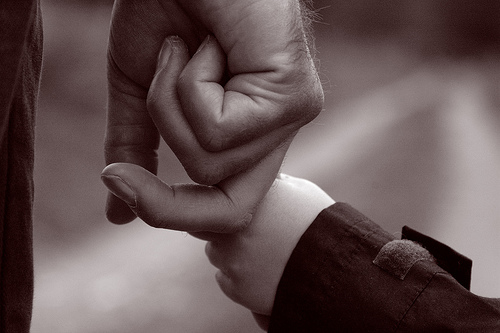
 Fatherhood” © 2005 Paul C. Smits

© 2005 Paul C. Smits

1) What is it like for a partner to witness a Postpartum Mood Disorder in action?

Things for us spiraled down very quickly.  In some ways things happened so fast that I felt like I was taking part in some made for TV drama.  At times I felt almost detached, like I was just playing a role.  At other times I felt devastated thinking about losing Denise and all that we had together.  I was very lucky to have supportive family and friends; otherwise, I know it would have been much worse.  Fortunately, just as quickly as things spiraled down, Denise got better.   


 2) Would you share your family’s experience with PPD? When did you first realize something wasn’t quite right and what steps were taken to get help?

 Here is our story:  https://home.comcast.net/~ddklinker/mysite2/Johns_Story.htm


3) Has becoming a Father changed you?

 The moment I looked into my daughter’s big brown eyes for the first time, I was a changed person.  I felt a huge sense of responsibility come over me as I sat there in the delivery room holding her.  The greatest changes came from needing to consider her needs over my own. 


4) What aspect of being a Father is the most challenging? The Least?

 I think the most challenging aspect of being a father is dealing with the fear of doing it wrong.  How do I know that the choices Denise and I make are the right ones?  Are we doing enough for the kids, or too much?  What makes us qualified to shape the lives of two wonderful human beings?  I deal with these fears but remembering that Denise and I are there to provide opportunities, guidance, and boundaries for our kids.  They shape their own lives, we just have to do our best to help them make good choices in their lives.

The least challenging aspect of being a Father is enjoying the special times together when everything seems right with the world.  Whether it watching them ride their bike for the first time, watching them catch their first fish, or just driving home after a softball game.  There have been many times where I know I’ve gotten the father thing right and it’s a great feeling.


 5) How did you get involved with PSI and how rewarding has it been to work with Fathers who are where you have been?

I got involved with PSI the same way many other volunteers have, I talked with Jane Honikman.  I knew that I wanted to do something to help other dads and Jane was very encouraging.  PSI has recognized the importance of reaching out to partners for a long time and needed someone to take the role as Father’s Coordinator.  I volunteered and was very warmly welcomed in the organization.  I have met many wonderful people through PSI and it has been a great experience for me.

My main involvement at PSI has been talking to fathers on the phone, responding to emails, and maintaining my website.  I usually only have 5-10 calls and maybe 10-15 email contacts within a year.  Most of the calls are from dads that feel cut out and rejected by their wives.  These dads feel devastated and powerless to doing anything about the situation.  I have several stories on the postpartumdads.org website from dads dealing with rejection.  I have to say, these calls are tough and I often feel inadequate to provide the kind of help these men desperately want.

On a more positive note, I have had several phone calls where I do feel I have made a difference.  It is very rewarding when I feel like I have helped someone through a tough time.  I have also received a lot of positive feedback on the website, especially the stories. 


6) What led you to develop your website for fathers/partners?

After taking some courses through Landmark Education I knew that I wanted to make a difference in the world.  While talking with a friend whose wife was experiencing PPD I realized I didn’t know what to say to help him.  I talked to him about my experience but I didn’t know what resources were available to help.  After looking for resources on the internet I saw that there was very little directed towards the needs of dads dealing with the depression of their wives.  I came up with an idea to develop a website that featured stories from other dads with very practical suggestions.  I got some great encouragement from the local PSI coordinator Shelly Ashe and from Jane Honikman.  With very little experience creating website, I figured out the basics and started with my own story.  I have been fortunate to have other dads contribute stories and I am very proud of what we have created.


7) Just as women with PPD learn that taking care of themselves is important, this is a lesson that Fathers should heed as well. What do you do on a regular basis to feed your soul and ensure that you stay in a good place?

I “feed my soul” by doing projects around the house, riding my mountain bike, taking walks, and playing with the kids.  I’m currently building a retaining wall in the back yard and I get great satisfaction out of seeing the progress I make each week.  It’s the most physical labor I get during a week.  I try to mountain bike once a week and the 20 minutes of flying down hill, after the 1 hour going uphill, are the best therapy possible.  Everyday at lunch I take a 20 minute walk that helps to clear my mind.  I also like to spend as much time with the kids as possible.  I enjoy being with them and it’s a great way to see the world through their eyes.


8 ) Did PPD strengthen or weaken your marriage? Do you feel that you both are in a better place now than prior to PPD?

PPD strengthened our marriage.  Denise and I have been through some very tough times together and we have been able to support each other through them.  Each time we have made it through the tough times we have felt closer as we have more invested in each other.  Watching Denise recover from PPD, as well as a life-threatening illness, has been an inspiration to me and many people around her.


9) What aspect of Fatherhood should be celebrated the most?

I see my primary role as a father to be setting the boundaries for my kids.  This means keeping them safe, but it also means allowing them to take risks and sometimes going further then their mom would allow.  I see myself as being there to back them up as they try new things, from riding a bike, to the first day at a new school.  I think the role that fathers play in fostering independence and confidence should be celebrated.


10) If there was one piece of advice you could give to an expectant father (new or experienced), what would it be and why would this be important for him to hear?

My one piece of advice to new dads is to trust your instincts.  If something doesn’t seem right it probably isn’t.  That applies to dealing with PPD was well as dealing with setting boundaries.   


Give An Hour

I found this article on my cell today and wanted to share it with you. Please pass this information on to anyone you know that will find it useful OR can volunteer. Give an Hour is working very hard to help our soliders and their families.

Here’s their mission statement with the article below:

Our Mission
Our mission is to develop a national network of volunteers capable of responding to both acute and chronic conditions that arise within our society. Our first target population is the U.S. troops and families who are being affected by the current military conflicts in Afghanistan and Iraq. Give an Hour is asking mental health professionals nationwide to literally give an hour of their time each week to provide free mental health services to military personnel and their families. Research will guide the development of additional services needed by the military community, and appropriate networks will be created to respond to those needs. Individuals who receive services will be given the opportunity to give an hour back in their own community.


Psychiatrists Volunteer to help soldiers

WASHINGTON – Thousands of private counselors are offering free services to troops returning from Iraq and Afghanistan with mental health problems, jumping in to help because the military is short on therapists.

On this Memorial Day, America’s armed forces and its veterans are coping with depression, suicide, family, marital and job problems on a scale not seen since Vietnam. The government has been in beg-borrow-and-steal mode, trying to hire psychiatrists and other professionals, recruit them with incentives or borrow them from other agencies.

Among those volunteering an hour a week to help is Brenna Chirby, a psychologist with a private practice in McLean, Va.

“It’s only an hour of your time,” said Chirby, who counsels a family member of a man deployed multiple times. “How can you not give that to these men and women that … are going oversees and fighting for us?”

There are only 1,431 mental health professionals among the nation’s 1.4 million active-duty military personnel, said Terry Jones, a Pentagon spokesman on health issues.

About 20,000 more full- and part-time professionals provide health care services for the Veterans Administration and the Pentagon. They include psychiatrists, psychologists, psychiatric nurses, social workers and substance abuse counselors.

According to veterans groups and health care experts, that is not enough for a mental health crisis emerging among troops and their families.

“Honestly, much is being done by the Department of Defense and the Department of Veterans Affairs,” said retired Army Brig. Gen. Stephen Xenakis, a psychiatrist. “But the need to help these men and women goes far beyond whatever any government agency can do.”

About 300,000 of those who have served in Iraq and Afghanistan are estimated to have anxiety or post-traumatic stress, a recent private study said. Add in spouses left home to manage families and households without their partner as well as children deprived of parents during long or repeated tours of duty, and the number with problems balloons to 1 million, Xenakis said.

The VA says it has seen 120,000 Iraq and Afghanistan veterans who have symptoms of mental health problems, half with post-traumatic stress disorder. Although rates are high from those two wars, most of the 400,000 patients seen in VA last year for PTSD were Vietnam-era veterans, officials said.

Civilian groups are trying to step in for troops from the current conflicts.

“There are over 400,000 mental health professionals in our great country,” said Barbara V. Romberg, a clinical psychologist who practices in Washington. “Clearly, we have the resources to meet this challenge.”

Romberg founded Give An Hour, a group of 1,200 mental health professionals donating one hour of free care a week to troops, veterans or family members. They have to commit to doing it for a year.

Romberg, in cooperation with the American Psychiatric Foundation, hopes to find 40,000 volunteers over the next three years, or about 10 percent of available civilian professionals. The effort to get the word out to those who need the help and to recruit and train volunteers is being backed by a $1 million grant from the Lilly Foundation.

Romberg’s group is the largest of a number across the nation.

Nearly 200 also have volunteered for the Soldiers Project, started by psychiatrists at the Ernest S. Lawrence Trauma Center of the Los Angeles Institute and Society for Psychoanalytic Studies – and now operating in Chicago, Seattle and New York.

The Coming Home Project in the San Francisco area has dozens of volunteers. A group of veterans, psychotherapists and interfaith leaders, it offers everything from retreats and workshops to yoga and other stress management programs as well as the counseling.

“Thousands of therapists across the country are donating their time to give vital treatment and support to our soldiers, sailors, airmen, Marines, veterans and families,” Xenakis said at a recent news conference announcing the Lilly grant. “These young men and women volunteered to defend our nation, and now our nation can volunteer to serve them.”

The government acknowledges there might be a place for such groups.

“While the military health system does not endorse volunteer health care organizations, we recognize that groups such as this one offer more options for our warriors and their families,” said the Pentagon’s Jones.

“If these mental health caregivers are willing to give and learn about our warriors, they may be more willing to become TRICARE providers,” he said, referring to the network of more than 300,000 physicians and specialists and 55,000 pharmacies that support the department’s military medical facilities and uniformed medical corps.

The military health care system serves about 9.2 million people – active duty, and guard and reserve components for all the services, as well as their families and retirees and their families.

Jones said there are 3,000 mental health professionals available under TRICARE in addition to the 1,431 in uniform. The VA said it has 17,000 full- and part-time mental health workers, 3,800 of which it has hired in the past few years.

The services are trying to hire about 575 more. Also, about 200 mental health officers from the U.S. Public Health Service will be detailed temporarily to the Pentagon to work in military facilities, Jones said. An agreement between the Pentagon and the Health and Human Services Department is to be signed in the coming weeks to finalize the arrangement.

The Pentagon has made a special effort to hire since a yearlong task force last year found it had neither enough money nor staff to support the military and family mental health needs during peacetime, let along during war.

Staffing was not the only issue. Officials have worked to change the military culture in which there is a stigma in seeking help and a fear doing so will harm careers.

They have tried to make mental health care more accessible, embedding more workers with troops, offering suicide prevention training and advising troops how to recognize mental problems in themselves and others.

The military also is working to assess mental health among troops, screening them before and after deployments and sending mental health teams to the front each year to measure morale, the amount of mental health problems, availability of care and related matters.

Programs to help families with housing, child care and other issues have been bolstered. Troops get mental-health training in a program called “Battlemind” that teaches about common problems to expect at home as they readjust to domestic life.

Still, some emotional difficulties are a normal reaction to war.

“No one who goes to war comes home the same person,” said Patrick Campbell, a medic for an infantry unit who served in Iraq in 2004-2005. “There are things you have to unlearn to emotionally feel again.”


By PAULINE JELINEK     Associated Press Writer

Psalm 37:5

praying hands

Commit thy way unto the LORD; trust also in Him; and He shall bring it to pass.

This morning I spent in the confines of a local courthouse awaiting legal ramifications from my accident on March 29th earlier this year. Chris, his dad, and our pastor were all with me. And God was there, surrounding all of us and comforting me as I sat and waited. And waited some more. And some more.

We spoke with the prosecutor and shared with him my extenuating circumstances. Thankfully he took compassion on my situation and the court was merciful. I am on probation and will have to pay fines as well as restitution. Probation will end early if I pay restitution, fines, and provide proof of insurance and an up to date tag on any vehicle I own. I did not have any points placed on my license for the accident or the insurance and for that I am grateful. They could have taken away my license if they had wanted to do so. And when we called about restitution after arriving home, it had been reduced significantly. Let’s hope it stays that way!

I am relieved court is over and we can continue to move forward. There’s still a long road ahead of us but we are grateful for the opportunity to grow in our marriage and in our relationship with the Lord.

Happy Birthday!

Happy Birthday to My Blog! We’re One!
I can honestly say that when I started this blog a year ago, I was merely trying to reframe my unexpected pregnancy. I had NO idea what it would become or where it would take me. And here we are, a year later, our son is nearly 5 months old, and nearly 10,000 people have visited my blog since inception. Wow. I hope that I’ve managed to change some lives through sharing my story. If it’s even just one life, it’s all been worth it. I know keeping this blog has been quite a journey for me, one that I have thoroughly enjoyed. I can’t wait to see what the next year brings!
Always take care of yourselves!
Warmest,
Lauren

The Little Things

This morning for breakfast, I had a muffin delivered and unwrapped by a three foot tall princess in a beautiful purple gown. That muffin was the best muffin I’ve ever eaten!

I am so blessed to be able to appreciate the little things each and every day in spite of all that is going on.

Speaking of everything that’s been going on, Chris has achieved 30 days of sobriety. Today marks day 31. He has been going to two meetings a week now and we have been doing devotionals and praying together each night. We have no secrets from each other and frankly, I’m relieved everything is out in the open which I know is one of the reasons I am doing so well with everything.

I bought Chris a cross necklace for his 30 day mark. I’m so proud of him.