Category Archives: survivor

A Simple Dream

A mum in the UK recently took her own life. Fellow PPD blogger Ivy Shih Leung wrote a very long and insightful piece about it here.

While I have not read anything beyond Ivy’s piece, I want to address one of the issues Ivy touches on in her post. For me, it is one of the primary reasons women who struggle with a Perinatal Mood & Anxiety Disorder still fight so desperately with reaching out for help and then with actually receiving the proper help.

Our battle has multiple levels. Were PMAD’s a video game, we would have to survive level after harrowing level before finally reaching a properly educated doctor or therapist. Some of us may be lucky enough to skip all these harrowing levels but for most of us, we are destined to fight with all we have while we don’t have much just to get by in a world expecting us to be super mom while we are at it.

First, we have to fight with ourselves to acknowledge that there is a problem.

Then, we fight with loved ones for help with every day tasks and with reaching out for help.  We fight the argument that we are “faking” or “pretending” just to get out of housework or parenting. We are, some of us, told to suck it up and get over it. Move on. We’ll fall in love with our children eventually. Worse yet, some of us are told depression is some sort of luxury the former generations did not have time with which to deal.

Next, we fight with the front desk folks at the doctor’s office who may tell us such things as “If you’re not suicidal, don’t call us until you are.” (And yes, shamefully, that DOES happen in real life).

We then level up to arguing with a doctor who may brilliantly tell us that our hormones should be back in order by now so of course it can’t be Postpartum Depression despite the fact that we just admitted several high risk symptoms to them. So we are referred to the therapist who calls and reschedules until we are exhausted and cancel altogether.

So we suck it up and try to make do on our own until the next baby when we completely fall apart and start the entire routine all over again. Only this time around, there is a little less resistance from family members and friends because they have seen you go through this before and realize that maybe, just maybe, she isn’t making it up this time around.

But we have to stay off the Internet because it’s a dangerous place for a woman with a PMAD to be – we will be judged for breastfeeding while taking medication or for giving formula because we have to medicate. We didn’t try hard enough to protect ourselves, there is something wrong with us. Damn straight there is something wrong with us – it’s an illness, it’s real, and it is hell.

Psychiatric stigma is bullshit. The divisiveness motherhood brings to a woman’s life is bullshit. Hell, sometimes just being a woman altogether is bullshit. Why we judge each other so harshly for our choices is so beyond me I don’t even know how to begin to understand why we do this. I’m serious – I truly do not understand the in-fighting or bickering.

It comes down to understanding one simple truth:

Each mother needs to do what is best for HER and for HER family. As long as she is doing just that, we do not need to judge, we do not need to place blame, stigma, guilt, or any other negative blanket upon her or her family.

The Internet can be a fabulous place for support if you end up surrounded by the right people and ignore the wrong people. It’s finding the wonderful people that is the challenge.

I have a simple dream, in closing. It’s a dream that one day, mothers of all sort of different beliefs, will be able to have a discussion about parenting without inadvertently reducing each other to panic attacks and/or tears because they’ve judged someone for doing something outside the realm of *their* comfort zone.

One day, right?

2014: Breathe, Yawp, Live

‘Tis the season to split oneself between the nostalgia of days gone by and the promising anticipation of sparkling new things yet to arrive. It’s the time of year we find ourselves inundated by “Best of” lists and the ever daunting “resolution” lists. December ends and January begins in an odd state of limbo swirling around us as if it were a beautiful and haunting blizzard threatening to swallow us whole if we stopped long enough to stare at the accumulating drifts of lists beneath our feet.

Is it okay for us to stop and stare at this vortex of nostalgia and anticipation? Will we be awestruck by the ferocity of the electricity dancing about in the overhead clouds? Or should we doggedly march forward, one right after the other, heads down, ignoring the invigorating storm?

Stop and smell the roses, we are told. But we are also told not to let the grass grow under our feet. Take the road less traveled, it will make all the difference. Do not go gentle into the good night, rage, rage against the light. We are all meant to meet that light one day. But until then, take the road less traveled and refuse to do anything less than rage against it. Yawp until you can yawp no more. Live life, don’t let life live you.

We seek, in life, a balance of joy and sorrow. We reach for joy when the sorrow shreds our soul to the bone, bleeding our hearts dry until there is nothing left, not even the marrow to suck out of life. So we are still, frozen, in grief, pain, whatever the reason, until joy surges forward and replenishes the marrow and our life force. With this resurgence comes the drive to rage against life. How do I know this? Because I have been there – splayed open for the world to see, my heart atrophied and hardened on the bare floor, aching for hope and love. It stayed there awhile, resigned to never finding love again, trapped in the penumbra of a hovel deep in the woods. Yet, it still beat and now, it is full of life-blood, dancing in the light of joy because of a daring rescue.

I wish that for those who read this. I know so many who have lost or faced difficult changes this past year. I am here to tell you that it gets better. The grey lifts, the sun rises, and the sky does fill with spectacular colour. It never stopped. It’s just waiting for you rise up from beneath the waves and see the tango of exploding soft oranges, pinks, and pale blues as you watch, breathlessly, the sun languidly traverse a cerulean sky until the clouds, holding hands, bed the sun beneath the horizon. As your feet find the shore, caressing the wet sand for the first time in eons, you exhale, letting go of the shattered soul which has claimed you for far too long. You slink out of your old soul and into your new one, the promises of joy filling your heart with a joy more beautiful than any fully bloomed scarlet rose covered gently in sweet morning dew.

Breathe.

Yawp.

Live.

This, this is your year.

Make it so.

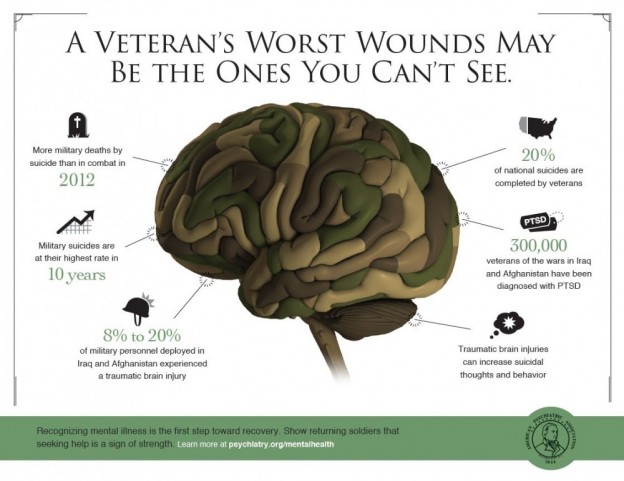
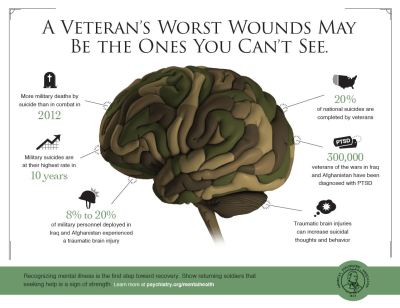
veteran-infographic

When You Thank A Vet

Today marks Veteran’s Day here in the United States. It’s a day we set aside to honor those who have fought so valiantly for our country.

With the advent of technology, reaching out to Veterans to declare your support is easier than ever before. Businesses, organizations, individuals – everyone is sending a shout out to Vets today. It is amazing to see the support flowing forth.

But.

I think there is an aspect we often forget about as we reach out to give our thanks to the vets who have fought for us through service in various branches of our military.

It is important to remember they are human too. They have emotions, reactions, and they too, are remembering their journey in their own way as we lavish them with praise and appreciation.

Some may struggle with PTSD. Others are lost in thoughts of brothers in arms lost to battle. Others contend with the idea that those who thank them for all they have taught them are themselves the teachers and worthy of praise.

We forget, all too often, I think, the intense emotional aspect of war. The toll it takes on all of us. Perhaps this is because best summed up by this quote:

“Humankind cannot bear very much reality.”

T.S. Eliot, Four Quartets

Is war something we are unable to closely associate with human emotion because of the very nature of it? Is battle too fierce? The fighting too gruesome? Do our psyches not allow us to carry the traumatic alongside the sensitivity? Is this our brain’s way of protecting us from an emotional overload? Or is it because the majority of soldiers for so long have been men and therefore not allowed to operate as anything less than robotic, keeping them from processing the emotions battle swells within them?

We do not broadcast our losses on the evening news as often as we should, a point made in this deeply moving post about a citizen sharing a last flight home by a soldier. Instead, we relegate ourselves to separation from the tremendous loss and focus instead on the reunions of soldiers with loved ones. We are not acknowledging, in my humble opinion, the steep and tragic cost associated with prolonged battle. The loss, the heartache, the raw emotions steeped in battle and drenched in blood shed against tyrants who dare to threaten our freedoms, are far too great for humanity to bear.

We, for whatever reason, do not often equate humanity with soldiering. Empathy and compassion fails to mesh well with the ferocity of battle. So when soldiering and emotion intersects, as it often does on Veteran’s Day for so many, it can be triggering. It may leave some feeling overwhelmed and not knowing quite how to deal with the gratitude flowing their way.

It is not like Christmas or Thanksgiving. We are not celebrating, we are honoring. There are no gifts or celebratory meals. Instead, there is quiet recognition and thoughtful consideration of all that our veterans have sacrificed. Like anything else, we all choose to do this differently for it is intensely personal for those of us who have a veteran in our lives. Whether they be friends, brothers, sisters, fathers, mothers, grandfathers, or grandmothers, how we choose to honor their service and their memories is as unique as a snowflake which falls with the first snow.

We may choose to honor them quietly or we may make a public statement. For me, today, I am wearing my grandfather’s tag and will probably at some point watch Mister Roberts, a movie I used to watch with my grandfather quite often. Both of my grandfathers served in the Navy in WWII and although they never spoke of it with me, I knew they carried their experiences with them, as all veterans do. Military service is a part of their souls and the very fiber of their beings. Once you have served, there is rarely a time when you can untangle soldier from human. Therein, in my opinion, lies the challenge in coming to grips with the flow of gratitude on Veteran’s Day.

I only saw my grandfather cry once – when we were at a play meant to raise funds for the WWII D-Day Monument. As the telegraph notifications came in reporting the deaths of the soldiers in Bedford, Virginia, the hall went completely silent. Deeper than an audible silence; the kind of silence which envelops a room when there is great respect for what is occurring. I glanced over at my grandfather at this point to see his cheeks soaked in tears. I quickly looked away and struggled to hide my own flooded cheeks shortly thereafter. We never spoke of these tears but I never forgot them for they symbolized the emotional depths of war for me and always will.

For many, in particular those who have seen war since 2001, today is different. The memories are recent, the pain is ongoing, and they have joined the Greatest Generation in knowing the pain of war. Yes, the pain. War is not some glorified wonderful thing. It is not the Hollywood version where there is a rise to action, action, and then a conclusion. It’s messy, it rips families apart, it pushes soldiers to their limits and back again, and if they’re lucky, they get to come home, alive and still intact both physically and mentally. For all too many, this is not the case, and their wounds may not be visible to the eye.

veteran-infographicSuicide rates among soldiers, for the first time ever, outnumbers the deaths occurring in active combat. There is PTSD, and number of additional other issues which, again, because of technology and advancements in mental health awareness & medicine, are now at the forefront of the adverse affects of war. Women who are deployed face a higher risk of Postpartum Depression which in turn, affects an entire generation. War truly leaves a mark on every one of us, both on and off the battlefield.

So today, when you thank a veteran, particularly a younger veteran, take the time to embrace that they may be filled with emotions they may not be ready for today as a result of the onslaught of gratitude. Take the time to realize that these brave men and women have lost loved ones, brothers in arms, and they are replaying this in their heads as you thank them for their service. Respect their journey but also take the time to check in with them and ask them how they are doing.

For they are soldiers, they are brave men and women, but beneath it all, they have a heart, a soul, and they have bled for us, some more than others. They deserve nothing less than our greatest compassion and understanding for the hell they witnessed on the battlefield as they fought for freedom from tyranny in our great country’s name.

How the @BostonGlobe got Postpartum Depression Wrong

With more news stories mentioning Postpartum Depression these days, it is becoming painfully obvious that reporters are scrambling to get their facts straight. Bless them for trying but sometimes, even with the best of intentions, they fall short. Like Karen Weintraub’s article “When the ‘baby blues’ are something more” at the Boston Globe on October 21, 2013.

Karen defends herself in the comments (all two of them at time of writing) about the term “baby blues” by saying that in her researching for this piece, she discovered there is such a thing as baby blues:

Boston Globe Comments

Kudos to Ms. Weintraub for doing enough research to realize that baby blues ARE distinct from depression.

BUT.

There are a multitude of omissions and errors within the article as it stands right now. Let’s go through them:

Ms. Weintraub breaks the Perinatal Mood & Anxiety Disorder experience into only three groups:

  • Baby Blues
  • Postpartum Depression
  • Postpartum Psychosis

Immediately, sirens sound. Particularly because the case study, a Nicole Caligiuri, a first time mother, states she felt “angry and anxious” all the time. While anger/irritability is a sign of depression, anxiety combined with anger is typically (in my non-professional opinion) more closely related to an anxiety disorder. Ms. Caligiuri, however, was diagnosed with Postpartum Depression.

By ignoring the additional facets of the PMAD spectrum, Ms. Weintraub does a severe disservice to those mothers who may be suffering from Postpartum Anxiety, Postpartum Post-traumatic Stress Disorder, or Postpartum OCD.

Weintraub states that 50-85% of new mothers experience baby blues, 14% experience postpartum depression, and a “fraction of 1 percent of new moms” experience Postpartum Psychosis. If you go by those numbers (at the higher levels), nearly 100% of all new mothers experience one of these three phenomena and none experience Postpartum Anxiety, Postpartum Post-traumatic Stress Disorder, or Postpartum OCD.

According to Postpartum Support International’s Get the Facts page:

  • Approximately 6% of pregnant women and 10% of postpartum women develop anxiety. Sometimes they experience anxiety alone, and sometimes they experience it in addition to depression. 
  • Postpartum Obsessive-Compulsive Disorder (OCD) is the most misunderstood and misdiagnosed of the perinatal disorders. It is estimated that as many as 3-5% of new mothers will experience these symptoms.
  • Approximately 1-6% of women experience postpartum post-traumatic stress disorder (PTSD) following childbirth.

But in Weintraub’s scenario, there isn’t room for the nearly 20-27% of women who develop these particular Perinatal Mood & Anxiety Disorders. As a survivor of Postpartum OCD, I find this troubling. Particularly because OCD can scare a new mother into thinking she is experiencing a form of Psychosis due to the horrific intrusive thoughts.

As I have mentioned multiple times, it is beyond important to differentiate the varying aspects of a Perinatal Mood & Anxiety Disorder. Why? Because when you lump Postpartum Psychosis sensationalism in with Postpartum Depression, things get murky. You scare new mothers who may be a bit depressed into thinking if they go get help, they will be thought of as potential criminals and have their babes ripped from their arms the instant they admit to feeling anything less than happy.

An additional issue with this article is the strong focus on early motherhood. The logic of this focus is evidenced by the study on which it is centered but a quick mention that PMAD can persist beyond early motherhood would have been a quick fix for this bias.

Why is it important to emphasize that PMAD onset can extend beyond early motherhood?

Often, many mothers do not realize they have issues until they are well into the 6th month or more. I have had mothers contact me at almost a year postpartum to share that they think something has been deeply wrong since the birth of their child but they did not recognize it until now. Many Perinatal Mood & Anxiety Disorders crop up within the first 2-3 months, often immediately after the period of baby blues, but some mothers do not recognize them or even get hit with them until much later. PMAD’s can crop up  within the first 12 months after birth and even then, may not be recognized until much later. But this information is not mentioned anywhere in the article nor are we ever told at what point Ms. Caligiuri sought help.

I deeply appreciate Ms. Weintraub’s effort to reach out to Dr. Katherine Wisner and Dr. Michael O’Hara, respected experts in the research field of Perinatal Mood & Anxiety Disorders, however, I wish she (or her editor) had taken the time to allow this article to be a bit more clear regarding the wide scope of Perinatal Mood & Anxiety Disorders. I also wish a side bar had been included to resources for women and families who are struggling with these issues, particularly given that Ms. Weintraub included this quote from Dr. O’Hara:

Social support is probably the most important thing to provide a new mother, who is at a particularly fragile point in life, said Michael O’Hara, a professor of psychology at the University of Iowa, who has been researching and treating postpartum depression for three decades.


Postpartum Support International will connect new mothers with social support. Also, specifically in Hadley, Massachusetts, there is Mother Woman, a fabulous organization who is making fantastic strides toward improving access to support and care for struggling women & families. Advocates in the trenches, such as the volunteers with PSI and Mother Woman, recognize how important it is to have peers support each other so they do not feel all alone in the dark. It is an oversight that neither of these organizations are mentioned anywhere in Ms. Weintraub’s piece.

Overall, Ms. Weintraub, despite making a few blunders, seems to handle the issue at hand with a respectable grace. The study at the heart of the article focuses on the development of depression in children born to mothers who struggled with depression but Ms. Weintraub is fabulous in her handling of this issue, particularly with this paragraph:

But parents shouldn’t feel like they’ve ruined their child’s life if they go through a period of depression, Pearson said. The increased risk of depression in their children is small. Overall, 7 percent of teens are depressed, compared with 11 percent of teens whose mothers were depressed early in their children’s lives.

She side-steps the potential onslaught of guilt and gracefully allows parents to breathe a sigh of relief by including this information from the study’s co-author.

As I stated in the opening, coverage of Perinatal Mood & Anxiety Disorders is greatly improving. But we still have a long way to go to get to fully informed reporting. For the most part, Ms. Weintraub’s article is generally free of sensationalism, includes quotes from respected experts, and manages to allay any potential guilt a new mother with a PMAD may feel in reading it. However, it is still just a few small adjustments away from being truly spectacular and informative.

The Elephant in the #PPDChat Community

Inferior without your consent

This past week, Katherine Stone over at Postpartum Progress announced the the Warrior Mom Leadership Team, an editorial team comprised of a diverse group of writers and advocates, who will help run her blog throughout the year. I am a member of this team along with several other fellow dedicated and amazing survivors who have battled through so much. Along our journeys, we all have been incredibly honest, dedicated, vocal, and driven to share our stories. Some of us started with the most basic of intentions but somewhere along the way, we became recognized advocates through hard work and repeatedly putting ourselves out there sometimes meeting with Fall Get Uprejection along the way. We brushed ourselves off and put ourselves back out there all over again.
Often, we did not even mean to put ourselves out there but had our stories noticed for whatever reason, forced into a higher level of publicity with our very personal battles than perhaps we were ready to deal with. So we rolled with it because we had to not because we wanted to.

One of my primary goals with my growth as an advocate was to develop an online network women and families could access 24/7. My goal with #PPDChat was not to develop a network to lift bloggers and advocates to higher popularity or to create popularity cliques within the community. My goal was to increase peer support for women and families to access whenever they need it, wherever they were. The worst aspect, for me, about a PMAD, is the overwhelming feeling of being all alone. That isolation, the fear that YOU are the only one stuck in this dark hell, is absolutely terrifying and what needs to be remedied first.

#PPDChat exists to create a sisterhood and community, yes, but it is not meant to cause divisiveness or jealousy of any friendships which may seem to net more opportunities or be more intimate than others. I realize these things will happen because this is the nature of humans in a group setting. We gravitate toward others like us. It’s hard-wired deep within us to do so.

The primary goal with #PPDChat was to create a safety-net. To move those who are hurting and isolated toward a place of healing, warmth, and eventually, a return of joy. One of the side-effects of this community has been the development of advocates as they have felt supported and buoyed by the community at large. Certain members have grown stronger in their advocacy voices as they have discovered they truly are not alone and witnessed the power of conjoined voices will do for a woman still fighting. Other members have continued along their own personal path of healing, not joining in the advocacy movement for their own personal reasons. But we have come this far together, as a community.

One of the definitions of community is: “a feeling of fellowship with others, as a result of sharing common attitudes, interests, and goals.” #PPDChat is definitely all of those and what keeps it fascinating is that even though PMAD has brought us together, our interests are broad and undefined – allowing for individual friendships to organically develop. Not once have I ever seen it as something which has intentionally excluded certain members. If anything, there have been multiple opportunities to include yourself with other members through guest posts, guest hosting within #PPDChat, and various other outreach situations. We all operate within our “circle of comfort” because of our various issues, something which may limit our exposure to the Social Media world at large, something which often moves faster than the speed of light. It can be exhausting to keep up and we are all moving at a different pace.

Regarding reaching out to involve everyone on an equal footing, Katherine has multiple opportunities for being involved at Postpartum Progress:

I, too, have offered to post guest stories and often highlight Postpartum Voices of the Week. I realize I have been slack over the past year but now that I am actively blogging, I plan to resuscitate this part of My Postpartum Voice. It is important to remember, however, that neither Katherine nor I nor every advocate can possibly read every single thing on the internet about PMAD’s. So we all highlight what we can when we can, which leads to some people feeling left out while others get a few minutes in the spotlight which may lead to other “opportunities”.

That said, those who have become more public and vocal are not any better than those who have not.

Repeat that.

Those who have become more public and vocal are not any better than those who have not.

This is where we return to the quote with which I started:

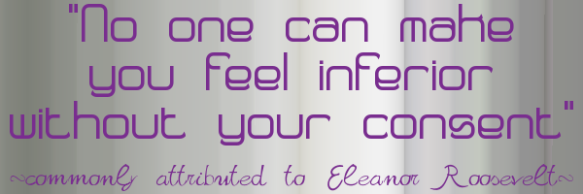
“No one can make you feel inferior without your consent” ~Eleanor Roosevelt~

When you allow a decision which seems exclusive to hurt you so deeply you lash out toward those who have been included, you are giving that decision power over you and thereby creating your own storm of emotions.

For those of us who ARE more public and vocal, opportunities are not viewed as something we covet or even necessarily seek out. For many of us, the “opportunities” may even be anxiety-inducing but we see them as an opportunity to educate, inform, and raise awareness so we charge forward. We do not see the opportunities as making us better than those who are not “chosen” for these opportunities – they are not a platform on which we place ourselves so others may look up at us and feel left out. Our words, our fight, our journey, for whatever reason, has included these turns and curves. As I emphasize ALL THE TIME:

EVERY JOURNEY IS DIFFERENT AND MUST BE RESPECTED AS SUCH.

I will not apologize for being a member of Katherine Stones’ Warrior Mom Leadership Team. No one should have to apologize for being a member of this team nor should Katherine be made to second guess the folks she has placed on the WMLT. Katherine is entrusting her blog, a blog she has worked tirelessly to develop a strong, ethical, and respected reputation for, to the members of this team. I get that she needed to choose people SHE felt she could trust to continue the tradition of the brand she has developed. I know I would be unable to trust my blog to just anyone. I respect her decision as just that – HER decision.

I feel I would be remiss if I did not also point out that this is not an award, this was not a contest, and we are not being paid to be on the WMLT. It is volunteer – and something we agreed to do because it promotes the community and it is going to help further reduce the stigma and misconception of PMAD’s.

Would I be saying all of this even if I were not on the WMLT?

Hell yes.

Because I GET that it’s her choice because it’s Katherine’s blog.

We cannot (and should not) internalize everything. We cannot expect every single door to open for us – the doors which open for us are the doors MEANT to open for us. Some may take more work, more drive, and some may seem as if they open easier for other people.

While it’s perfectly normal and acceptable to feel left out, the manner in which this has been expressed over the past 48 hours in reaction to Katherine’s announcement has greatly saddened me. The sub-tweets, the sub-textual expressions, and the chit-chat behind the backs of those chosen (and yes, I saw a good deal of this on Twitter) has broken my heart because for me, this defeats the very idea of a unified community.

We are all advocates. We are all responsible for dismissing stigma and fighting back against myths with our voices and our journeys. When we fail to support those who, for whatever reason, end up surging forward in the public realm, we fail the community as a whole.

Am I saying it is wrong to be upset?

Absolutely not.

What I AM saying is there needs to be honesty and respect in how we express these emotions. There needs to be the realization that your words WILL be read by those who have managed to not be “looked over” or become “it” girls. Words DO hurt. I get that you are disappointed and you are hurt, I do. I have felt that myself when yet again, my blog fails to gain any recognition or when #ppdchat fails to gain any recognition in an awards process. It’s frustrating as hell. But do I publicly denounce those who have won recognition? Hell no. I congratulate them with grace and deal with my disappointment privately.

BECAUSE THAT’S WHAT YOU DO. You support the community, you empower it, and you rejoice that the subject matter is receiving attention. It does not matter WHO is doing it, but WHAT is receiving the recognition. It is about furthering the cause, not about garnering individual attention. (Again, however, human nature celebrates when individual attention is received and deflates when it is not – hard-wired, not a faulty reaction at all).

The moment you make it about “ME” is the moment you are not advocating for “US” and that, in my opinion, is failing to kick stigma’s ass.

In that scenario, no one is a winner.

We all have different reasons for writing and when we summarily dismiss the achievements of those around us based on a personal negative reaction, we damage any progress we may make as a whole.

I write because I love to write and I will be damned if I let someone journey along this road alone. I do not write for glory or to be an “it” person, whatever the hell that is. I have never, ever considered myself to be an “it” person, in fact, I have always thought of myself as the complete opposite.

It’s okay for people to be sad and I’m not trying to fix it but at the same time, in expressing their feelings, they are dragging those who HAVE been chosen down and not expressing their disappointment in a healthy manner, which leads to divisiveness and guilt. “United we stand, divided we fall” and all that.

For me, accepting a place on the WMLT means Katherine can focus on doing more with Postpartum Progress, the non-profit which means she can make even MORE strides against PMAD’s. She’s been kicking ass for years with her blog and is already making waves with her non-profit. So if she asks for help, I will say yes as long as it doesn’t interfere with what I already have going on (because it is healthy to make sure you don’t overload your plate).

I’m speaking up because I do not want this recent decision to divide the community. I want us to remain supportive of each other. I want us to be able to express disappointment without attacking other members and without making other members feel guilt and/or shame for achieving something for which others feel they have been “overlooked.” When we drag one person down for achieving something, we impede EVERYONE’S progress toward a better tomorrow. Is that what we want?

We, all of us, are better than this.

We, all of us, know battling alone sucks.

We, all of us, want to win the fight.

We, all of us, are winning this fight, in our own little ways.

Let’s just make sure we do it together – as a team.