Tag Archives: sharing the journey

Sharing the Journey with My Husband

As I sit here having just read this interview, I am blown away by how far we have truly come since the birth of our first child. We have overcome so much and I know it is because neither one of us is afraid of staring adversity in the eye. Chris and I met November 2000 while we worked at the same company. We’ve been inseparable ever since, no matter what the storm brought to our world. Relying on each other’s strengths and shoring up each other’s weaknesses, we’ve managed to build an extremely strong marriage that has been tested time and again in the short six years of wedded partnership. And you know what? We’ve come out of each storm stronger and closer than before. There’s a quote by Louisa Alcott:  “I am not afraid of the storm for I am learning to sail my ship.” Together we are not afraid of the storm and have slowly begun to master sailing our ship through whatever mighty waves come our way. I hope you enjoy this honest and compassionate look into my PPD experience from my husband’s perspective.

Would you share your experience of watching the woman you love suffer from Postpartum Depression? What were some of the emotions you went through as you watched me spiral downward and what was the hardest part for you?

Wow, thats tough. I guess it is hard because I have blocked that out of my mind. I think the best way to answer that question is to just explain what PPD looks like from the outside from the perspective of someone who is uneducated in the signs, because that is where I was when it all began. Honestly I really didn’t know what to think. All I knew is that the woman that I married and loved was gone. You were reclusive and moody most of the time. All I really wanted to do is just tell you to snap out of it, and I think that I did a couple of times. I thought you had become lazy and selfish. I knew something was wrong, but I thought it was more of a problem with lack of motivation and lack of discipline. It made me angry. After our second daughter was born, I had educated myself. I found that even though I got frustrated with you, I understood. I probably didn’t show it all the time, because I had my own stresses going on with sixty hour work weeks and the hospitalization of our daughter. The hardest part of it all though was watching you hurt. I just wanted so bad for you to be happy and it just didn’t seem to happen.

Looking back, would you agree that the lack of diagnosis/treatment of my first episode compounded my second episode?

Definitely. I actually believe that it just carried over into the second pregnancy. You never really recovered from the first episode. It wasn’t until nearly a year after the birth of Charlotte that I even began to recognize you as the same woman that I married.

You recognized my PP OCD the second time around well before I was able to admit there was a problem. In fact, you even made the call to my OB’s office for initial treatment. What were some of the warning signs that alerted you to the beginnings of this episode?

You had become anti-social. You were sad most of the time. You did a lot of cleaning, and please don’t take this the wrong way because you really are a great housewife, but neither one of us is Mary Poppins when it comes to keeping the house clean. What really tipped me off though was that you just didn’t seem well. You wanted to sleep a lot and you also seemed to snap very easily at the smallest things.

My hospitalization absolutely frightened me but ultimately became the turning point in my recovery. Would you share your memories and feelings surrounding my hospitalization?

Honestly, I was scared to death as well. I didn’t know what I was going to do. I was working sixty hour work weeks with a two year old and newborn at home and I didn’t know how I was going to take care of them. And how would I juggle having to make the hour drive back and forth to the hospital that you were in to bring you the things that you would need and to get milk for Charlotte? I didn’t know how long you would be there. I was really scared. I was also concerned for you. I love you and didn’t want to see you hurting. I was also thankful for the fact that you were getting the help you needed. When you called me at work and told me that you were having intrusive thoughts, I couldn’t get home fast enough. Who knows what the outcome would have been had you not gone to the hospital that day? That thought still crosses my mind today. I am so grateful that you understood the severity of your problem and took the help that was given to you. I think it all goes back to education.

We worked very hard together to prevent PPD after Cameron’s birth. What were some of the differences in how we approached the postpartum period this time around?

Well, I know that you took antidepressants during your pregnancy, but we also had a set of written guidelines as to what to look for and for how we would respond if certain events took place. We tried to educate (there’s that word again) our families about the signs to look for and also what were the right and wrong things to say and do in the event that PPD reared it’s head again. During your second bout with PPD I really think that we were better educated, but our families were not. This caused a lot of tension and strife. With the whole family knowing what to look for, it helped make everyone sympathetic to the situation. Boy do I wish we had that in place when in the throes of your second episode.

What is the biggest lesson you feel you’ve learned from my PP OCD episodes?

I always viewed mental illness as something that happened to other people. I viewed people with mental illness as weird or abnormal. The biggest thing I learned is that mental illness can strike anyone, at any time. I suffer from ADHD, depression and anxiety and would have never sought help with my issues had I not educated myself about yours.

What has it been like to watch me grow from mother suffering from PPD to the PPD Advocate I am today?

First I would like to say how proud I am of you. You have turned adversity into triumph. I have been amazed at the transformation. Most people just take their hard knocks and then move on, but you have taken up a cause and have made a difference in other peoples lives. I am inspired and in awe. I love you and encourage to keep up the great work that you are doing.

Share with us what you find to be most challenging about fatherhood. The Least challenging.

I have always been a rather impatient person. Fatherhood is teaching me patience. That is a challenge since I tend to want instant results. Maybe that is just the ADHD in me. Kids sort of move at their own pace, and I have learned that they are learning all along the way. To rush them along is not only detrimental to their growth and development, but it is also unfair to steal those learning experiences away from them. The least challenging is loving those precious kids. I just can’t seem to get enough of them and can’t give enough hugs and kisses. That is not a challenge at all.

How important do you feel it is to hold onto a sense of self once you become a parent? What are some ways a father can provide some much needed alone time?

You must know who you are before you can help someone else, namely your children, discover who they are. The best way to do that is to have some “me time”. It is very difficult to get when you are a parent between diaper changes and cleaning mud (or other mud like substances) off the walls, but is essential. Sometimes I will stay up late to get some alone time or will go to the store. Don’t forget though that you and your spouse need some time together too. Also, it is ok to ask your wife to take the kids for a few hours while you go get some coffee. Just remember though that you need to provide her with that same luxury as well. Ask the Grandparents to take the kids too. Even if it is just for an hour or two, you and your spouse can have a nice dinner or just go home and work on some of those household projects that you have on your “honey do” list.

And last but not least, if you had one piece of advice to give an expectant father (new or experienced), what would it be?

Educate, educate and when it’s all through educate some more. You can never fully prepare yourself for everything that fatherhood throws at you, but knowing some of what to expect takes a lot of the anxiety away and relieves a lot of the stress on you and your spouses relationship

Sharing the Journey with David Klinker

 There is a reality as powerful and profound as Motherhood. It’s Fatherhood.

This month we’ll be focusing on the Father’s point of view through interviews with David Klinker, the Father’s Coordinator with PSI, Dr. William Courtenay, a psychologist and Men’s Coordinator for PSI (meaning he works with men who are suffering from PPD – yes, that happens too), Michael Lurie, author of My Journey to Her World, and my own husband’s experience with my PPD.
Today you’ll read about David Klinker, his survival through his wife’s PPD and his website, Postpartum Dads, which is designed to be a resource for new Dads. David is wonderful and I often send families his way because I belive that the entire family needs to heal and recover – not just mom. Thanks David – for your hard work and for supporting Dads everywhere. You are doing amazing things! 

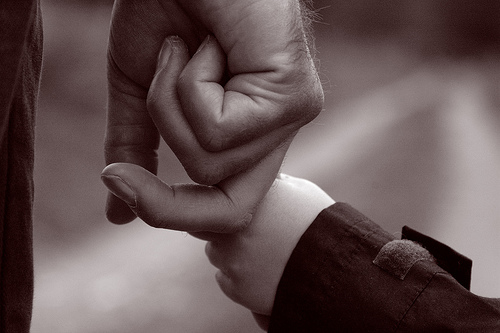
 Fatherhood” © 2005 Paul C. Smits

© 2005 Paul C. Smits

1) What is it like for a partner to witness a Postpartum Mood Disorder in action?

Things for us spiraled down very quickly.  In some ways things happened so fast that I felt like I was taking part in some made for TV drama.  At times I felt almost detached, like I was just playing a role.  At other times I felt devastated thinking about losing Denise and all that we had together.  I was very lucky to have supportive family and friends; otherwise, I know it would have been much worse.  Fortunately, just as quickly as things spiraled down, Denise got better.   


 2) Would you share your family’s experience with PPD? When did you first realize something wasn’t quite right and what steps were taken to get help?

 Here is our story:  https://home.comcast.net/~ddklinker/mysite2/Johns_Story.htm


3) Has becoming a Father changed you?

 The moment I looked into my daughter’s big brown eyes for the first time, I was a changed person.  I felt a huge sense of responsibility come over me as I sat there in the delivery room holding her.  The greatest changes came from needing to consider her needs over my own. 


4) What aspect of being a Father is the most challenging? The Least?

 I think the most challenging aspect of being a father is dealing with the fear of doing it wrong.  How do I know that the choices Denise and I make are the right ones?  Are we doing enough for the kids, or too much?  What makes us qualified to shape the lives of two wonderful human beings?  I deal with these fears but remembering that Denise and I are there to provide opportunities, guidance, and boundaries for our kids.  They shape their own lives, we just have to do our best to help them make good choices in their lives.

The least challenging aspect of being a Father is enjoying the special times together when everything seems right with the world.  Whether it watching them ride their bike for the first time, watching them catch their first fish, or just driving home after a softball game.  There have been many times where I know I’ve gotten the father thing right and it’s a great feeling.


 5) How did you get involved with PSI and how rewarding has it been to work with Fathers who are where you have been?

I got involved with PSI the same way many other volunteers have, I talked with Jane Honikman.  I knew that I wanted to do something to help other dads and Jane was very encouraging.  PSI has recognized the importance of reaching out to partners for a long time and needed someone to take the role as Father’s Coordinator.  I volunteered and was very warmly welcomed in the organization.  I have met many wonderful people through PSI and it has been a great experience for me.

My main involvement at PSI has been talking to fathers on the phone, responding to emails, and maintaining my website.  I usually only have 5-10 calls and maybe 10-15 email contacts within a year.  Most of the calls are from dads that feel cut out and rejected by their wives.  These dads feel devastated and powerless to doing anything about the situation.  I have several stories on the postpartumdads.org website from dads dealing with rejection.  I have to say, these calls are tough and I often feel inadequate to provide the kind of help these men desperately want.

On a more positive note, I have had several phone calls where I do feel I have made a difference.  It is very rewarding when I feel like I have helped someone through a tough time.  I have also received a lot of positive feedback on the website, especially the stories. 


6) What led you to develop your website for fathers/partners?

After taking some courses through Landmark Education I knew that I wanted to make a difference in the world.  While talking with a friend whose wife was experiencing PPD I realized I didn’t know what to say to help him.  I talked to him about my experience but I didn’t know what resources were available to help.  After looking for resources on the internet I saw that there was very little directed towards the needs of dads dealing with the depression of their wives.  I came up with an idea to develop a website that featured stories from other dads with very practical suggestions.  I got some great encouragement from the local PSI coordinator Shelly Ashe and from Jane Honikman.  With very little experience creating website, I figured out the basics and started with my own story.  I have been fortunate to have other dads contribute stories and I am very proud of what we have created.


7) Just as women with PPD learn that taking care of themselves is important, this is a lesson that Fathers should heed as well. What do you do on a regular basis to feed your soul and ensure that you stay in a good place?

I “feed my soul” by doing projects around the house, riding my mountain bike, taking walks, and playing with the kids.  I’m currently building a retaining wall in the back yard and I get great satisfaction out of seeing the progress I make each week.  It’s the most physical labor I get during a week.  I try to mountain bike once a week and the 20 minutes of flying down hill, after the 1 hour going uphill, are the best therapy possible.  Everyday at lunch I take a 20 minute walk that helps to clear my mind.  I also like to spend as much time with the kids as possible.  I enjoy being with them and it’s a great way to see the world through their eyes.


8 ) Did PPD strengthen or weaken your marriage? Do you feel that you both are in a better place now than prior to PPD?

PPD strengthened our marriage.  Denise and I have been through some very tough times together and we have been able to support each other through them.  Each time we have made it through the tough times we have felt closer as we have more invested in each other.  Watching Denise recover from PPD, as well as a life-threatening illness, has been an inspiration to me and many people around her.


9) What aspect of Fatherhood should be celebrated the most?

I see my primary role as a father to be setting the boundaries for my kids.  This means keeping them safe, but it also means allowing them to take risks and sometimes going further then their mom would allow.  I see myself as being there to back them up as they try new things, from riding a bike, to the first day at a new school.  I think the role that fathers play in fostering independence and confidence should be celebrated.


10) If there was one piece of advice you could give to an expectant father (new or experienced), what would it be and why would this be important for him to hear?

My one piece of advice to new dads is to trust your instincts.  If something doesn’t seem right it probably isn’t.  That applies to dealing with PPD was well as dealing with setting boundaries.   


Sharing the Journey with Karen Kleiman

Yes, I know this month’s interviews are dedicated to moms of women with PPD but I am just so excited about this interview that I just had to put it up!

If you’ve been following this blog from the beginning (and thank you if you have!), you know that Karen’s book, What am I thinking? Having a Baby after Postpartum Depression was what I grabbed immediately after the positive pregnancy test. It was that very book that led to the inspiration for this blog so in a way, this is coming full circle for me because it was about this time last year that I found out I was pregnant.

Karen runs The Postpartum Stress Center in PA and her website and books are the first places I will send a new mom or family member. She’s got her stuff together and in my opinion has some of the best straightforward advice and information for women and their families! I am so honoured to be sharing this with you and even more honoured that Karen agreed to do the interview. Thanks Karen for all your hard work! Keep it up!


What led you to specialize in women’s issues?

To steal a line from my new book, “Ever since I was a young child, I wanted to be a mother.”  I remember playing with dolls and always taking on the role of the perfect mother.  I remember proudly asserting to my own mother, “when I grow up, I’m going to be a mother!”  After studying to be a therapist and then, becoming a mother myself, it felt natural to narrow my professional focus to women and their unique needs.

How did the idea for The Postpartum Stress Center come about and what brought it to fruition?

When my children were born, twenty plus years ago, I went back to work part-time as a social worker and trained to be a lactation consultant so I could connect with new mothers when I wasn’t working.  That experience provided one of my earliest exposures to the emotional upheaval of new motherhood.  Women started telling me how bad they were feeling.  (As you can imagine, if you can talk to a stranger about your nipples, you can talk about anything!)  I wasn’t sure if it was because I was a therapist or because they were so overwhelmed, it didn’t matter who was on the other end of the phone, but either way, I became aware of how many women weren’t feeling good after they had their babies.  Some felt bad about their babies, some felt bad about their marriages, some felt bad about them selves.  The common themes were: lack of support, exhaustion, and chronic worry. 

So when I went into private practice, I started studying postpartum depression to better understand what some of these women might be experiencing.   It didn’t take long for me to realize that most of these women were falling through the cracks of the medical community, remember, this was twenty four years ago.  No one was talking about postpartum depression like they do today.  As my practice developed and I started treating more and more women with depression, it was apparent how insufficient the healthcare system was in response to this great need.  This is when my clinical practice evolved into the next phase which included psycho-education, trainings, in-services, and writing, in order to enhance the community’s understanding and promote optimal treatment options.

As a mother yourself, what has been most challenging? Least challenging?

As much as I hate to admit it… this Empty Nest thing… I don’t love it.  It’s funny, I often think to myself how fortunate I am to have such a loving husband (twenty five years with me cannot be easy!), a fabulous career and all kinds of wonderful things to fill my days.  Still, it’s hard not to have the kids here.  Both are close enough to home, but, it’s not the same.

Least challenging?  Laughing with and about my kids.  You know that feeling that a new mother gets when she hears her baby belly laugh for the first time?  It’s like you want to stop the whole world and tell everyone to listen to this exquisite sound, as if no one had ever heard a baby laugh before!  Nothing in the world feels better than hearing your baby belly laugh.  And when the baby is 15 years old, or 21, or 24?  It feels exactly the same way.  It’s magical.

How has becoming a mother changed you?

Motherhood has inspired all that I do, most of what I say, and much of who I am.

What activity refreshes you the most when you’ve had a rough day?

I love coming home and sitting on the deck with my husband after a day’s work; surrounded by flowers, birds, dogs, good food, and lots of laughs.  It is actually essential to my well-being.  I get very cranky if I don’t laugh.

In your opinion, what aspect of motherhood should be celebrated the most?

I don’t think there is any aspect of motherhood that can be singled out to be celebrated.  I truly think all mothers, as well as fathers, always do the best they can at any given moment.   Women need to stop comparing themselves to others; they need to try to quiet the critical voice inside their own heads and believe in themselves.  Mothers need to learn to celebrate their own accomplishments, big and small, and realize the greatness in all that they do.  If they wait for appreciation from others, they will, undoubtedly, be disappointed and disillusioned.

What led you to write The Postpartum Husband?

After working with the postpartum population for some time, I began to realize that husbands were often kept out of the treatment loop.   As more and more partners were joining our sessions, I became aware of their enormous influence on the recovery process.  Not only did they need information and support, but their presence and their connection to the process made a significant difference in how women recovered.

Your book, What Am I Thinking?: Having a Baby After Postpartum Depression, was what I grabbed when I got my positive pregnancy result for Cameron and it really helped me to put a positive spin on my pregnancy – inspired this blog, actually. What went into the authorship of this book and why would you recommend it to women who are facing either a decision about pregnancy or an unexpected pregnancy after experiencing a Postpartum Mood Disorder?

Well as you know, the decision to get pregnant after experiencing a previous postpartum mood disorder is a difficult one.  In my practice, I have seen that women will feel more confident, more in control and less anxious if they have information.  The information gathered from a previous experience of depression can arm a woman with details that can help her learn a great deal about herself.  It has been shown that preparing for the postpartum period by fortifying her resources can reduce the likelihood of a full-blown depression.

  As with all the books I have written, the women I see in my practice have literally led the way.  They tell me what they need to know, which is how I determine what should be addressed.  Postpartum women have taught me what I know and what I need to teach others.  I’m so glad to hear my book helped support you through your pregnancy and postpartum period!  And it inspired this blog?  What a sweet thing to say.  I think this blog is such a fabulous idea and I’m certain it has offered much support to women going through similar circumstances.

 I hope you don’t mind me plugging my newest book which is due out this September.  “Therapy and the Postpartum Woman: Notes on Healing Postpartum Depression for Clinicians and the Women Who Seek their Help” (Routledge, 2008 ) will be a nice companion book for women with PPD who are either in therapy or considering therapy. 

Any sage advice for families currently experiencing issues with a Postpartum Mood disorder? What steps should they take to help Mom get better?  

Talk to her.  Sit with her.  Stay close to her.  Tolerate her anxiety and ambivalence.  Encourage her to contact her healthcare practitioner.  If she doesn’t, make sure she knows you will do that with her or for her.   Do not assume she is fine if she says she is.  Stay connected to the process.  Do what needs to be done to enable her to sleep, eat, rest and get out for fresh air.  Remind her she is loved and no matter how long this takes, you will be there.  Tell her she will not always feel this way. 

If there was one piece of advice you could give to an expectant mother (new or experienced), what would it be and why would this be important for her to hear? 

An expectant mother is at a turning point in her life.  She knows that no matter how things unfold, her life will never be the same.  This can be experienced with great anticipation or with great anxiety.  Either way, it is best to prepare by being mindful and attentive; to her own needs, to those of her partner and to those of her marriage.
 
For women who may be symptomatic during or after their pregnancy, I am reminded of a wonderful quote by Emory Austin:

“Some days there won’t be a song in your heart.  Sing anyway.” 

Sharing the Journey with Helena Bradford

Welcome to the second interview in this month’s series, Mothers of Women who have Struggled with PPD. Today’s interview is with Helena Bradford, mother to Ruth. Helena has courageously dedicated her life to helping women with PPD through her foundation, the Ruth Rhoden Craven Foundation. She tragically lost Ruth to PPD as a result of inadequate medical care and lack of information provided by medical professionals and is passionate about not letting that happen to anyone else. Helena has a wonderful quote as part of her email signature and it has immersed itself in my life and has kept my bad days limited to being singular in occurence as I remind myself of WHO holds my tomorrow. I want to share it with you and thank Helena for sharing it with those who email her.

I don’t know what tomorrow holds,
but I know Who holds tomorrow.

Helena truly has turned her tragic loss into such a powerful and wonderful shining light, filling those who are suffering with hope and allowing them to know that yes, there are people who care and they are NOT alone in their suffering. Thank you Helena, for your bravery, optimism, perseverance, and compassion. All four are awesome traits needed in the PPD world and we are indeed a lucky community to have your dedication to improving and spreading knowledge and resources to women and families who need it!


What was it about your daughter’s experience with PPD that led you to start the Ruth Rhoden Craven Foundation?

 The fact that she received exceptionally poor treatment and died as a result. We received no information about PPD, no guidance in how to help Ruth stay alive, and no support from the medical community. We were certainly never told PPD was temporary and totally treatable, so these are some of the services we provide to the public through our Foundation. 

 How soon after your daughter gave birth did you begin to notice something wasn’t quite right with her? What were some of her primary symptoms?

 Shortly after delivery – like a day or two. Ruth’s symptoms included:  

  • I’m not sure I’m capable of taking care of this baby
  • Social withdrawal; behavior totally out of character

    Ruth made the statement she felt she needed to be institutionalized and that scared her to death

  • MEGA frustration and feelings of inadequacy – how can I do everything that has to be done and do it in a manner acceptable to me?

  • “Freaking out”, internally, every time the baby cried even though she knew there was someone there to take care of Andrew when she didn’t feel she could. Felt it was her responsibility – not someone else’s

  • Couldn’t sleep because her brain wouldn’t quit racing about how she was going to get everything done for the baby as well as her normal, everyday duties – mega problems with sleep deprivation

  • Found her on the floor in a corner between two large pieces of furniture one morning. When asked why she was there, she said she was hiding.


  What were some things that you drew strength from during this difficult time with Ruth?

 My faith in God and the support of friends and church family. 

 Has working with the Ruth Rhoden Craven Foundation taken Ruth’s tragedy and turned it into something positive for you?  

   Absolutely! I believe God has taken Ruth’s totally needless death and saved many lives through the story of her tragedy.  

 How uplifting is it for you when you are able to successfully help a woman and family in need?  

 Indescribably powerful and affirming. Being able to rescue moms and their families from the devastation of postpartum depression/perinatal mood disorders removes some of the senselessness of Ruth’s death. It gives positive meaning to her life and to the beautiful person she was.  

  Do you feel that the resources available to women with PPD have improved? 

 Yes they have, but we still have an exceptionally long way to go to eliminate tragedies and devastated lives and families as a result of PPD. I would say the majority of medical care givers and lay people are still totally ignorant of facts surrounding perinatal mood disorders and their treatment. That’s unacceptable.  


 What were some of the things you did as a mother to try to help Ruth?  

 I lived with Ruth and took care of her, the house and the baby for nearly 6 weeks. In addition, I brought her home with me a couple of times. For 2 ½ months, I was with Ruth more than I was away from her. Although that kind of support is crucial in battling PPD, it may not be enough if bad medical treatment is being received. It certainly wasn’t for Ruth. 

I tried to find good medical care for her but was unsuccessful. I wish I had taken her to Raleigh, NC where there is a PPD support group. I think she would have benefited tremendously from the group. 


 Tell us about your Walk/Run coming up in September that helps to raise awareness for PPD as well as funds for your organization. How did it get started? 

 Well, that’s a really neat story. One of the sweetest men in the world came to our house one night about five years ago to deliver an oxygen machine to my husband that his doctor had prescribed. While Gary was explaining the operation of the machine to us, we got off on the subject of the Foundation. After hearing Ruth’s story, Gary was in tears and said he wanted to do a fundraiser for us. THAT was the birth of the PPD Awareness Walk/Run. 

 The Run is held annually at Hampton Park in Charleston, SC. (For more information, please visit our web site at www.ppdsupport.org.) Both runners and walkers are invited to participate. Each year folks from all over our country, who work with PPD issues, travel to Charleston to participate. To me, that’s the most fun part because I get to meet the dedicated, passionate professionals and volunteers (some are PPD survivors) with whom I work throughout the year. 


 In your opinion, what should all expectant mothers know about PPD? 

  Postpartum Depression is totally treatable and is a temporary illness. No one needs to die as a result of it.  

  • There is help available. Please reach out for it, and don’t hesitate to change doctors if you feel you are receiving improper treatment or if you are not being heard. Postpartum depression is a valid illness that is equally as serious as bipolar disorder or schizophrenia. Thank God, it is temporary if treated early on and properly

  • Although there are definite risk factors for experiencing PPD, to my knowledge there is no way to know who will experience it and who won’t. That’s why I feel good PPD information should be provided in all birthing classes.

Have a plan in place before symptoms appear – just in case you happen to experience PPD. Some of the things a plan should include are:

  • a psychiatrist who is experienced in treating PPD

  • a night nurse or postpartum doula to take care of the baby at night so the mom can get plenty of sleep at night. This is critical.

  • friends/family members who will help the mom for several weeks (minimum) after she comes home from the hospital 


 Any advice for other mothers whose daughters are struggling with a Postpartum Mood Disorder?

 Make sure your daughter finds the best available medical care. Help her understand medication is necessary in most cases, and there is nothing wrong with taking that medication any more than it is to take medication for heart problems, diabetes or a whole host of other physical ailments. PPD is a physical illness that just happens to affect the brain instead of some other “more acceptable” organ in the body. No one deserves or asks for PPD!

Sharing the Journey with my Mom!

Happy May Day!

Today I am starting a series of interviews in honor of Mother’s Day. Interviews this month are focusing on Mothers of women who have suffered from Postpartum Depression. Up first is someone I am very happy to have the privilege of being close to and honoured that she agreed to be interviewd for my blog. My Mother is an intensely private person and yet it is because of her that I feel comfortable in being myself and reaching out to others. Raising three kids is no easy task (as I am discovering these days) and I am grateful that I have my mom to reach out to and certainly do not take that for granted. Thanks for all you have done for me over the years, Mom, and Thank you for your wonderful continued support in my life!

1) I know that you have a strong faith in God. How do you feel watching me go through Postpartum Depression and the subsequent growth I’ve experienced has affected your relationship with Him? Has it made it stronger?
 
   Having a close relationship with the Lord, has allowed me to let Him take care of  life situations. Through all the PPD that you have experienced His strength has given me just all the more reason to be thankful for the gift of patience and understanding. It has been amazing to look back just not at your journey but mine also and seeing the understanding of what and who God can be in our lives everyday.
    As far as a stronger relationship with God, every year I grow with Him in my life, His strength has always been the strongest for me, and His strength is always there.
  
2) When and how did you first realize something wasn’t quite right with me after Allison’s birth? What were some of the signs that didn’t sit well with you?
 
       Being the mother of three children myself, and that back when PPD was really just something that was not talked about or not even believed to have existed, my feelings of what you went through were really not in that place at that time. I can only understand after Allisons birth the constant calling to be reassured was a need for security from my point of view. Unfortunately because of the distance of living situations I only heard your feelings and immediately prayed and gave them  and your family to the Lord.
    
 3) I want to Thank You for your willingness to help so much after Charlotte’s birth when we were back and forth to the NICU. How hard was it for you to come down and help care for Allison while watching Chris and I go back and forth to Atlanta to visit our newborn daughter?
 
       This is a very easy question, I have always felt if I could be there for our children I would be. It comes back as your mom I knew that in my heart you would feel much better knowing I was there for you and your family. This particular time was when you started sharing more with me the emotional struggles because of Charlotte’s disability and also the understanding of the situation among all family members was new so there was quite a bit of distress.
 
4) You also dropped everything to come down when I was admitted to the hospital for PPD to help Chris with the girls. What were some of your thoughts as we went through that weekend?
 
     My immediate reaction when I read this question was one of I prayed! Next I knew because of what you, again had shared, the reasoning at this time was a medication issue. I will just say that the peace that God gave me is a big answer for this one. It was His strength not mine and His peace came  along with it.
 
5) How do you feel I am doing this time around with postpartum issues?
 
   You are more understanding, mainly because you are aware of what the problems can be. You still call a lot but I am seeing more of you sharing what the children are doing and the funny sayings, antics etc. I see a willingness to look outside “yourself” which in my opinion has helped you grow because
 its  allowed you to see how others in your life live. Your own relationship with the Lord has grown. That is a wonderful blessing!
 
 
6) What, if anything, have you learned from my postpartum experiences?
 
    I guess one of the biggest things I learned is that I do feel for all the mothers out there who had PPD and had no idea what was going on with their emotions.
Years ago when PPD was unknown and how so many of us have been affected and we kept asking is this normal?  To understand that as a society today we also no longer have families living close by and therefore the help that would once have been there has caused extra stress and therefore insecurities.
  
7) Do you feel that my motherhood has brought us closer?
 
    Yes and no. Yes, because of knowing that you care about my opinion and also seeing the relationship with our Lord growing. No, because of the distance of where we live keeps a lot of what we would share face to face out of the spectrum of our lives.
 
8 ) Have you done any research on your own into Postpartum Mood Disorders? If so, did what you find surprise you?
 
      I have done a bit but since at my age I am experiencing a lot of emotional changes in my own life I am giving it to the Lord who has been my strength when I have needed it. I am hardly ever surprised at much anymore. Emotions run the gamut, all over map.
 
9) What is your opinion on how open I am about my experiences and my determination to help other women not suffer alone?
 
       This, is one area I can say I am proud of you that you have taken it upon yourself to let others see and hear about what you have gone through. A beginning, yes, for knowing you have ” kept” a part of yourself and I know as your children grow you will hold onto yourself so when you are older you will know who you are.
 
10) Any advice for other mothers whose daughters are struggling with a Postpartum Mood Disorder?
 
    As you have shared many times already, keep the communication lines open. There will be plenty of times when as a parent you really have a hard time dealing with communication but I have found it the best way to help is to listen and learn and also just be there even if you have nothing to say. I have always shared with my children that if you ask I will give you my opinion, but you do not have to take it. There are so many resources out there now and some of the best advice I can give is to get all the advice you can from all possible places and then make an informed decision. Prayer for my family has always been an answer, God opens the doors to show me the right decision to make!  As a parent of someone who has PPD, just give love unconditionally!