Tag Archives: PPD

Sharing the Journey with My Husband

As I sit here having just read this interview, I am blown away by how far we have truly come since the birth of our first child. We have overcome so much and I know it is because neither one of us is afraid of staring adversity in the eye. Chris and I met November 2000 while we worked at the same company. We’ve been inseparable ever since, no matter what the storm brought to our world. Relying on each other’s strengths and shoring up each other’s weaknesses, we’ve managed to build an extremely strong marriage that has been tested time and again in the short six years of wedded partnership. And you know what? We’ve come out of each storm stronger and closer than before. There’s a quote by Louisa Alcott:  “I am not afraid of the storm for I am learning to sail my ship.” Together we are not afraid of the storm and have slowly begun to master sailing our ship through whatever mighty waves come our way. I hope you enjoy this honest and compassionate look into my PPD experience from my husband’s perspective.

Would you share your experience of watching the woman you love suffer from Postpartum Depression? What were some of the emotions you went through as you watched me spiral downward and what was the hardest part for you?

Wow, thats tough. I guess it is hard because I have blocked that out of my mind. I think the best way to answer that question is to just explain what PPD looks like from the outside from the perspective of someone who is uneducated in the signs, because that is where I was when it all began. Honestly I really didn’t know what to think. All I knew is that the woman that I married and loved was gone. You were reclusive and moody most of the time. All I really wanted to do is just tell you to snap out of it, and I think that I did a couple of times. I thought you had become lazy and selfish. I knew something was wrong, but I thought it was more of a problem with lack of motivation and lack of discipline. It made me angry. After our second daughter was born, I had educated myself. I found that even though I got frustrated with you, I understood. I probably didn’t show it all the time, because I had my own stresses going on with sixty hour work weeks and the hospitalization of our daughter. The hardest part of it all though was watching you hurt. I just wanted so bad for you to be happy and it just didn’t seem to happen.

Looking back, would you agree that the lack of diagnosis/treatment of my first episode compounded my second episode?

Definitely. I actually believe that it just carried over into the second pregnancy. You never really recovered from the first episode. It wasn’t until nearly a year after the birth of Charlotte that I even began to recognize you as the same woman that I married.

You recognized my PP OCD the second time around well before I was able to admit there was a problem. In fact, you even made the call to my OB’s office for initial treatment. What were some of the warning signs that alerted you to the beginnings of this episode?

You had become anti-social. You were sad most of the time. You did a lot of cleaning, and please don’t take this the wrong way because you really are a great housewife, but neither one of us is Mary Poppins when it comes to keeping the house clean. What really tipped me off though was that you just didn’t seem well. You wanted to sleep a lot and you also seemed to snap very easily at the smallest things.

My hospitalization absolutely frightened me but ultimately became the turning point in my recovery. Would you share your memories and feelings surrounding my hospitalization?

Honestly, I was scared to death as well. I didn’t know what I was going to do. I was working sixty hour work weeks with a two year old and newborn at home and I didn’t know how I was going to take care of them. And how would I juggle having to make the hour drive back and forth to the hospital that you were in to bring you the things that you would need and to get milk for Charlotte? I didn’t know how long you would be there. I was really scared. I was also concerned for you. I love you and didn’t want to see you hurting. I was also thankful for the fact that you were getting the help you needed. When you called me at work and told me that you were having intrusive thoughts, I couldn’t get home fast enough. Who knows what the outcome would have been had you not gone to the hospital that day? That thought still crosses my mind today. I am so grateful that you understood the severity of your problem and took the help that was given to you. I think it all goes back to education.

We worked very hard together to prevent PPD after Cameron’s birth. What were some of the differences in how we approached the postpartum period this time around?

Well, I know that you took antidepressants during your pregnancy, but we also had a set of written guidelines as to what to look for and for how we would respond if certain events took place. We tried to educate (there’s that word again) our families about the signs to look for and also what were the right and wrong things to say and do in the event that PPD reared it’s head again. During your second bout with PPD I really think that we were better educated, but our families were not. This caused a lot of tension and strife. With the whole family knowing what to look for, it helped make everyone sympathetic to the situation. Boy do I wish we had that in place when in the throes of your second episode.

What is the biggest lesson you feel you’ve learned from my PP OCD episodes?

I always viewed mental illness as something that happened to other people. I viewed people with mental illness as weird or abnormal. The biggest thing I learned is that mental illness can strike anyone, at any time. I suffer from ADHD, depression and anxiety and would have never sought help with my issues had I not educated myself about yours.

What has it been like to watch me grow from mother suffering from PPD to the PPD Advocate I am today?

First I would like to say how proud I am of you. You have turned adversity into triumph. I have been amazed at the transformation. Most people just take their hard knocks and then move on, but you have taken up a cause and have made a difference in other peoples lives. I am inspired and in awe. I love you and encourage to keep up the great work that you are doing.

Share with us what you find to be most challenging about fatherhood. The Least challenging.

I have always been a rather impatient person. Fatherhood is teaching me patience. That is a challenge since I tend to want instant results. Maybe that is just the ADHD in me. Kids sort of move at their own pace, and I have learned that they are learning all along the way. To rush them along is not only detrimental to their growth and development, but it is also unfair to steal those learning experiences away from them. The least challenging is loving those precious kids. I just can’t seem to get enough of them and can’t give enough hugs and kisses. That is not a challenge at all.

How important do you feel it is to hold onto a sense of self once you become a parent? What are some ways a father can provide some much needed alone time?

You must know who you are before you can help someone else, namely your children, discover who they are. The best way to do that is to have some “me time”. It is very difficult to get when you are a parent between diaper changes and cleaning mud (or other mud like substances) off the walls, but is essential. Sometimes I will stay up late to get some alone time or will go to the store. Don’t forget though that you and your spouse need some time together too. Also, it is ok to ask your wife to take the kids for a few hours while you go get some coffee. Just remember though that you need to provide her with that same luxury as well. Ask the Grandparents to take the kids too. Even if it is just for an hour or two, you and your spouse can have a nice dinner or just go home and work on some of those household projects that you have on your “honey do” list.

And last but not least, if you had one piece of advice to give an expectant father (new or experienced), what would it be?

Educate, educate and when it’s all through educate some more. You can never fully prepare yourself for everything that fatherhood throws at you, but knowing some of what to expect takes a lot of the anxiety away and relieves a lot of the stress on you and your spouses relationship

Sound Off!!!

i want to know –

What’s the tackiest thing anyone has said to you about PPD???

I myself have quite a list but the two that stay at the forefront of my mind are from my first doctor and a receptionist at the local DFCS office:

Doc: “Well you’re past 6wks PP so your hormones should be leveled out. You can’t possibly have PPD.”

Receptionist (response after I told her what I did): “Oh. I think I was too busy with my kids to even notice if I had that.”

Makes you want to scream, doesn’t it?

So come on – share your quotes with us!

Sharing the Journey with David Klinker

 There is a reality as powerful and profound as Motherhood. It’s Fatherhood.

This month we’ll be focusing on the Father’s point of view through interviews with David Klinker, the Father’s Coordinator with PSI, Dr. William Courtenay, a psychologist and Men’s Coordinator for PSI (meaning he works with men who are suffering from PPD – yes, that happens too), Michael Lurie, author of My Journey to Her World, and my own husband’s experience with my PPD.
Today you’ll read about David Klinker, his survival through his wife’s PPD and his website, Postpartum Dads, which is designed to be a resource for new Dads. David is wonderful and I often send families his way because I belive that the entire family needs to heal and recover – not just mom. Thanks David – for your hard work and for supporting Dads everywhere. You are doing amazing things! 

 Fatherhood” © 2005 Paul C. Smits
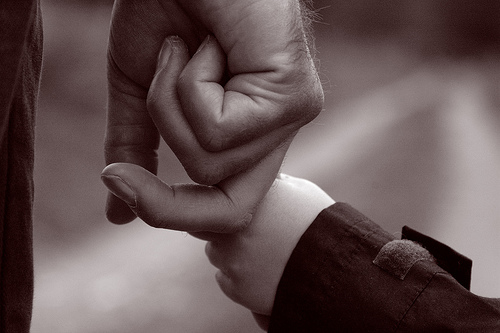
© 2005 Paul C. Smits

1) What is it like for a partner to witness a Postpartum Mood Disorder in action?

Things for us spiraled down very quickly.  In some ways things happened so fast that I felt like I was taking part in some made for TV drama.  At times I felt almost detached, like I was just playing a role.  At other times I felt devastated thinking about losing Denise and all that we had together.  I was very lucky to have supportive family and friends; otherwise, I know it would have been much worse.  Fortunately, just as quickly as things spiraled down, Denise got better.   


 2) Would you share your family’s experience with PPD? When did you first realize something wasn’t quite right and what steps were taken to get help?

 Here is our story:  https://home.comcast.net/~ddklinker/mysite2/Johns_Story.htm


3) Has becoming a Father changed you?

 The moment I looked into my daughter’s big brown eyes for the first time, I was a changed person.  I felt a huge sense of responsibility come over me as I sat there in the delivery room holding her.  The greatest changes came from needing to consider her needs over my own. 


4) What aspect of being a Father is the most challenging? The Least?

 I think the most challenging aspect of being a father is dealing with the fear of doing it wrong.  How do I know that the choices Denise and I make are the right ones?  Are we doing enough for the kids, or too much?  What makes us qualified to shape the lives of two wonderful human beings?  I deal with these fears but remembering that Denise and I are there to provide opportunities, guidance, and boundaries for our kids.  They shape their own lives, we just have to do our best to help them make good choices in their lives.

The least challenging aspect of being a Father is enjoying the special times together when everything seems right with the world.  Whether it watching them ride their bike for the first time, watching them catch their first fish, or just driving home after a softball game.  There have been many times where I know I’ve gotten the father thing right and it’s a great feeling.


 5) How did you get involved with PSI and how rewarding has it been to work with Fathers who are where you have been?

I got involved with PSI the same way many other volunteers have, I talked with Jane Honikman.  I knew that I wanted to do something to help other dads and Jane was very encouraging.  PSI has recognized the importance of reaching out to partners for a long time and needed someone to take the role as Father’s Coordinator.  I volunteered and was very warmly welcomed in the organization.  I have met many wonderful people through PSI and it has been a great experience for me.

My main involvement at PSI has been talking to fathers on the phone, responding to emails, and maintaining my website.  I usually only have 5-10 calls and maybe 10-15 email contacts within a year.  Most of the calls are from dads that feel cut out and rejected by their wives.  These dads feel devastated and powerless to doing anything about the situation.  I have several stories on the postpartumdads.org website from dads dealing with rejection.  I have to say, these calls are tough and I often feel inadequate to provide the kind of help these men desperately want.

On a more positive note, I have had several phone calls where I do feel I have made a difference.  It is very rewarding when I feel like I have helped someone through a tough time.  I have also received a lot of positive feedback on the website, especially the stories. 


6) What led you to develop your website for fathers/partners?

After taking some courses through Landmark Education I knew that I wanted to make a difference in the world.  While talking with a friend whose wife was experiencing PPD I realized I didn’t know what to say to help him.  I talked to him about my experience but I didn’t know what resources were available to help.  After looking for resources on the internet I saw that there was very little directed towards the needs of dads dealing with the depression of their wives.  I came up with an idea to develop a website that featured stories from other dads with very practical suggestions.  I got some great encouragement from the local PSI coordinator Shelly Ashe and from Jane Honikman.  With very little experience creating website, I figured out the basics and started with my own story.  I have been fortunate to have other dads contribute stories and I am very proud of what we have created.


7) Just as women with PPD learn that taking care of themselves is important, this is a lesson that Fathers should heed as well. What do you do on a regular basis to feed your soul and ensure that you stay in a good place?

I “feed my soul” by doing projects around the house, riding my mountain bike, taking walks, and playing with the kids.  I’m currently building a retaining wall in the back yard and I get great satisfaction out of seeing the progress I make each week.  It’s the most physical labor I get during a week.  I try to mountain bike once a week and the 20 minutes of flying down hill, after the 1 hour going uphill, are the best therapy possible.  Everyday at lunch I take a 20 minute walk that helps to clear my mind.  I also like to spend as much time with the kids as possible.  I enjoy being with them and it’s a great way to see the world through their eyes.


8 ) Did PPD strengthen or weaken your marriage? Do you feel that you both are in a better place now than prior to PPD?

PPD strengthened our marriage.  Denise and I have been through some very tough times together and we have been able to support each other through them.  Each time we have made it through the tough times we have felt closer as we have more invested in each other.  Watching Denise recover from PPD, as well as a life-threatening illness, has been an inspiration to me and many people around her.


9) What aspect of Fatherhood should be celebrated the most?

I see my primary role as a father to be setting the boundaries for my kids.  This means keeping them safe, but it also means allowing them to take risks and sometimes going further then their mom would allow.  I see myself as being there to back them up as they try new things, from riding a bike, to the first day at a new school.  I think the role that fathers play in fostering independence and confidence should be celebrated.


10) If there was one piece of advice you could give to an expectant father (new or experienced), what would it be and why would this be important for him to hear?

My one piece of advice to new dads is to trust your instincts.  If something doesn’t seem right it probably isn’t.  That applies to dealing with PPD was well as dealing with setting boundaries.   


Nurturing your Soul

old fashoned photo frazzled momLet’s face it – parenting is rough. I mean, I’d almost rather play full contact football with the NY Giants on the really hard days. I certainly feel like I have at the end of the day. It’s at the end of those days especially that I force myself to sit back and nurture my soul. I’ve nurtured everyone else’s by then and doggone it, I deserve some lovin’ too.

As moms with PPD, we are in a unique class indeed. We marvel at moms in public who seem so put together, at moms in playgroup who calmly soothe their babies. We wonder what is wrong with us and why we are not like that. We need an entirely different set of skills and yet there is no one nearby to share these skills with us and sadly many of us are left to fend for ourselves as families find more and more distance between what used to be right next door or down the street.

Thankfully PPD is becoming more and more recognized and more information is available to us today than ever before. Slowly the stigma is being removed and women and even lawmakers are talking about PPD and coming up with solutions. In the meantime, all we can do is keep the communication lines open, learning to ask for help as well as accept help when it is offered.

I will start by sharing a few methods I’ve used to get through what I call “High Stress Moments.” You know, the moments when the baby is screaming (and has been for hours), the dogs are barking, the mailman is banging on the door, the phone starts to ring, the dishes need to be done, your toddler is throwing a tantrum in the middle of the floor because Cookie Monster didn’t pick the right letter for the day and all you want to do is for Calgon to take you away. Now. Actually, five minutes ago would have been perfect.

Tip #1: Prioritize. The baby will be just fine in his or her crib if you need a few moments to yourself, even if you just step outside or go to your room and scream or sob into your pillow. Or write it down and then tear it up if you don’t want anyone to read it. This accomplishes two things – gets it off your chest and soothes the frustration with tearing. (You could also keep bubble wrap around!) And the mailman? Well he can just leave a note. The phone? Thank goodness for voice mail. Leave a message with updates about the baby and informing callers that mom and baby are resting. Visitors? A mom I know created a letter stating what visitors would be expected to do if they came by. She had her midwife sign it to make it official. Another mom I know had a list of stuff to be done on the refrigerator and yet another mom kept her bathrobe at the door so that she could appear to have been napping if anyone happened by.

Tip#2: Take time for you. And yes, that even means just grocery trips by yourself. Never before has a grocery trip been such a luxurious indulgence and I usually treat myself to something special and it does not have to be high in calories or fat. (Although chocolate ice cream is a favorite of mine!)

Tip#3: Make time for you & your significant other. Does not have to be sexual, just a coffee or even a nice dinner at home once baby has gone to bed or nap. Go to the following website: www.postpartumstress.com and click on their Family Support Link. They have a Postpartum Pact for you and your partner to complete. This will help your partner better understand how they can help you. They also have cards you can print out and hand out to loved ones.

Tip#4: Try to educate those around you about PPD. If you are unable to do this on your own, recruit your physician to get handouts and maybe even make an appointment for both you and your loved one to talk with your doctor about PPD.

And last but not least, please remember that you are not alone, you are not to blame, and you will be well with help.

Daily Perinatal Mood Disorders Fact

Defining the Differences:

Baby “blues”: fleeting periods of sadness and mood swings immediately after giving birth. Typically goes away within two weeks or less. Risk rate is 80% of all new mothers.

Postpartum Depression: Continued and deeper feelings of sadness and mood swings. Other symptoms may possibly include increased irritability, decreased appetite, inability to sleep, intrusive thoughts, increased anxiety. Risk rate is 10-15% of all new mothers, regardless of how many children she has.

Postpartum Psychosis: Onset is fast and can include delusions, hallucinations, inability to make any decisions, hearing voices. If suspected, the mother needs to be hospitalized immediately and not left alone until she is under professional care. This is rare, every 1 in 1000 women are at risk for developing this and a family history of bipolar or schizophrenia raise the risk even higher.