Category Archives: women

Did you watch Postpartum Nightmares?

What were your thoughts?

Did you think Discovery Health did a good job? Or was it just more sensationalism that hurt the public perception of Postpartum Mood Disorders?

What did you like?

What did you not like?

Let me (and Discovery) know what you thought of this documentary!

Speaking up across the blogosphere

I’d like to recognize the growing numbers of bloggers discussing Postpartum Depression here at Sharing the Journey. I’ll try to post a list like this each week. If you come across (or write) a great blog that includes a postpartum mood disorder experience and isn’t already on my blog roll, email it to me @ ppdacceptance at gmail dot com.

Today’s featured bloggers are:

Trying to find my way through Postpartum Depression (a newly diagnosed mom sharing her journey! Please go and say hi!)

Willis, Party of 6: Postpartum Depression (military mom shares her journey with four kids!)

Sisters from different Misters (Cassie) shares about “Things I’ve learned from my therapist,” a relationship which all started when she developed postpartum depression.

Jen from Tales of a Southern Yankee (a new favorite blog of mine) shares about her postpartum experience in a wonderful post entitled “Things we do not say”

And while the next link is not a blog, it’s a worthy read. An article from Wales which delves into the postnatal depression experience and encourages mothers not to suffer alone. You can read this article by clicking here.

Just Talkin’ Tuesday 08.18.09: Telling Your Partner

Original photo by Pingu1963 @ flickr

Original photo by Pingu1963 @ flickr

We’ve touched briefly on seeking support and how you overcame the stigma of admitting something was wrong.

Today I want to take that topic to a more personal level.

How did your partner take the news?

My husband was so confused right after we had our first daughter. One minute I’d be fine, the next – yelling at him for simple things – like criticizing how he blew his nose or something equally inane. Or one of my favorites – the laughing hyena fits. Oh how I hated those! They hit at the most inopportune time! Him: “My day sucked.” My response: laugh so hard milk I had drank that morning would come spewing out my nose. Yeah, peachy, huh?

Once I kind of figured out what might be happening it really helped us both immensely. I stopped believing he had been born with super powers which would magically allow him to know precisely what (and when) I needed him to do with the baby and he started asking what he could do to help out. Before you knew it, we were navigating the perilous yellow brick road of communication quite successfully! (Did I mention he even talked to his parents about PPD for me? How sweet!)

By the time my second episode occurred, he knew more than enough to recognize old habits and encouraged me to seek help. We did have a bump when I was hospitalized but I think anyone with a loved one with a need for mental health hospitalization would be understandably stressed.

Third time around he was just as big an advocate as I was, knew a ton, and fortunately, sailed right through the experience with me. We were both very blessed to be able to fully enjoy the newborn stage with at least one of our children. That experience is something neither one of us takes for granted.

So – what I’d like to talk about today is how you told your significant other that everything was not alright in New Momville. How’d that conversation go? Did you initiate it? Did they? What was the reaction? What did they do to support you as you recovered?

I do want to take a moment to mention that if you have an unsupportive partner, talk with your caregiver about this. See if you can arrange to have your partner attend an appointment with you so that the doc can explain to them how important it is for you to have support at home. Good support at home is essential to a solid recovery and as your partner, they are on the front lines. In fact, it’s always a good idea to take your partner with you to your appointment because they may be witness to behavior you are not aware of in yourself.

Let’s get to Just Talkin’ Tuesday!

Tips on Identifying Reliable Health Information on the Internet

If you’ve landed here as a result of a Google, Yahoo,  Bing, or other search engine, you already know how many results you can get in mere seconds and even sometimes nano-seconds. Thousands! So you wade through the results hoping for reliable and trustworthy information. Unfortunately, not everything out there is reliable and trustworthy. And even if it is reliable and trustworthy, you should ALWAYS check with a professional prior to implementing or stopping any treatment.

Here are some general tips to help you tell the good from the bad (source: Medical Library Association):

1. Sponsorship
  • Can you easily identify the site sponsor? Sponsorship is important because it helps establish the site as respected and dependable. Does the site list advisory board members or consultants? This may give you further insights on the credibility of information published on the site.
  • The web address itself can provide additional information about the nature of the site and the sponsor’s intent.
    • A government agency has .gov in the address.
    • An educational institution is indicated by .edu in the address.
    • A professional organization such as a scientific or research society will be identified as .org. For example, the American Cancer Society’s website is http://www.cancer.org/.
    • Commercial sites identified by .com will most often identify the sponsor as a company, for example Merck & Co., the pharmaceutical firm.
  • What should you know about .com health sites? Commercial sites may represent a specific company or be sponsored by a company using the web for commercial reasons—to sell products. At the same time, many commercial websites have valuable and credible information. Many hospitals have .com in their address. The site should fully disclose the sponsor of the site, including the identities of commercial and noncommercial organizations that have contributed funding, services, or material to the site.
2. Currency
  • The site should be updated frequently. Health information changes constantly as new information is learned about diseases and treatments through research and patient care. websites should reflect the most up-to-date information.
  • The website should be consistently available, with the date of the latest revision clearly posted. This usually appears at the bottom of the page.
3. Factual information
  • Information should be presented in a clear manner. It should be factual (not opinion) and capable of being verified from a primary information source such as the professional literature, abstracts, or links to other web pages.
  • Information represented as an opinion should be clearly stated and the source should be identified as a qualified professional or organization.
4. Audience
  • The website should clearly state whether the information is intended for the consumer or the health professional.
  • Many health information websites have two different areas – one for consumers, one for professionals. The design of the site should make selection of one area over the other clear to the user.

MLA’s guidelines are an excellent starting point and should be used by anyone searching for Medical information on the internet. Many caregivers will also tell you to not search the web for information, especially if you have a Postpartum Mood Disorder. If you have a question and feel overwhelmed with doing research on your own, get in touch with a Postpartum Support International Coordinator, your midwife, or your doctor, and ask for help in doing research. Sometimes you may come across research or news stories that are not applicable to your situation that may cause triggering thoughts or increase your fear and anxiety without justification.

Another great way to check the reliability of a website is to do so through HONcode. HONcode, Health on the Net certifies websites with healthcare information. Their standards are pretty high and they certify on a random basis once a website has been accepted. (I’m currently working on acheiving this certification for this blog myself). Through HONcode, as a patient/consumer, you can download a toolbar or search directly from their site and will only be given websites that have been approved by them. Click here to learn more about the safety process at HONcode.

I also want to take a moment to mention that a good doctor or advocate will be compassionate, understanding, and work with you regarding your desired route of treatment. Good Caregivers and Advocates are able to stay objective and not allow personal experience to cloud their aid to those who seek their help. This does not dismiss advocates who have specialized knowledge of certain types of treatment however – what I mean by this statement is that if you approach and advocate with a question regarding an Anti-Depressant, they should direct you to research regarding that particular medication and encourage you to also speak with your caregiver. They should NOT bash said medication because they’ve had a bad experience with it. If the caregiver or advocate is not compassionate but instead dismisses or attacks your desired treatment methods, it’s time to find another caregiver or advocate for support.

As a Postpartum Support International Coordinator myself, I work very hard to support the journey the mother is on and the treatment route that best fits with her personal philosophy. I encourage the involvement of professionals – including her OB or midwife, a psychiatrist, and a therapist. I also encourage Mom to take time for herself, something we all forget to do from time to time, but is very important for our mental well-being.

So please remember to:

Thoroughly check the source of the information you are reading online using the above guidelines from the Medical Library Association as well as searching via HONcode for your information.

Double-check any information regarding starting treatment or stopping treatment with your professional caregiver prior to implementation.

Make sure your caregiver respects your opinion regarding your body. (You are of course, your #1 expert in this area!) If he/she fails to respect you, although it may be difficult, find another caregiver who DOES respect you!

Take time for yourself as you heal.

Sharing the Journey with Cynthia Olkie

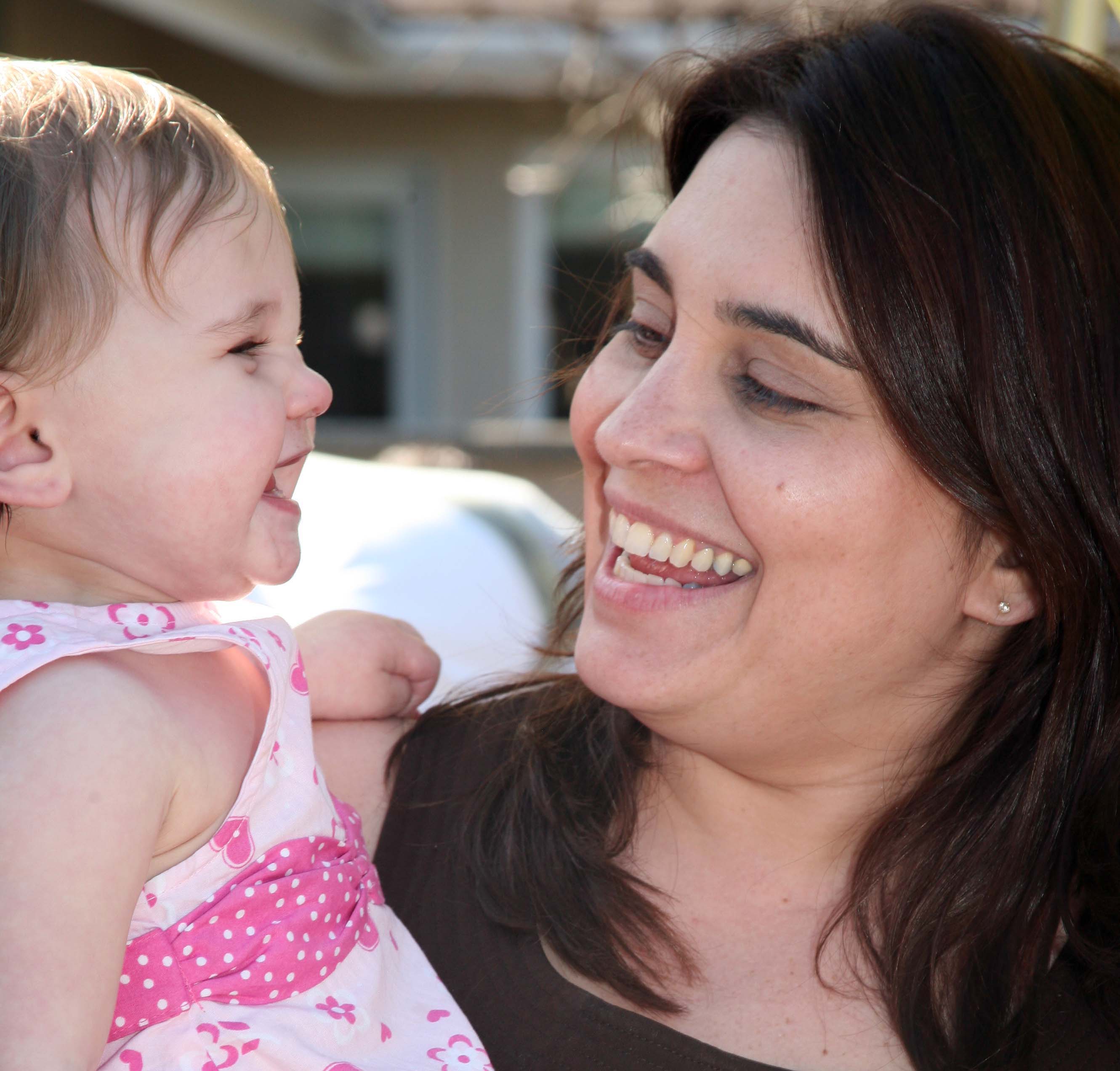
A fellow Coordinator with PSI first emailed me about Cynthia Okie’s Project, It’s Not So Black and White. The project is a photo essay book focusing on stories and photos of survivors of Postpartum Mood Disorders. I immediately posted about the project, following up with an email to Cynthia with a request for an interview. I am so excited to be sharing her journey with you today! She’s still accepting submissions for the book from survivors so if you have a story to share and can squeeze it out in 650 words or so, shoot Cynthia an email at fleurphoto@aol.com. If you’re in the L.A. area you’ll even get a free photo shoot! Certainly can’t beat that!

Thanks, Cynthia, for working on what I am sure will be an invaluable contribution to the every growing body of work from survivors.
blog-pic-copy

Tell us about Cynthia. Who is she when she’s relaxing and hanging out?

I can’t say I stay put for very long.  If I am being creative I am happy.  That could include taking a walk on the beach with my husband, step-son and daughter, having visits with my family where we just hang out and talk (most of them with Long Island accents), taking photographs, doing an art project, etc.  If I get quiet time I do enjoy reading a good book.  Once in a while I will watch TV.  Reality shows are my vice.

Share with us your daughter’s birth story. Was pregnancy and delivery anything like what you expected?

I had a wonderful pregnancy and thank goodness no complications.  The birth was a different story.

My daughter was pushing 2 weeks overdue and they scheduled me to be induced at midnight on a Sunday night.  For the next 43 hours I went through 2 rounds of Cervidil and 2 rounds of Pitocin.  Not dilating at all I ended up having a  c-section.  Had I known how easy the surgery was I would have just opted for that and not go through the pain and uncomfortable process of inducing.

My daughter was born and I went to recovery.  I was in the recovery room for nearly 5 hours and the last 20 minutes completely by myself.  The nurse left to find out what was happening in the postpartum rooms.  It was a bit scary because my legs were still a bit numb from the epidural.  I had visions of being in a horror film where someone comes in with a knife and i can’t run because my legs were numb.  I rang the buzzer and asked for a nurse and finally was taken to a room.

The next 3 1/2 days were anything but enjoyable.  All of the nurses gave me different information about nursing-“hold the breast up”, “squeeze the nipple”, “don’t do this, do that”.  Even though I took a class once my daughter was in my hands it was totally different.  The nurses were a bit inconsiderate and contradicted each other.

Since my daughter had lost more weight then they say they like they told us we might have had to supplement with formula.  As soon as my husband left to go pick up my mother the nurse came in and said “bottle or syringe?”.  Syringe?? What is that?  Needless to say she stuck a bottle in my daughters mouth.  That got my hormones a bit in an uproar.

On Saturday before we were checking out the pediatrician and lactation consultant came in.  They were both amazing and said the nurse did not follow instructions and was supposed to wait until the end of the day and if anything do syringe feeding.  We were glad to go home and get our new family going.  We had a lactation consultant come over and she got us back up and nursing full time.

Postpartum Depression can be a dark and scary place. Share with us what your stay there was like.

After my daughter was 4 months old we had her Baptism.  Family that never come to Los Angeles came and we had a full house for almost a week.  It was a Wednesday morning and my brother who was going to stay with us for a few more weeks and I drove my mother and aunt to the airport.  It was the final send off which is always hard for me.  As soon as we walked into the door and sat down there was an earthquake.  Now,  earthquakes and I do not get along.  It was my catalyst that set me off like a light switch.  It got my adrenaline running and I got hot flashes. From that moment on I had a very difficult time trying to care for my baby.  Apparently I was holding her so tight in the door frame my brother took her from me.

Although the earthquake was the switch, the fact that I was completely exhausted and overwhelmed with being a new mom contributed greatly.  I found it too scary to wake up in the morning because I knew as soon as my daughter woke up that I had to be on duty and I couldn’t bear the thought.  The only thing I wanted to do was nurse her and then hand her off to someone else.  I had support through my local MOMS Club which was incredible because all of the doctors and medical personal I tried to contact gave me the quick brush off.  I finally got a prescription for medicine which I knew would take a few weeks to kick in.  I spent about a month crying every day and calling my family on the east coast at 4 am Pacific Time which I knew was right when they would get up.  I barely ate if at all, had no desire to do anything and wanted to escape.


How did your husband and family support you through your recovery? What were some of the things they did that helped the most?

My husband and brother blew me away with their support.  Being men I thought they would get scared, crawl up in their hole and try to ignore anything was going on.  Instead my husband took over with feedings which we had switched to bottles during the day only, made me food which I would try to eat and offered to do anything he could.  My brother who was staying with us also took over where he could.  He sat with me for hours patiently listening to me repeat the same things over and over and told me how great of a mother I was and that I would overcome this.  They both were there for me, my daughter and each other and owe them everything.  I also had a wonderful friend who came over when she could and was their for me every step of the way as well as my Aunt and Cousin on the East Coast who listened to me every single day for days on end and were struggling themselves to help me from afar.

In my journey I needed to constantly be talking to someone even though I would say the same things over and over.  I can’t say I found much professionals very helpful or supportive which was very disappointing.

Tell us about 3 things that made you laugh today.

My daughter’s silly face she makes.
My husbands goofy dances
How scared I was when I was sitting so quietly alone at my computer when I though the cat wanted to eat my piece of cheese and was all over the desk only to find out he was trying to get the HUGE moth crawling next to me. I don’t like bugs.

You’re working on a photography and essay compilation book. What started the inspiration for this project?

During the darkest of my days in postpartum I went to the park to cry and call my Aunt.  While I was sitting there I had a glimpse of my photography and how much I love taking photographs.  Some where out of the blue I came up with the idea to do a photo-essay book on my experience. It was almost as if I went through my experience so that my idea could come to fruition.  I still don’t know how it occurred to me but I do know exactly where I was sitting and how I felt.

What do you find to be the most challenging about parenting? The least?

The most challenging thing about parenting is how I don’t have nearly the same amount of time for myself as I used to. I am grateful to be a stay at home mom for the time being but find it hard to be home and not want to do something for myself.

The least challenging is how easy it is to love my child.  It is the absolute best thing that has ever happened to me.  It is completely unexplainable.  The joy, emotion, warmth and unconditional love surpasses anything I have ever felt.

How did your husband handle your journey through PPD? Do you feel it impacted your marriage?

My husband was there for me through my whole journey.  I think for a few moments he was so nervous he didn’t know what to do but he sure didn’t show that to me.  He was stronger then I have ever seen him.  He would just ask what he could do and all I wanted was a hug.  And a hug from him makes me feel safe.  I am not sure my journey impacted our marriage as much as just the addition of a new person. A marriage needs work and adding a child adds even more.  We manage to work through our issues and we can only hope we are raising a wonderfully kind, gentle, smart  and decent human being.

Here at Sharing the Journey, I encourage mothers to focus on themselves. What are some things you do to take time for yourself every day?

Every day?  Ha! That’s a challenge.  I do cherish a good hot shower without any interruptions.  That’s something I can count on every day.  The hot water cleanses all of my worries even if it’s for a few moments.  I read a little every day even if its a few pages in a magazine.  I talk a walk with my daughter in the stroller which gives me time to breath in the air while she is not running around.

Last but not least, let’s say you have a chance to give an expectant mother (new or experienced) a piece of advice about PMD’s. What would you share with her?

Try to get help as soon as you can and don’t be ashamed.  Lots and lots of people told me “you are not alone”.  Although I know that now….when I was in my dark place it didn’t matter.  I wanted to be a child again myself and have someone take care of me.  Find support.  It’s out there.  Right now we have to do a lot of work to find it but so many people are speaking out about PPD that I pray it will soon get easier.