Category Archives: strong woman

The One Flaw In Women

A good friend of mine sent this to me today. Good thing she did because I really needed to read it. Enjoy.

By the time the Lord made woman,
He was into his sixth day of working overtime.
An angel appeared and said,
‘Why are you spending so much time on this one?’
And the Lord answered, ‘Have you seen my spec sheet on her?
She has to be completely washable, but not plastic,
have over 200 movable parts, all replaceable
and able to run on diet coke and leftovers,
have a lap that can hold four children at one time,
have a kiss that can cure anything from a scraped knee to a broken heart
-and she will do everything
with only two hands.’

The angel was astounded at the requirements.
‘Only two hands!? No way!
And that’s just on the standard model?
That’s too much work for one day.
Wait until tomorrow to finish.’

‘But I won’t, ‘ the Lord protested.
‘I am so close to finishing this creation that is so close to my own heart.
She already heals herself when she is sick
AND can work 18 hour days.’

The angel moved closer and touched the woman.
‘But you have made her so soft, Lord.’
‘She is soft,’ the Lord agreed,
‘but I have also made her tough.
You have no idea what she can endure or accomplish.’

‘Will she be able to think?’, asked the angel.
The Lord replied,
‘Not only will she be able to think,
she will be able to reason and negotiate.’

The angel then noticed something,
and reaching out, touched the woman’s cheek.
‘Oops, it looks like you have a leak in this model.
I told you that you were trying to put too much into this one.’

‘That’s not a leak,’
the Lord corrected,
‘that’s a tear!’
‘What’s the tear for?’ the angel asked.

The Lord said, ‘The tear is her way of expressing her joy,
her sorrow, her pain, her disappointment, her love,
her loneliness, her grief and her pride.’
The angel was impressed.
‘You are a genius, Lord.
You thought of everything!
Woman is truly amazing.’

And she is!
Women have strengths that amaze men.
They bear hardships and they carry burdens,
but they hold happiness,
love and joy.
They smile when they want to scream.
They sing when they want to cry.
They cry when they are happy
and laugh when they are nervous.
They fight for what they believe in.
They stand up to injustice.
They don’t take ‘no’ for an answer when they believe there is a better solution.
They go without so their family can have.
They go to the doctor with a frightened friend.
They love unconditionally.
They cry when their children excel
and cheer when their friends get awards.
They are happy when they hear about
a birth or a wedding.
Their hearts break when a friend dies.
They grieve at the loss of a family member,
yet they are strong when they think there is no strength left.
They know that a hug and a kiss
can heal a broken heart.
Women come in all shapes, sizes and colors.
They’ll drive, fly, walk, run or e-mail you
to show how much they care about you.
The heart of a woman is what makes the world keep turning.
They bring joy, hope and love.
They have compassion and ideals.
They give moral support to their family and friends.
Women have vital things to say and everything to give

HOWEVER, IF THERE IS ONE TINY FLAW IN WOMEN,

IT IS THAT THEY FORGET THEIR WORTH.

Sharing the Journey with Dr. Shoshana Bennett

Having started out much like myself as a survivor of PPD, Shoshana Bennett has done more than just dig herself out of a deep dark place – she’s risen far above it and has been reaching back to help others find their way back out and into the bright Clear Sky. In fact, Dr. Shoshana appeared just this past Tuesday on The Doctors to speak about Postpartum Mood Disorders and offered to help currently struggling moms. She serves as a true inspiration and source of caring support for those of us who advocate and are struggling through our own dark path. Thank you, Dr. Shosh, thank you.
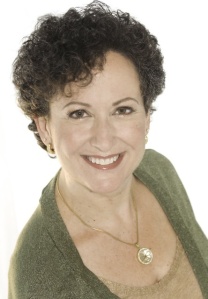
Would you share a little bit about yourself with us?

A survivor of two life-threatening, undiagnosed postpartum depressions, now considered a pioneer in the field, I founded Postpartum Assistance for Mothers in 1987, and am a former president of Postpartum Support International. I’ve  helped over 17,000 women worldwide through individual consultations, support groups and tele-classes. As a noted guest lecturer and keynote speaker, I travel throughout the US and abroad, training medical and mental health professionals to assess and treat postpartum depression and related mood disorders. I have earned three teaching credentials, two masters degrees, a Ph.D. and am a licensed as a clinical psychologist. Currently, I am working to pass legislation that helps reduce the incidence and impact of postpartum mood disorders. You can contact me through http://ClearSky-Inc.com.

I’ve written Postpartum Depression For Dummies and co-authored Beyond the Blues: Understanding and Treating Prenatal and Postpartum Depression. My latest book Pregnant on Prozac will be available in January of ’09. I’ve also created guided imagery audios that are specifically focused on helping moms take care of themselves.

How did you become focused on Postpartum Mood Disorders? What drew you in to the subject?

Out of personal experience with severe postpartum depressions (along with OCD, panic, and PTSD), it became my mission to educate. There was no help for me back in the ‘80s. When I realized there was a name for what I had gone through, I understood that my family and I didn’t have to suffer like we had. Since then, it’s been my passion to help prevent that pain and isolation in others.

As I look back at my two episodes of Postpartum Depression with OCD tendencies, I see very clearly now how they helped to mold me into the woman I am today and allowed me to develop my tenacity and increase my self-esteem. What are some of the biggest things your experience with PPD allowed you to realize? Through sharing my experience and expertise with clients and colleagues, I experience the deepest, most satisfying feelings. I know my suffering was not in vain – my purpose is to get the word out that there’s hope and that moms will recover with proper help. I get to witness my clients’ lives transforming before my eyes. They often tell me they’re happier than they were even before their postpartum depressions! I am so thankful that out of personal devastation came this glorious path.

As a mom, what have you found to be the most energizing about motherhood? The most challenging?

As many of your readers will agree, our children are our best teachers. My kids always hold up that proverbial mirror so I will be the best person I can be. This is both what’s most energizing and most challenging. It’s not always easy to take an honest look (right?), but I truly love the personal growth involved. I find this challenge stimulating and exciting.

What are some of the biggest challenges you have faced in juggling motherhood and work?

I earned a doctorate degree when my children were quite young. Most of my studying and papers were completed between 3 and 6 in the morning, before my kids woke up, which took some discipline. Also, working from home can be easier in some obvious respects, but more challenging in others. For instance, I needed to learn to keep my work contained in my office , instead of letting it spill into my kitchen and living room. Psychologically and physically it took some practice setting and keeping those boundaries.

We often encourage mothers to remember to take time for themselves. What is it that YOU do to recharge your batteries?

In between writing chapters for my next book Pregnant on Prozac, I take walks, do yoga, and visit with friends. I travel and speak quite a bit, but these are things I can do anywhere. Almost every day I put on some great, upbeat music and I focus on my next steps personally and professionally. I’m also a huge believer in nutrition – I eat really well to support healthy brain chemistry and body functioning. Every month I also receive a wonderful massage. I encourage my clients to take good care of themselves physically, emotionally, psychologically and spiritually, and I do the same for myself.

Postpartum Mood Disorder recognition and acceptance has come a LONG way but we still have miles to go. What do you see as some of the hurdles we still have to cross?

For one, the DSM should recognize the postpartum mood disorders as their very own diagnoses. Right now, there is no actual diagnosis of postpartum depression, so it’s viewed by many well-meaning professionals as no different from any other depression. For any woman who has been depressed before having a baby, and then has ppd, she absolutely knows that ppd feels different. Also, the right questions for moms and dads need to be asked in OB and pediatricians’ offices as a standard practice. It is definitely going in the right direction, and doctors are increasingly “tuning in” to these questions and listening better to the answers given. In addition, medical doctors are also understanding that prescription medicine doesn’t always need to be the first line of treatment. Many of my clients have not needed medication once they receive a solid plan of action with natural healing.

What is your philosophy regarding your approach to Postpartum Depression? How did you develop this philosophy?

I am solution-focused, not problem-focused. I focus on wellness and healing and helping depressed women get “un-stuck” as fast as possible. I learned many years ago that women can recover remarkably quickly when they have very simple and practical steps to help them move forward.

What advice would you give to medical professionals who may come in contact with a mother who is depressed? What are some of the best things they could do for this mom? What should they not do?

Funny – I was just asked to present at a women’s conference on just this topic. It’s important to speak to this mom with care, sensitivity and respect – reassure her that she’s not inadequate, there’s nothing to be ashamed about and handle the topic very matter-of-factly, as gestational diabetes (or any other common perinatal illness) would be approached. A practitioner should not dismiss depression as “normal” or give pat advice such as, “go out on more dates and get your nails done and it should pass.” Depression needs to be taken seriously and a referral to a therapist who specializes in the field should be provided.

And last but not least, if you had a chance to give just one piece of advice to an expectant mother (new or experienced), what would you say?

Pregnant women call me all the time, since they want to prevent depression and anxiety later on in the pregnancy and also postpartum. I help them with a simple plan of setting realistic expectations, sleeping at night, eating/nutrition, and getting emotional and physical support. So much joy and happiness can be experienced (and mood disorders greatly minimized, if not completely avoided), when there’s a solid plan of action in place!

Sharing the Journey with Pec Indman

Pec is one of the warmest people I have had the pleasure of emailing. Ever. She has been super supportive of all that I do and for me it’s amazing that in just four years, I’ve gone from an unsupportive OB to being able to email an expert like Pec and get a response in mere seconds. What a road! Pec is whole-heartedly dedicated to women and families struggling with Postpartum Mood Disorders and like me, I know she’ll never stop doing what she’s doing. Keep up the amazing work and thank you for sharing a bit of yourself with us!

Would you share a little bit about yourself with us?

I grew up in a very loving family. My parents were active in political movements that supported causes including civil rights and the women’s movement. I became a family practice trained Physician Assistant in the 70’s, and worked in Family Practice and women’s health. After deciding to go back to school, I completed a Master’s in Health Psychology, and then a Doctorate in Counseling. I had Megan, my first daughter just after I completed my doctoral coursework. Emily was born almost six years later, after treatment for fertility problems and a miscarriage.

How did you become focused on Postpartum Mood Disorders? What drew you in to the subject?

About 12 years ago, I was in an OB/GYN waiting room and happened to see a flier by Postpartum Support International (PSI) about Postpartum Depression. I realized that although I had years of training and experience in women’s health and mental health, and had delivered two children, I had been taught nothing about mood disorders related to childbearing. I was horrified and angry. I am still outraged that my Master’s program in Health Psychology never covered anything related to specific issues related to women’s reproductive mental health (for example, PMS, perinatal, or perimenopause/menopause). So, I joined PSI, read everything I could, and went to trainings and conferences. I began teaching for PSI and co-authored a book, Beyond the Blues, A Guide to Understanding and Treating Prenatal and Postpartum Depression. We’ve updated it several times to reflect the latest information and research, and are proud to have it in Spanish, as well. I’ve been honored to be invited to participate and contribute in the creation of several federally funded projects on perinatal mood disorders. I feel very honored to do this work. It’s the most rewarding work I’ve done. It’s also the most fun; I work with nice moms, sometimes they bring their babies, and everyone gets better! What could be more fun?

I know different approaches work for different people. What have you found to be the most successful in your practice with Postpartum Women?

My clients describe me as “warm and fuzzy.” I like to think my office is a comfortable place where women and families can feel safe and free from judgments. One of the things I find that women and families thirst for is information. So often I hear, “why didn’t anyone tell me I was at risk?” I practice a model of therapy called cognitive-behavioral therapy. It is a very practical model that helps people learn how depression and anxiety distort thinking and teaches people how to think differently. My clients really appreciate the practical skills and tools.

As a mom, what have you found to be the most energizing about motherhood? The most challenging?

I feel enormous pride when I watch my girls achieve something they have worked hard to accomplish. The most difficult thing has been standing by while they have experienced life challenges, knowing I can’t take away the disappointment and pain.

What are some of the biggest challenges you have faced in balancing motherhood and work?

I think the idea of “work/life balance” is an impossible goal that sets women up for feeling not good enough. I see it as a juggling act. Sometimes one ball is on the floor-it might be the laundry or the dishes. Or, sometimes a kid gets sick or there is a client emergency. There is no “balance”. I think the key is to be flexible and have clear priorities. Laundry and dishes will always wait for you. I am extremely lucky in that I can arrange my work schedule around my “chauffeur” mom job.

We often encourage mothers to remember to take time for themselves. What is it that YOU do to recharge your batteries?

I am an avid scuba diver and tropical fish lover. My whole family dives, and we just had a delightful family vacation in Cozumel, Mexico. I enjoy taking underwater photos, and my husband takes underwater video. So, when I can’t be with the fish, I can still enjoy their beauty and the magnificent underwater world.

Postpartum Mood Disorder recognition and acceptance has come a LONG way but we still have miles to go. What do you see as some of the hurdles we still have to cross?

We have come a long way, but we have a lot more work to do. Ideally, all women should be informed about risk factors for perinatal mood disorders, before getting pregnant or at a diagnosis of pregnancy. Women should be screened for mood problems during pregnancy and throughout the first year. In order to do this, health care providers need have a better understanding of perinatal disorders and why it so important to take them seriously. And we need to train providers to treat women and families suffering. I am appalled that the most common complication of childbearing is still so misunderstood and poorly treated. I think we need to dispel the myths that still surround perinatal mood disorders. We need to educate women and families about the problem and to be good consumers in seeking treatment. We need to train health care providers to ask the questions and screen, and we need a trained therapist on every street corner.

I believe one of the biggest keys to positive recovery for women is full family involvement -i.e., a supportive and educated husband/partner and family. Of course, education prior to an episode is wonderful but how can we best aid in this process when the family is in the midst of a Postpartum Mood Disorder Crisis?

I agree that family involvement is critical. Whenever possible it is important to include the family in the process of treatment. Often the family is confused and unsure what to say or how to be supportive. Treatment should include family whenever possible.

What makes you smile?

Hanging out with my family, being in a clear turquoise tropical ocean (I did have to learn not to smile at the fish, because it would cause my face mask to leak!), and hearing a mom say “I got my self back”.

And last but not least, if you had a chance to give just one piece of advice to an expectant mother (new or experienced), what would you say?

I have a few words of wisdom:hug and kiss your kids as often as possible, notice the positive, and remember to be emotionally flexible. Know what is developmentally appropriate for your child and have realistic expectations of them. Lastly, if it’s not a health or safety issue, be able to let it go…… somethings aren’t important to make a big issue over.

One of THOSE days

The girls tried to make themselves breakfast again this morning. Apparently cheese toast and bacon were on the menu along with Good n Plenty, Belly Flops, and some sort of strawberry candy. I have no idea what they were planning on doing with the Fondue Pot. Frankly I am not sure I want to know.

I just realized today was so hectic I forgot to take my meds but I’m still here and very calm amazingly enough.

This afternoon was wonderful. They cleaned up their room without too much prodding and even earned a snack and a movie. Then as they moved back to their room to play as I cooked dinner, silence. For those of you who have never experienced toddlers, silence is a bad thing. A very bad thing. It means they are up to no good. This time they had the sample of Snuggle that had just come in the mail and were pouring it everywhere. I herded them to the tub, rinsed them off, and put them to bed. Yes, without dinner. I do not cook meals for those who choose to disobey. Bedtime went rather smoothly with Charlotte – Alli was another story altogether. I had to get the Magic Monster Catcher (a handheld vaccuum) and catch all the Monsters in their room, assure her the very dead bug on the window was OUTSIDE and would not be coming in to get her anytime soon, and let her crawl into bed with Charlotte so she wouldn’t be all alone. Oh the things Parents do to get their kids to go to sleep.

As I sit here typing, the comforting roar of traffic echoes in the background while the fans here in the house whine and sway as they keep me cool. No sounds from the back bedroom (ok, so silence is GOOD when they’re SUPPOSED to be quiet) and no sounds from Cameron’s room. Chris is at a step meeting and I am relaxing by venting here and contemplating lying down and catching a few ZZzzzZZZZ’s before Chris gets home so I’ll be able to enjoy his company when he gets here. I may just fix myself a cup of tea and sit here instead.

Thanks for listening and sharing my journey. Please don’t forget to take care of yourselves no matter how hectic the day gets. You ARE ALWAYS worth it.

Correction to MOTHER’S Act Update

Apparently I missed an important fact last night – Motion to proceed to consideration of measure was withdrawn in Senate. (consideration: CR S7554) Click on S7544 to read the text of the proceedings as they played out yesterday afternoon on the Senate floor.

At this point in time, I am not sure what this means for The MOTHER’S Act. I am disappointed in the situation and sincerely hope that this will not dampen the drive for this bill that has been building for so long now.