Category Archives: sharing the journey

Sharing the Journey with Christy Cuellar Wentz

I first found Christy at Twitter. She sent out a tweet requesting Guest Bloggers. I responded and ended up doing an hour on her Radio Show, The Mommy-Muse is In, just yesterday in addition to my guest blog post at her website. And here I thought I would just be writing a blog post! I have thoroughly enjoyed getting to know Christy and had a blast yesterday during our radio chat. A fellow survivor of a PMD herself, she now offers online counseling for new mothers and has a very empowering approach she provides for all new moms. I hope you enjoy getting to know Christy as much as I have!
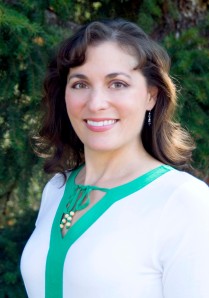
christys-publicity-photos-smallest1Tell us a little bit about yourself – who is Christy Cuellar Wentz when she’s NOT the Mommy-Muse?

First of all, being a Mommy-Muse is part of my essential self. It is not just a “job,” it is a passion.

That said, I can finally say that I accept myself as being perfectly imperfect! I am a mom like every other mom, working to walk (and dance!) my talk in the world. I make mistakes every day and am actually glad for my children to see my process of self-correction.

I grew up feeling as though everything I did needed to be perfect. I graduated from college at 18, and had the idea that if I just “studied hard” and got the “A,” everything would be all right. Turns out, life outside of school doesn’t necessarily work that way! Especially parenting. I can laugh at myself now, and definitely feel like a “broken in mommy,” rather like the Velveteen Rabbit, at times.

I love being outside in beautiful, wild areas, and love animals. I love belly dancing, and wrote The Belly Dance Prescription: Shake Your Hips AND Depression once I realized how transformative it can be. I’ve even been known to belly dance in nursing homes.

I also home-school my children while working from home, so I may be a little crazy, but I love the life I’m creating just the same!

Have you experienced a Perinatal Mood Disorder? If so, how did this experience affect you? How did you handle it?

Yes, I went through Postpartum Depression following the birth of my first child. It was a dark fog that didn’t lift for nearly two years. I got through with support of my husband and mother, by taking one small step at a time through days and nights that seemed endless. I cannot say I handled it well, just that I survived the experience without hurting myself or anyone else. I did not seek treatment because I was scared I wouldn’t be able to nurse my child if I was on any medication. Looking back, I wish I had.

This had a profound effect on my life, and was the main reason I co-founded Mommy-Muse.com.

How did your husband handle your bout with a PMD? Was he supportive? Did the experience strengthen or weaken your marriage?

My husband was supportive, but confused. He was a first-time father, in the middle of his life, and none of this was what he expected. He saw the woman he loved in pain, and didn’t know how to fix it. My first daughter cried a LOT, and rarely responded well to anyone but me. He wanted to ease my load and soothe her, giving me breaks, but had very little success. It was an enormously stressful experience for both of us. We are stronger in our marriage from surviving the experience, but I can sure understand why so many marriages suffer after the birth of a new child.

Here at Unexpected Blessing, I put a tremendous emphasis on the importance of self-care. What is it you do to take care of yourself and what are some typical signs that a Mom can look for to tip her off that self-care needs to be initiated?

I have a list of simple things that nourish me from the inside out, through all my senses. I got the idea from a beloved book, Martha Beck’s The Joy Diet.

Here are some of my favorites:

Belly dancing, eating a really great piece of chocolate, taking a bath with some favorite essential oils, listening to a favorite piece of music, meditating, savoring a warm patch of sunlight through my window, or enjoying a pot of perfectly prepared tea from my favorite tea set.

I choose some things from this list to do for myself every day. If I don’t, I really know it. Some sure signs that I look for in myself and other moms that tell me self-care is absolutely essential are an overwhelming sense of stress, unusually short temper, hyper-sensitivity, negative self-talk, tearfulness, and depression.

Share three things with us that made you laugh today.

You bet! Spontaneous dancing with my children, watching our canary jumping around excitedly, and watching my children do a joyfully extended version of the “pee-pee dance” just for my benefit.

What do you find the most challenging about motherhood? The least challenging?

Ahh, the most challenging. There is a chapter called “On Balance” in Leslie Morgan Steiner’s book Mommy Wars in which Jane Juska writes these powerful words: “Children are not born to provide balance. Children are made to stir us up, to teach us how angry we can get, how scared we can be, how utterly happy, happier than we’d ever imagined was possible, how deeply we can love. Children turn us upside down and inside out…but they do not balance us.” My biggest challenge is creating a balanced, ecological life for myself and my family. My fantasy version of balance is a static point that I will magically reach and forever maintain. The reality, of course, is that balance is very fluid, changing hourly, daily, according to the needs of the moment. I am learning to flow with more grace in my life, but it is a continually evolving process.

The least challenging part of motherhood is delighting in small, daily moments of joy with my children. This is in sharp contrast to my two years of postpartum depression. Everything at that time seemed difficult, including the ability to enjoy my child. Knowing the difference helps me appreciate today’s joyful moments even more fully.

How did your training as a counselor affect your PMD experience? Did it enable you to better recognize your symptoms and seek help or did it inhibit you from seeking help?

I would like to be able to say that I had a better experience with postpartum depression because of my training. The truth is that I couldn’t see my symptoms clearly through the fog. In fact, having a Master’s Degree in the field may have allowed me to hide my symptoms more thoroughly, partly because I thought I should be handling my life better, and partly because I mistakenly believed I would have to give up nursing if I sought help and required medications.

Tell us about the Mommy-Muse site. How did this come to be?

Mommy-Muse.com was born out of my experiences with postpartum depression and feelings of isolation. Once I emerged from PPD, I realized there was a vital group of women to reach out to – new mothers, who often do an amazing job of hiding their true feelings from even from their closest friends. When a woman goes through any kind of postpartum mood disorder, even the simple act of getting your baby ready for an outing to a counselor’s office can seem overwhelming.

My mother, Linda Semrau, had also lived through postpartum mood disorders. Together, we decided to be the change we wish to see in the world, providing the very thing we wished for as new moms – effective, convenient, affordable coaching and therapy, available any time of the day or night.

At the Mommy-Muse site you state that it takes up to 24 months to adjust to Motherhood EACH TIME. Explain a little of this for my readers. Why 24 months?

We originally stated this based on our personal experiences and interviews with other moms. Even mothers with 7 children confessed that a complete adjustment to life with a new child takes 2 years, each time. I was delighted to discover during an interview on The Mommy-Muse Is In: Empowering Your Journey into Motherhood that many doctors actually do recognize it takes two full years to adjust physically and emotionally to the arrival OR exit of a family member.

If a mother knows that an extended adjustment period is normal, she is more likely to take care of herself during the process. I think we put unrealistic pressure on ourselves to have everything “all together” by the time we have our 6 week checkup. Knowing the truth can empower us to mobilize needed resources long after this artificial benchmark.

Last but not least, if you had a chance to give an expectant mother (new or experienced) just one piece of advice regarding Perinatal Mood Disorders, what would you say to her?

Communicate with your family and friends about any concerns you may have, and prepare a postpartum action plan, or “wish list,” to implement in case you need it. It is so much easier to mobilize supportive resources before you’re in the middle of sleep-deprived “Baby Time.”

If you have a blissfully easy transition into new parenthood and never need to activate your support plan, great! If you do need it, you (and everyone who cares about you) will be glad it is in place.

One powerful resource to help is our new “Get Ready, Get Set, Expecting-A-Baby” 12-week coaching package at Mommy-Muse.com. We custom designed this package to help expectant moms make the smoothest possible transition as they welcome a new baby into their lives.
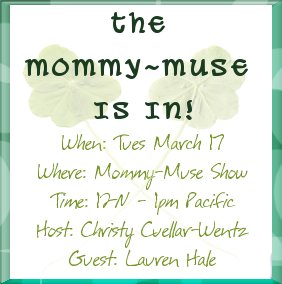
Mommy-Muse Day is here!

Today I’m the featured blogger over at the Mommy-Muse website.

Later today at 3:00pm EST, you’ll get an entire hour of me on the radio with her. I’ll be discussing my journey as well as sharing some general information and tips! (There’s information on how to listen at the above link!)

As if that’s not enough, Christy (Mommy-Muse), has agreed to allow me to share her journey with her. Look for her interview to post here on Thursday!

Sharing the Journey with Tara Mock

Tara has been a true source of inspiration for me through my advocacy journey. Her strength, faith, and dedication to supporting other women has made me examine my own work and my increasing awareness of the role my faith and God held in my experience with Postpartum OCD and my subsequent passion for advocacy. I often refer women to her website when they are in need of faith-based support. I’ve thoroughly enjoyed getting to know her and have connected with another wonderful Christian PPD supporter – Sue McRoberts – through Tara. Thank you, Tara for all you do for Moms who are still on that dark path. Thank you for showing them the way Out of the Valley.

valley2

Share a little bit of yourself with us. Who IS Tara Mock as a woman?

I am a formerly-shy-now-outspoken woman who loves Jesus dearly, my husband 0428whole-heartedly, and my children with everything I have.  I am a pianist and an avid reader.  I can have a sarcastic sense of humor, but I love to laugh and believe the best memories are those with lots of laughter and smiles.  I hate pickles with a deep and abiding passion, but will eat chocolate with anything.  I love to have dinner and/or coffee (I prefer hot chocolate) with my girlfriends.  They are so precious to me, so encouraging and wise, and as a mom of young children, I love that.  I’m not sure what I would do without them!

You’ve walked the dark path of Postpartum Depression. Share with us what that was like.

In one word –  horrid.  I would not wish what I went through on my worst enemies. PPD hit me hard and fast in the week after my son’s birth.  I was in a lot of physical pain to begin with and then my emotions began to snowball, running the gamut:  sadness, anger, apathy, despair, hopelessness, frustration, to eventually suicidal.  That terrified me and it was then, and through the encouragement of my pastor’s wife, that I told my doctor.  Even after that, those crisis days were not over and I still had another couple of weeks to trudge through – including a hospitalization, suicide watch, meds, 24-hour care by a nurse-friend, and lots of sleep.  In the subsequent days and weeks and months, I gradually learned how to care for my son and gain new confidence as a mother, with my eyes towards hope for the future. There were good days and there were bad days, but when the good started outnumbering the bad, I knew I was getting better.  It was about nine or ten months from the time of his birth before I really felt like I had my feet on solid ground and out of that valley.
How did your faith affect your experience and recovery?

Greatly.  My Christian faith is who I am, but with this experience I initially felt like I had been “kicked while down.”  We had gone through infertility treatments to even conceive this baby, my husband had been laid off on the very day we found out I was pregnant, and I was very angry that PPD was happening to me after all that.  I repeatedly asked God “Why?  Isn’t it enough what I’ve been through already?”  But I learned that I also could not get through it without Him.  I clung to encouraging Scriptures with everything I had, even taping them on note cards around my house.   Unfortunately, there were Christian friends who said well-meaning but hurtful things (pray more, just be grateful, etc.), but working past that and learning what the Bible really says helped me grow so much.  I hated going through PPD, but I can also say that I am grateful for the experience and for who it made me today.  (Please know that it is ok if you do not feel the same way!)
At what point did you decide to become an advocate and source of support for other women who are struggling with a Postpartum Mood Disorder?

There were a series of events that solidified my resolve to become an advocate for women going through what I went through.  First, on my first Mother’s Day, the one I had longed for for quite a few years, I went to a local bookstore to purchase Brooke Shields’ new book, Down Came the Rain – it had just been released.  The lady behind the counter started commenting on my son, mentioned she had a baby the same age then started to tell me how she could not understand how anyone who had had a baby could be sad.  I was stunned.  Here I was purchasing a book about PPD and she could not put two and two together that I might be hurting?  I mumbled something about that it had happened to me and thankyouverymuchgoodbye.  I cried all the way home.   (Not to worry, I went back the next day and spoke with the manager about that employee.)  Second, the argument between Brooke Shields and Tom Cruise was a highlight in the news sometime around then and I was angry at the sheer ignorance that some people had about this illness as well as the fact that this Hollywood figure was spreading so much misinformation.  Third, I was part of an online Christian group and some lady (or two, I do not recall) had a discussion about the Brooke Shields book and began degrading her and what she went through.  I took it very personally because I was going through it as well – and these were fellow Christians.  Ouch!  The misinformation out there was stunning – I had just encountered it three times in a short time span.  I decided then and there to not be ashamed of my story, to share it and not hide it, and to encourage other women also sick with PPD.  That was the beginning….  I then began to search for Christian resources for this illness and at the time, there were none.  (Now, there are a few and the number is growing quite quickly, yea!!!)  After my son’s first birthday, I felt led to fill the gap – to provide a non-denominational Christian ministry for women, their families, and churches to know how to deal with Postpartum Mood Disorders.  Thus was born the (currently) online ministry, Out of the Valley Ministries, Inc.

You have two beautiful children. Did you experience PPD with both? If not, what do you think made the difference?

Thank you!  With my daughter, I experienced a small amount of anxiety, but overall the experience was remarkably better with no real recurrence of PPD.  We planned very, very carefully for her birth.  The planning itself was therapy, helping me feel like I had some control, whereas I felt I had none when I had PPD with my son. Medications were discussed with my doctor.  I had a therapist I could call if needed.  I had a schedule of family and friends to be here with me for at least six weeks.  My husband was insistent that sleep be my first priority (sleep deprivation being a huge trigger for me) and he was so wonderful in making sure that I got that.  I had a self-care plan in place for my return home to minimize anxiety.  I had the same doctor as I did for my son’s birth and amazingly, the same nurse who was there for our childbirth education classes, my son’s delivery, and who cared for me when I had PPD  – she was standing there when I walked into the birth center in labor with my daughter.  What a blessing!! She knew me and exactly how to take care of me.  As much as I had it under control, that told me that God had it in His hands as well.  I believe prayer and the pro-active approach we took to minimize/prevent a recurrence of PPD was really key.
Self-care is of the utmost importance on this road called Motherhood. What do you do to make sure you are taken care of on a daily basis?

Not enough! I make sure to always put the kids in their rooms for quiet time/nap time in the middle of the day – whether they sleep or play.  This gives me the mental break and quiet moment I need to get through the rest of the day. I treat myself to a cup of tea and either a book, my favorite blogs, or catch up on a favorite TV show. The days that I am able to have a quiet moment to read my Bible and pray are definitely my better days, but doing that consistently, especially when kids like to get up at 6am is difficult!   Staying in touch with the rest of the world is important for me as well – the internet is a wonderful thing to a mom with young children!  Being a pianist, music is ingrained in my soul.  If things are getting stressful around here, I know I can put on some music and my mood can change that quickly.  I love that!
List three things that made you laugh today.

Ah, great question!  I laughed when my son came up to me and said, “I love you wotsa-wotsa-wotsa-wotsa!”  (Translation:  I love you lots and lots and lots and lots!)   And my little girl makes me laugh all the time – especially when she grins and says “I did it!” for something she shouldn’t have done.  I have to hide my laugh then!
What have you found to be the most challenging about parenting? The least challenging?

The least challenging?  When the kids are actually asleep.  The most challenging?  When they are awake.  Some days we just have no idea how to handle this or that behavior, and other days we are just amazed at what great kids they are.
Tell us a little about Out of The Valley and how it has continued to grow. When you started out, did you envision it growing as much as it has?

Out of the Valley Ministries is primarily an online ministry – I share articles and Scriptures to encourage ladies who are hurting, help churches and loved ones help those who are sick, as well as list a wealth of resources.  On my blog, I try to list practical self-care tips, include music that encouraged me, and write devotional-type pieces to encourage the hurting mom, and have recently begun to feature stories and testimonies of survivors.  Periodically, I may share my story on the blog or other information that is of the utmost importance in the PPD world.  Yours (Sharing the Journey) and Katherine Stone’s (Postpartum Progress) among others do such a great job at keeping us updated on the news that I feel no need to duplicate the information, but to rather write from a self-care perspective.  That growth has come as I have learned about and gotten to know the many wonderful people advocating for postpartum mood disorders, as well as gotten better at managing my website and finding a niche that fits me as a person.  I love seeing how God has used this ministry to touch women’s lives – and women that I had no idea that it helped until recently.  That blesses my socks off!  It made what I went through worth every second.
And last but not least, if you had the opportunity to share one piece of advice about PMD’s with an expectant mother, (new or experienced), what would you tell them?

Just one?  Gosh, Lauren, you know how to ask the hard questions!  Some days you will need to take it one breath at a time, and others five minutes at a time, but eventually the whole day will be beautiful and full of hope.  You WILL walk out of this valley, and know that God is with you the entire time!

Sharing the Journey with Michael Puline

A couple of weeks ago, we shared the journey with Amber Koter-Puline. Today we’ll get her husband’s point of view. It’s important to include dad in the postpartum experience because his support is invaluable to recovery. I want to thank Michael from the depths of my heart for sharing his story so openly and for supporting Amber so wonderfully during such a difficult experience. I hope this provides invaluable insight for new or expecting fathers who may either find themselves in a similar situation or know someone who is already there.

What makes you tick? Tell us a little bit about who you are!

I enjoy business – specifically the retail real estate business.  I enjoy all aspects of my business.  I spend a good portion of my time dedicated to being successful in my work so that I can provide for my family.  I also enjoy spending time training Gracie jiu jitsu; its something that I have always wanted to get into before but didn’t have the opportunity.  When we moved to Atlanta and I found a place to train and I immediately began.  I am a morning person!  I like to get up very early before others to accomplish things.  I am generally waiting for the gym to open at 4:45am when I arrive.   Sometimes they let us in early.  On nights that I am not at jiu jitsu, I play the guitar and enjoy spending time with my family.

You’ve walked the dark path of Postpartum Depression with your wife. Share with us what it was like to watch the woman you loved seemingly slip away into a dark shell.

It was awful.  I saw a highly motivated and capable person become so helpless and undergo such a radical change.  It is almost as if you no longer know the person.  They are someone else.  It was very difficult for me because I didn’t really believe it was happening.  I thought that it would go away on its own.  But, when Amber came to me and recognized that she was in need of professional help I knew that it was serious.  It was  very difficult to deal with.  I had to change my work schedule and Amber had to even come with me to work some days.  It was almost as if she had regressed mentally to a 4 year old.  She had to be at my side almost 24-7.  You can’t believe it until you experience it.

How did your faith support you through Amber’s recovery?

It helped in many ways.  One of the biggest was seeing the outpouring of help from our church community.  Even people who we did not expect to come through for us came and truly tried to make a difference in our lives and help us with this difficult situation.  As a result of having gone through this, my faith has grown stronger and I can now see why God chose this to happen to my wife.

What has it been like to see your wife take something so painful and turn it into such a point of strength and grace?

It has been really nice. I know she enjoys it. Anytime you go through a challenge and are able to transform it into a positive aspect of others lives I believe it is the ultimate blessing you can receive.  Amber has done this.  She has put her heart and soul into a blog, website, communicating with others, and constantly trying to reach out and help others. It is very commendable. I love her for it. It feels really good to know that she wants to help others. She took the situation, transformed it, and is giving it back to God by helping others. It’s the only way to live.

Did PPD affect your marriage? If so, how?

Yes, in many ways. It has changed our plans for future children (we had previously wanted a larger family.) We had to change our schedules and had to change the dynamics of our child-rearing than we had previously planned. You see, Amber and I had initially thought about having several children, however when she went through such a severe PPMD it really changed her desire and made her feel as if she could never handle more than one child, as she could barely physically and emotionally handle this one. As she had continued to get better, I believe her opinion continues to change slightly. For the first 3 or 4 months I had to do the lion’s share of the night-time wakings, because she needed to rest. At first I think I resented her for it, but now I think it helped me to build an irreplaceable bond with my son. While it was difficult at the time, I am very much thankful for the opportunity to do that because the benefits clearly outweigh the sacrifice I made. Hey, whats a few hours sleep for a guy who gets up at 4:30am anyways? I think as a result we take specific time in our day to better ourselves- praying together, reading and discussing books together, etc. We truly want each other to grow and develop everyday as individuals and parents. We are much more committed to each other. Not just to having our marriage be ok or something we endure, but to flourish. It also changed how we now interact. We have a different relationship. It’s much stronger.
Fathers need to remember not to lose themselves in the process of parenting. What is it that you do to just hang out and be a “guy”?

Jiu Jitsu.  I train.  For me, jiu jitsu offers me the opportunity to escape.  Going to the gym is similar, but jiu jitsu provides me the one on one competition that drives me to do better every day.  I think one of the reasons I like it so much is that I wrestled as a child.  I always enjoyed wrestling and jiu jitsu is similar, but you wear a gi instead and the object is to submit an opponent vs. pin them.  Outside of that, I really like to watch football.  College, NFL, it doesn’t matter!  My wife will watch “our teams,” but can’t understand at all why I would watch other games.  For me, this is how I relax…sitting on the couch or in my chair, with a cold beer Sweetwater 420 (shameless local beer plug!) in my hand.  That’s my release.

3 things that made me laugh…

Telling others a story about how a rock hit my windshield.
My son saying “mango” as one of his first words.
Remembering when my wife saw a coyote walking down the middle of our street when she had PPD.  I asked her if it was real.  She replied, “I am crazy, but not THAT crazy!”  The next day we got a notice about a neighborhood coyote spotting.  :)

What do you find the most and least challenging about fatherhood?

Having patience with my son has been challenging.  I sell things…I am a salesman.  I have absolutely NO patience for anything and I don’t care to.  For me, patience was not important at all.  But now, with my son, I start to realize that there are times where it is needed.  I think that because my love for him is so strong I am able to be more patient and give him the attention that he needs.

I think just having fun with my son comes easily and naturally to me.  Ball, guitar, piano, wrestling, etc.  If there is one thing that I know how to do, it’s how to have fun!  I have spent my whole life enjoying every moment.  Get the fullest out of life.  I want to look back and say I wouldn’t have done anything differently.  It’s the only way to live.

Amber’s PPD Support means…

Alot to me because it means a lot to her.  I think it is important to her.  It helps her grow as a person and move past this terrible part of her life that occurred.

Advice…

This is REAL.  It can happen to anyone.  Don’t feel badly.  Don’t try to hide it.  Don’t ignore it.  Seek professional help right away.  Be more proactive in finding out how your spouse is feeling postpartum.  Ask her- Are you feeling overwhelmed?  Are you feeling depressed?  Can we go for a walk and talk?  Observe her.  Is she getting enough rest?  She is human, too.  She needs more than 2 hours of sleep a day.  Is she getting it?  You are much better off taking the necessary time off in the beginning to try to avoid a PPMD getting worse than to let it evolve untreated.  It will get worse before better.  In closing you’ll note that in the beginning it may be harder to detect, but easier to cure.  While left untreated, it will become VERY apparent and much more difficult to cure.  My suggestion is to be proactive.  It really can happen to your family.