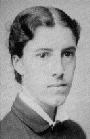
Why write about Charlotte Perkins Gilman at a blog about Postpartum Depression you might ask. She suffered a near nervous breakdown after the birth of her first child, leading her to author The Yellow Wallpaper, an intense short story about a woman’s treatment during a nervous breakdown, a story that one led a Boston Physician to state in The Transcript that “Such a story ought not to be written, he said; it was enough to drive anyone mad to read it.” Possibly so, but a physician from Kansas also wrote that “it was the best description of incipient insanity he had ever seen, and–begging my pardon–had I been there?” (Perkins Gilman)
Sadly, her nervous breakdown led to divorce and leaving her daughter in the custody of her ex-husband. Turning to writing as a way of earning money, Gilman eventually found herself as a spokesperson regarding “women’s perspectives on work and family.” Perkins Gilman believed that men and women should share household duties and particularly that women should be taught to be economically independent from a very early age (DeGrazia, Jodi), a topic she focused on in her work, Women and Economics, penned in 1898.
The Yellow Wallpaper has been a favorite story of mine since first read, love at first words. I identified with the main character well before experiencing motherhood and my own brush with insanity shortly thereafter. Perkins Gilman did an exquisite job of breathing a realistic insanity into her main character as well as exposing the mental health diagnoses and “cures” of the day for what they truly were – sadly insufficient and ignorant of treating the illness and instead closeting away those who suffered in hopes of recovery or at least not be part of mainstream society and therefore remain to be a “figment” of one’s imagination, the dark family secret.
In 1887, Perkins Gilman sought treatment for continuous nervous breakdown from the best k nown nervous specialist in the country. The rest cure applied and she responded well physically; however, the physician then declared all was well; sending her home with “solemn advice to ‘live as domestic a life as far as possible,’ to ‘have but two hours’ intellectual life a day,’ and ‘never to touch pen, brush, or pencil again’ ” for the remainder of her days. Gilman then writes regarding the effectiveness of this advice, saying “I went home and obeyed those directions for some three months, and came so near the borderline of utter mental ruin that I could see over.” (Perkins Gilman)
Engaging the help of a close friend and gathering what strength she had left, Perkins Gilman picked up her artistic work again and began to recover, finding strength within her work and “ultimately recovering some measure of power.” This experience is what led her to write The Yellow Wallpaper. Perkins Gilman admits to embellishments, stating she “never had hallucinations or objections to my mural decorations”. Written as a celebration of return to her success, her true motivation behind sharing her story, albeit in a fictional world, lay within the hope of saving others from her fate of mistreatment and the nearly paralyzing insanity following soon after.
In Perkin Gilman’s own words regarding her authorship of The Yellow Wallpaper, she states:
It has, to my knowledge, saved one woman from a similar fate–so terrifying her family that they let her out into normal activity and she recovered.
But the best result is this. Many years later I was told that the great specialist had admitted to friends of his that he had altered his treatment of neurasthenia since reading The Yellow Wallpaper.
It was not intended to drive people crazy, but to save people from being driven crazy, and it worked.
The number one reason I hear when women have chosen to share their experience with a Postpartum Mood Disorder is the hope that it will provide comfort to another as she travels down the same road. It is with the same spirit Perkins Gilman penned The Yellow Wallpaper that I share my story. Recovery is a hard road and sometimes a lonely road. I said from the very beginning of reaching out to others with a helping hand that if I could help even one woman, it would all be worth it.
The screaming, the agony, the tears, the lifting of the fog – it would all begin to somehow make sense and instead of continuing to drag me down, it would lift me up. The fog did not begin to lift until I reached out for help and found it – drenching myself in the stories of others who had been where I no longer wanted to be and read with new understanding and an intensity I had never known before just how they were able to escape the depths of depression and reach the light, breathing in sweet fresh air again.
Determined to shine a light on the path for those behind me and around me, I dove full force into sharing my story. Every time I shared my experiences with a woman who believed she had no hope left and found herself ashamed of her condition and witnessed what an impact my openness and vulnerability had on her, I knew supporting Mothers was my calling.
So I write about Charlotte Perkins Gilman in order to better explain my mission here at this blog and in life. I refuse to let another woman suffer alone and in silence. Not on my watch.


