Category Archives: family

Sharing the Journey with Cynthia Olkie

A fellow Coordinator with PSI first emailed me about Cynthia Okie’s Project, It’s Not So Black and White. The project is a photo essay book focusing on stories and photos of survivors of Postpartum Mood Disorders. I immediately posted about the project, following up with an email to Cynthia with a request for an interview. I am so excited to be sharing her journey with you today! She’s still accepting submissions for the book from survivors so if you have a story to share and can squeeze it out in 650 words or so, shoot Cynthia an email at fleurphoto@aol.com. If you’re in the L.A. area you’ll even get a free photo shoot! Certainly can’t beat that!

Thanks, Cynthia, for working on what I am sure will be an invaluable contribution to the every growing body of work from survivors.
blog-pic-copy

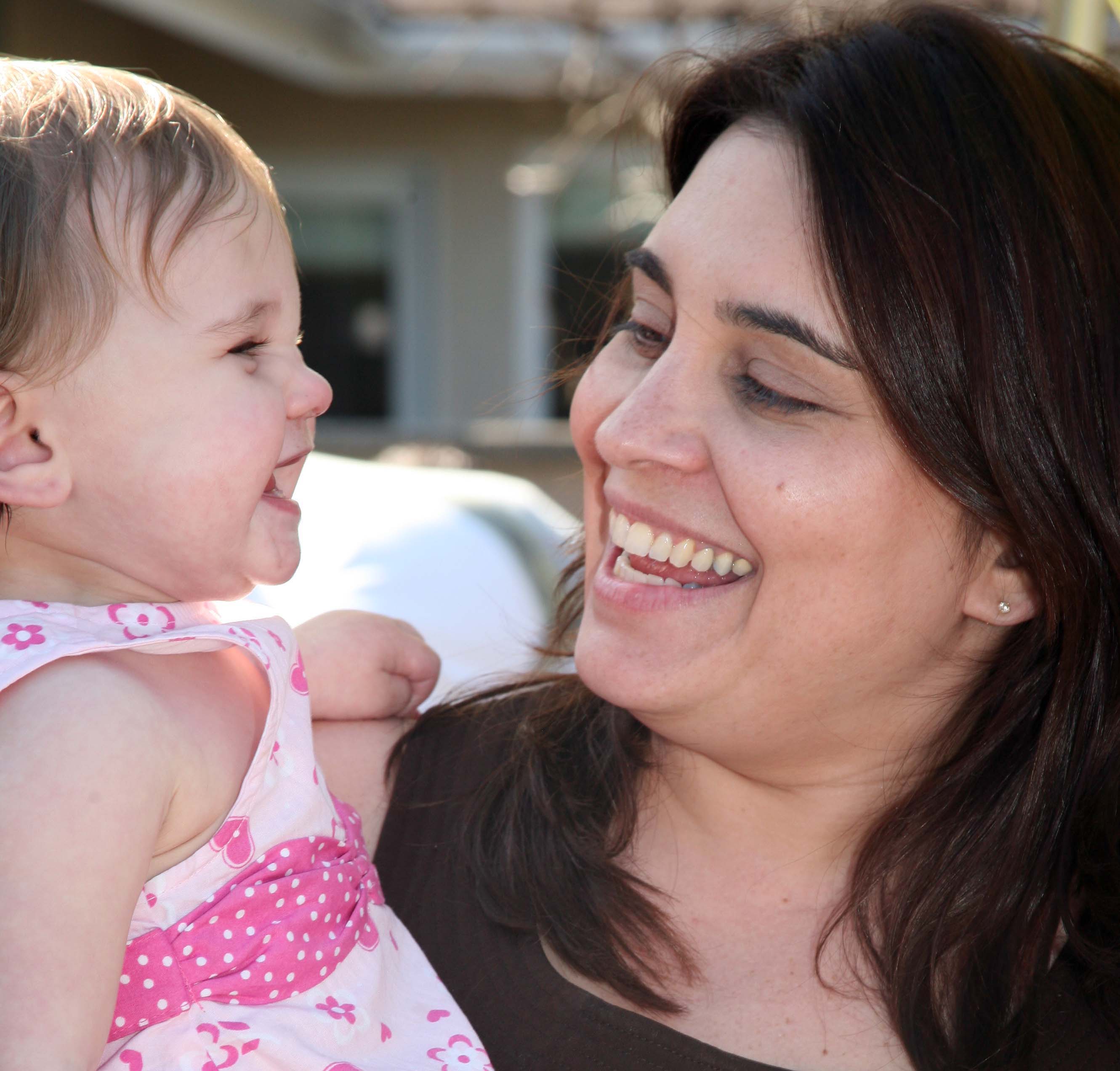
Tell us about Cynthia. Who is she when she’s relaxing and hanging out?

I can’t say I stay put for very long.  If I am being creative I am happy.  That could include taking a walk on the beach with my husband, step-son and daughter, having visits with my family where we just hang out and talk (most of them with Long Island accents), taking photographs, doing an art project, etc.  If I get quiet time I do enjoy reading a good book.  Once in a while I will watch TV.  Reality shows are my vice.

Share with us your daughter’s birth story. Was pregnancy and delivery anything like what you expected?

I had a wonderful pregnancy and thank goodness no complications.  The birth was a different story.

My daughter was pushing 2 weeks overdue and they scheduled me to be induced at midnight on a Sunday night.  For the next 43 hours I went through 2 rounds of Cervidil and 2 rounds of Pitocin.  Not dilating at all I ended up having a  c-section.  Had I known how easy the surgery was I would have just opted for that and not go through the pain and uncomfortable process of inducing.

My daughter was born and I went to recovery.  I was in the recovery room for nearly 5 hours and the last 20 minutes completely by myself.  The nurse left to find out what was happening in the postpartum rooms.  It was a bit scary because my legs were still a bit numb from the epidural.  I had visions of being in a horror film where someone comes in with a knife and i can’t run because my legs were numb.  I rang the buzzer and asked for a nurse and finally was taken to a room.

The next 3 1/2 days were anything but enjoyable.  All of the nurses gave me different information about nursing-“hold the breast up”, “squeeze the nipple”, “don’t do this, do that”.  Even though I took a class once my daughter was in my hands it was totally different.  The nurses were a bit inconsiderate and contradicted each other.

Since my daughter had lost more weight then they say they like they told us we might have had to supplement with formula.  As soon as my husband left to go pick up my mother the nurse came in and said “bottle or syringe?”.  Syringe?? What is that?  Needless to say she stuck a bottle in my daughters mouth.  That got my hormones a bit in an uproar.

On Saturday before we were checking out the pediatrician and lactation consultant came in.  They were both amazing and said the nurse did not follow instructions and was supposed to wait until the end of the day and if anything do syringe feeding.  We were glad to go home and get our new family going.  We had a lactation consultant come over and she got us back up and nursing full time.

Postpartum Depression can be a dark and scary place. Share with us what your stay there was like.

After my daughter was 4 months old we had her Baptism.  Family that never come to Los Angeles came and we had a full house for almost a week.  It was a Wednesday morning and my brother who was going to stay with us for a few more weeks and I drove my mother and aunt to the airport.  It was the final send off which is always hard for me.  As soon as we walked into the door and sat down there was an earthquake.  Now,  earthquakes and I do not get along.  It was my catalyst that set me off like a light switch.  It got my adrenaline running and I got hot flashes. From that moment on I had a very difficult time trying to care for my baby.  Apparently I was holding her so tight in the door frame my brother took her from me.

Although the earthquake was the switch, the fact that I was completely exhausted and overwhelmed with being a new mom contributed greatly.  I found it too scary to wake up in the morning because I knew as soon as my daughter woke up that I had to be on duty and I couldn’t bear the thought.  The only thing I wanted to do was nurse her and then hand her off to someone else.  I had support through my local MOMS Club which was incredible because all of the doctors and medical personal I tried to contact gave me the quick brush off.  I finally got a prescription for medicine which I knew would take a few weeks to kick in.  I spent about a month crying every day and calling my family on the east coast at 4 am Pacific Time which I knew was right when they would get up.  I barely ate if at all, had no desire to do anything and wanted to escape.


How did your husband and family support you through your recovery? What were some of the things they did that helped the most?

My husband and brother blew me away with their support.  Being men I thought they would get scared, crawl up in their hole and try to ignore anything was going on.  Instead my husband took over with feedings which we had switched to bottles during the day only, made me food which I would try to eat and offered to do anything he could.  My brother who was staying with us also took over where he could.  He sat with me for hours patiently listening to me repeat the same things over and over and told me how great of a mother I was and that I would overcome this.  They both were there for me, my daughter and each other and owe them everything.  I also had a wonderful friend who came over when she could and was their for me every step of the way as well as my Aunt and Cousin on the East Coast who listened to me every single day for days on end and were struggling themselves to help me from afar.

In my journey I needed to constantly be talking to someone even though I would say the same things over and over.  I can’t say I found much professionals very helpful or supportive which was very disappointing.

Tell us about 3 things that made you laugh today.

My daughter’s silly face she makes.
My husbands goofy dances
How scared I was when I was sitting so quietly alone at my computer when I though the cat wanted to eat my piece of cheese and was all over the desk only to find out he was trying to get the HUGE moth crawling next to me. I don’t like bugs.

You’re working on a photography and essay compilation book. What started the inspiration for this project?

During the darkest of my days in postpartum I went to the park to cry and call my Aunt.  While I was sitting there I had a glimpse of my photography and how much I love taking photographs.  Some where out of the blue I came up with the idea to do a photo-essay book on my experience. It was almost as if I went through my experience so that my idea could come to fruition.  I still don’t know how it occurred to me but I do know exactly where I was sitting and how I felt.

What do you find to be the most challenging about parenting? The least?

The most challenging thing about parenting is how I don’t have nearly the same amount of time for myself as I used to. I am grateful to be a stay at home mom for the time being but find it hard to be home and not want to do something for myself.

The least challenging is how easy it is to love my child.  It is the absolute best thing that has ever happened to me.  It is completely unexplainable.  The joy, emotion, warmth and unconditional love surpasses anything I have ever felt.

How did your husband handle your journey through PPD? Do you feel it impacted your marriage?

My husband was there for me through my whole journey.  I think for a few moments he was so nervous he didn’t know what to do but he sure didn’t show that to me.  He was stronger then I have ever seen him.  He would just ask what he could do and all I wanted was a hug.  And a hug from him makes me feel safe.  I am not sure my journey impacted our marriage as much as just the addition of a new person. A marriage needs work and adding a child adds even more.  We manage to work through our issues and we can only hope we are raising a wonderfully kind, gentle, smart  and decent human being.

Here at Sharing the Journey, I encourage mothers to focus on themselves. What are some things you do to take time for yourself every day?

Every day?  Ha! That’s a challenge.  I do cherish a good hot shower without any interruptions.  That’s something I can count on every day.  The hot water cleanses all of my worries even if it’s for a few moments.  I read a little every day even if its a few pages in a magazine.  I talk a walk with my daughter in the stroller which gives me time to breath in the air while she is not running around.

Last but not least, let’s say you have a chance to give an expectant mother (new or experienced) a piece of advice about PMD’s. What would you share with her?

Try to get help as soon as you can and don’t be ashamed.  Lots and lots of people told me “you are not alone”.  Although I know that now….when I was in my dark place it didn’t matter.  I wanted to be a child again myself and have someone take care of me.  Find support.  It’s out there.  Right now we have to do a lot of work to find it but so many people are speaking out about PPD that I pray it will soon get easier.

Real Life isn’t All Roses….

Back during the Ultimate Blog Party for Moms, I had the pleasure of “meeting” Jess.

Jess is a hip mama who writes what she calls her anti-blog all about her gluten free lifestyle. She’s a self-admitted non-expert who just goes with the flow. Sometimes things turn out well, other times not so well. But hey, that’s life, right?

Jess is also a two-time PPD survivor. Turns out when she stopped by here she had been contemplating writing about her experience. She emailed me with the post back during Blog Week for the Mother’s Act and it got lost in all the craziness.

Today though, I really want to share her post with you. It’s poignant, wise, and informative. Most of all, it reflect’s Jess’ bravery in finally stepping out to share her story with the world.

My favorite part of the post?

When Jess describes some of her feelings during PPD.

“There are moments too when I feel my brow furrow and an aching in my stomach like I’m holding my breath almost.  I am suddenly angry for no reason, anxious with no cause.  It’s a strange and unwanted intrusion and it is certainly not me, not an attitude problem, not a choice to respond to a situation wrongly.  Often it comes before I’m even faced with a situation, when I’m thinking of nothing or doing nothing in particular.  It sneaks in and I’m taken prisoner for the moment until someone like my husband steps in or one of the older kids helps out, sometimes even a phone call has helped.”

You can read her complete post by clicking here.

Sleep patterns of infants with depressed Mothers differs

"sleep like a baby" by peasap @ flickr

"sleep like a baby" by peasap @ flickr

According to a study published today in the May 1 issue of the journal SLEEP, the patterns of sleep differ depending on Mom’s depression or lack there of. The overall amount of sleep seems to be the same but infants with non-depressed mothers sleep longer at night (up to 97 minutes to be precise) and also seem to sleep for longer periods during the day.

Infants of depressed moms seem to wake more often .

Researchers hypothesize that this is related to the stress hormone, cortisol. When mom is pregnant and stressed, more cortisol crosses the placenta. And if you’re depressed postpartum, that plays a role as well.

Now before you freak out and think that your child’s sleep patterns are wrecked for life here, the lead author, Roseanne Armitage, MD, has news for you. The “damage” may be reversible.

“We do think that we could develop a behavioral and environmental intervention to improve entrainment of sleep and circadian rhythms in the high risk infants,” said Armitage. “However, whether it is maternal hormones that “cause” the sleep problems in infants is not yet known. It could genetic, hormonal, or both. Regardless of the cause, they may still be modifiable since brain regulation is very plastic and responsive in childhood.”

If you’d like to read more about this study, click here.

Now, breathe a little sigh of relief. See? the fact that baby isn’t sleeping ISN’T because you’re not doing something right or wrong. It’s not because there’s something wrong with your baby. It’s hormonal. Totally out of your control. I don’t know about you, but I am always able to put things into a better perspective when I understand the explanation behind them.

Frankly, this explains a LOT.

It explains why my first daughter never wanted to sleep for very long and why she wouldn’t sleep a lot at night. It also explains why our second daughter did the same thing. And last but not least, because I did not have PPD with our third, it explains why he’s such an amazing sleeper and has been from the start. Thank GOD it wasn’t me (or baby)! Phew!

Thoughts on exploring a “Pregnant Pause”

An article in May’s issue of Vogue entitled “Pregnant Pause” by Alexis Jetter attempts to provide insight into the very confusing world of the pharmacological treatment of depression or mental illness during pregnancy. Ms. Jetter seems to have done her homework. She brings up some very valid points, includes supportive research, referring to specific studies all framed within a heart-tugging story of a boy born with a heart defect as a result of his Mom taking Paxil during her pregnancy. Yet Ms. Jetter forgets to tell both sides of the story. Here’s my take on the article.

In no way am I belittling this Mom’s experience by rebutting some of Ms. Jetter’s claims. As a Mom of a special needs child, I know first-hand how difficult life becomes as you work with and around your child’s needs. I also understand the enveloping guilt which rages inside you every time you see your child suffer or struggle and wonder “Did I do that? Was it my fault?”

You see, I didn’t take my pre-natal vitamins during my second pregnancy. At first it was because of the wretched morning sickness. Then I just didn’t want to take them. I even pondered what would happen if I didn’t take them, thinking it would be a neat little “experiment” to find out.

When my daughter was born with Pierre Robin Sequence which included a complete and bilateral cleft of her hard and soft palate, I felt a guilt that cannot begin to be described by any words known to mankind. It took me nearly two years to admit this to anyone. I lied at the hospital when I was asked if I had taken my prenatal vitamins. Why? Because I knew from my mom’s quick research about PRS that lack of folic acid in the maternal diet increases the risk for this particular condition. The last thing I needed was for the doctors to also blame me for my monumentally bad judgment. Looking back, I’m pretty sure this erratic behavior was directly related to my untreated issues with Postpartum OCD/Depression after the birth of our first daughter.

To this day as my daughter struggles with speech, socialization, and a myriad of other challenges, I still blame myself somewhat. Intellectually I know her problems are not my fault. I have accepted this on that level. But a small part of me will always wonder if she would have these problems if I had just taken my vitamins. So I get it. I get the guilt, I get the hind-sight. I get the anger and outrage. And I definitely get the need for education and informed consent.

What I don’t get is the desire to limit treatment options for other people. Instead of limiting, let’s encourage the development and shared knowledge of non-pharmacological therapies for mild cases of depression during pregnancy such as altering your diet, increasing exercise, natural supplements, psychotherapy, to name a few. Instead of judging, let’s allow women to make their own decisions regarding their mental health treatment. (you can read more on my thoughts regarding the ante-partum medication conundrum here)

Just as with those who are passionate for home-birth and those who are passionate for breastfeeding, there is a caution to be heeded here. We cannot convince a woman who is determined to have a caesarean section to have home-birth just as we cannot convince a woman who is convinced that a pill will solve her problems to try other therapies. All we can do is provide the education, statistics, and support. Then we need to step out of the way and let the woman make the decision with her medical professional team.

We can only fix ourselves, not those around us.

Now, onto the meat of the article, if you will.

After we meet Gina Fromm and hear of her difficult experience as a result of taking Paxil during her pregnancy, we are introduced to Dr. Anick Berard, PhD and Professor of Pharmacy at the University of Montreal. He discusses his study on Paxil, concluding that “..now other people have done the studies, too. And I’m much more comfortable saying that Paxil is a bad drug to take during pregnancy.”

Really, Dr. Berard?

I found a more recent study undertaken by none other than Dr. Anick Berard which concludes that unless the dose of Paxil is above 25mg during the first trimester, Paxil usage is not associated with an increase in congenital cardiac malformations when compared with non-SSRI usage. (Typical therapeutic dosage for Paxil can range anywhere from 10mg to 40mg.) When researching it’s not difficult to find studies to contradict one another but when you find them from the same researcher it’s a bit odd.

Next we meet Carol Louik, Sc.D, author of one of the two studies released in June of 2007 extolling the small risk SSRI’s posed to the human fetus. Turns out Carol’s study was partially funded by GlaxoSmithKline, Sanofi Aventis, and another Pharmaceutical Company. However, at the same time Carol’s study was published in the New England Journal of Medicine, another study was also published. This study was coordinated by the CDC out of Atlanta and did not have any financial disclosures to the Pharmaceutical Companies. Sura Alwan, MSc, and Jennita Reefhuis, RN, were first and senior authors respectively. Their study concluded the absolute risk of exposure vs. non-exposure not to be much different than the standard baseline risk for defects in any healthy pregnancy.

But the Alwan/Reffhuis study results are not present in the Vogue article.

Then we’re tossed this golden nugget – “….SSRI usage dramatically increases the chances that a baby may be miscarried, born prematurely or too small, suffer erratic heartbeats, and have trouble breathing.” The author further states that “Taken together the NEW research caught many experts by surprise.” Yet most of the research articles I located by the researchers quoted were from 2006 or earlier. This is hardly NEW research. In fact, the NEW research contradicts many of the studies referenced in the Vogue Article.

For instance, we’re informed through a quote from Dr. Adam Urato, M.D. That “these antidepressants are portrayed almost like prenatal vitamins that will level out their mood and lead to a healthier baby. But antidepressants have not been shown to decrease rates of miscarriage or birth defects or low birth weight. On the contrary, they’ve been shown to increase those problems.” Then directly after this quote, Ms. Jetters states pregnant women are routinely excluded from clinical tests of new drugs. But she fails to ask a very important question.

Why?

A solid answer can be found in the February 2009 Carlat Psychiatry Report, an unbiased report regarding all things psychiatry related, including medication. According to an article entitled “Psychotropics and Pregnancy: An Update,” the Carlat Psychiatry Report states “the gold standard study will never occur. It will never be ethically permissible to enroll pregnant women into a randomized, placebo controlled trial designed to determine if a drug causes birth defects. For this reason, we are left with less than ideal methods of determining risk.”

To seemingly substantiate Dr. Urato’s quote regarding miscarriage, birth defects, or low birth weight, a study performed by Developmental Pediatrician Tim Oberlander, M.D. At the University of British Columbia is briefly examined. This study concluded after tracking the birth outcomes of 120,000 women that infants exposed to SSRI’s prenatally were born too small and have trouble breathing. Oberlander’s quoted conclusion for the article? “It’s not the mother’s mood,” Oberlander says. “It’s the medication.”

Yet Oberlander’s study is negated by Einarson’s study, “Evaluation of the Risk of Congenital Cardiovascular Defects Associated With Use of Paroxetine During Pregnancy” Einarson also writes a letter to the American Journal of Psychiatry, (located in Vol. 64, No. 7, July 2007) which states the conclusions made by Oberlander and others is not supported by the data presented. Einarson points out that low birth weight was not stated as an investigated outcome and that only average weight of newborns and proportion falling lower than the 10th percentile (ie, small for gestational age but NOT low birth weight. Low birth weight is technically defined as >2500g2.

Einarson’s study combined both prospective and retrospective methodology to examine a large number of women specifically on Paxil. Their conclusion? “Paroxetine does not appear to be associated with an increased risk of cardiovascular defects following use in early pregnancy, as the incidence in more than 3,000 infants was well within the population incidence of approximately 1%.”

Just in case you’re wondering, no, their study was not funded by GlaxoSmithKline. The Carlat Psychiatry Report is quick to point out that seven of the nine authors received no funding from GSK or any other drug company but two have received funding for drug research from other drug companies but not GSK.

The Carlat Report also address what one should do with conflicting information regarding medicating during pregnancy. The best one can do from a “medico-legal perspective is to avoid paroxetine. But the data does suggest that paroxetine – and perhaps by extension, all SSRI’s – may be safer than what has been suggested by other smaller studies.”

Going back to the issue of pre-term delivery as well as low birth weight and their relation to mood or medication, a recent study released by Dr. Katherine Wisner examines this very topic. The study looked at 238 women with no, partial, or continuous exposure to either SSRI treatment or depression and compared infant outcomes. Dr. Wisner’s study found that exposure to SSRI’s did not increase birth defects or affect infant birth weight but the importance of this study lies within the finding that the pre-term delivery rates were the same with depression exclusive of SSRI treatment, leading the researchers to state that it is “possible that underlying depressive disorder is a factor in pre-term birth among women taking SSRI’s.” Dr. Wisner also encourages further research into this topic even though her study was just released this year. You can read more about this study by clicking here.

Rita Suri, M.D. from UCLA also studied this very situation, publishing her research in August 2007 in the American Journal of Psychiatry. Not surprisingly, Suri’s study is quoted in the Vogue article. Her results found that infants born to women taking SSRI’s were three times more likely to be born prematurely (although most were only 1 week early) She also found that the higher the antidepressant dose, the higher the risk of early delivery. However, her results did not show that untreated mild depression had an effect on prematurity. I’d like to add a personal digression here. My second daughter was born at 36 weeks. While not officially diagnosed, I would say that I suffered from untreated depression during that pregnancy. Sure it’s not an official research study but it’s very hard to discount personal experience especially when it agrees with current research.

At this point in the article, we’re introduced to one of the more well-known disorders associated with paroxetine usage, Persistent Pulmonary Hypertension of the newborn. Tina Chambers, Ph.d, a birth-defects researcher from University of California at San Diego is the chosen expert for this topic. She states that this condition normally strikes only one or two infants in 1,000. But Chambers found that rates jumped between six and twelve per 1,000 for mothers who take SSRI’s. In contrast, a recent prospective study by Susan Andrade, ScD, concluded no relationship between SSRI usage and PPHN but did admit that given limitations of the study and small number of confirmed cases, further study in this area may be warranted. In Andrade’s study, 1104 mothers were followed with only 5 confirmed cases of PPHN reported.

Alexis McLaughlin’s story about her daughter’s struggle with PPHN is striking, especially for me, because I’ve seen my daughter struggle for breath immediately after birth. Her quote, “It’s difficult because you need good mental health and a healthy baby,” is very reminiscent. You do indeed need good mental health and a healthy baby. When I was pregnant with Charlotte, we told people we didn’t care about gender, all we cared about was health. But if that doesn’t happen? You do your best to get through it because there is nothing you can do to go back and change what was done in the past. We can only move forward, changing what we can, and if we can’t change it, we change the way we think about it. Even with a normal pregnancy given no SSRI exposure or depressive exposure, a mother faces a 3% risk of giving birth to a child with a birth defect of some kind.

We are then moved into the science behind the affect of an anti-depressant on the human fetus. It’s hypothesized that serotonin is responsible for sending “crucial developmental signals to the fetal heart, lung, and brain….[and that]…SSRI’s, which prevent the body’s natural absorption of serotonin, could be tampering with essential cell growth.” A study by Francine Cote concludes that maternal serotonin is indeed involved in fetal development, precedes the appearance of sertogenic neurons, and is critical for development. The latter hypothesis regarding the interference of SSRI with essential cell growth has been and I’m sure will be studied for quite some time.

Shortly after this, the article winds down by warning of the “small coterie of influential doctors who…underplay the dangers of antidepressants,” again, a quote from Dr. Adam Urato. I do agree whole-heartedly with the latter part of his quote: “We want and need expert opinion that’s free from industry influence and from the appearance of bias,” Urato says. “It’s just outrageous that doctors have to work with that.”

Any of the several women I’ve come across who work with the Perinatal Population will be some of the first to admit that yes, there are risks to taking medications while pregnant or nursing. We even inform women we support to not only weigh the benefits against the risks by researching their options but let the professionals determine if the situation is severe enough to warrant medication.

Dr. Katherine Wisner examined this Risk-Benefit relationship in a study back in 2000. In this study, Dr. Wisner encourages physician and patient communication through the use of informed consent, provided the patient meets the legal definition of competent. She also recommends a family member or friend of the patient be present to help alleviate any anxiety and to ask questions the patient may not think of asking regarding any medication decision.

Many of the recommendations Dr. Wisner sets forth should be commonly used by a competent physician. Unfortunately there are physicians who do not follow informed consent and instead pay attention to the perks offered by Pharmaceutical Companies. However; these perks are slowly disappearing as the medical community awakens to the ethical dangers they pose as a result of increased consumer advocacy for fair and informed treatment when it comes to mental illness. If you should find yourself with a physician who prescribes SSRI’s like m&m’s or refuses to listen to your situation, it is time to find a new doctor for your care. A good doctor will listen, research, and collaborate with you.

I want to close with a quote directly from the Vogue article by Gina Fromm, Mother to Mark Fromm, the little boy with the heart defect as a result of his mother’s usage of Paxil. I couldn’t say it any better than this.

“It is easier to take a pill,” Gina says. “But over the long run, that’s not the best solution. It certainly hasn’t been for my life.”

I agree Gina, I agree whole-heartedly.

In my opinion, society today has gotten in the habit of quick fixes instead of sustaining solutions. I personally think it’s time we change that. But let’s do so in a logical, evidence based, and bias-free manner. Otherwise we’ll all just end up stuck right where we are screaming at each other so loud we can no longer hear ourselves think.

From the trenches…

Today I’d like to focus on the real faces and true stories of Perinatal Mood Disorders.

These are the stories of everyday people who have ferociously fought to survive this insidious illness.

These are the people who realize the true value of The Melanie Blocker Stokes MOTHER’S Act. They passionately support the legislation.

Many of them are also now ardently dedicated to supporting others as they tread on this dark and lonely path.tea-cup-and-strainer1

Got a few minutes?

C’mon in – grab a cup of tea and sit down.

Let me introduce you to a few of them.

Meet Heather. Her brush with Postpartum Depression began during the pregnancy of her first child. Anxiety and intrusive thoughts settled in, causing her to obsess about birth defects of her unborn infant. Things went from difficult to worse when Heather experienced a reaction to a pain medicine administered during labor. She awoke at 7 hours postpartum only to witness her son receiving oxygen. Once home, she stopped sleeping, going days without rest. Her milk supply dried up as a result of the intense stress she was experiencing. Heather and her family moved in with a family member as it was no longer safe for her to be on her own. With an intolerance to all medications (including antibiotics), she sought help via talk therapy and a kinesiologist. After a few months of therapy, she was given a clean bill of health. Heather now serves as a moderator at the Online PPD Support Page and finds helping others very rewarding and meaningful. You can read more of Heather’s story by clicking here.

Ruth Rhoden Craven & son

Ruth Rhoden Craven & son

Then there’s Helena Bradford, one of the most amazing women I have ever had the privilege of knowing. Her daughter Ruth Rhoden Craven tragically ended her life after struggling with Postpartum Depression. Doctors were unable to help and some bad internet advice led the family to believe all Ruth needed was a vacation. How wrong they were! Helena works each and every day with a determination to prevent what happened to Ruth from happening to others. She is deeply rooted in her faith and believes without a doubt that the Lord has used Ruth to further the cause of PPD awareness. Helena has an amazing will. She is standing strong despite her tragic loss. Read an interview with Helena by clicking here.

headshot_bob-gibbsAnother parent who has joined the battle is Bob Gibbs. Bob lost his daughter and grandson, Jennifer Gibbs Bankston and Graham Bankston on December 19, 2007. This particular story is very hard for me to write about. I gave birth to my son on December 18, 2007, just a day before Jenny and Graham lost their lives. Even in the face of this tragedy that would cause most to buckle and falter, Bob and family have instead garnered strength and power. They have turned their loss into a powerful outreach program which has garnered national recognition. Jennyslight.org is a powerful and energetic new force within the Postpartum Advocacy landscape, one we hope will continue for a very long time. While we are saddened for their loss, we are thankful for their dedication and passion to families struggling with Postpartum Mood Disorders. Get to know Bob Gibbs in his own words by clicking here.

cheryljazzar1Meet Cheryl Jazzar. She experienced a psychotic break after the birth of her first child and was subsequently hospitalized. The break destroyed her marriage and she lost her child as a result. Five years later found her remarried with another child on the way. She experienced a depression a few months after birth. Using self-care, she rebounded quickly and knew she had something to share. Cheryl began to educate herself regarding alternative and complementary methods of treatments available to mothers during the perinatal period. She quickly became quite knowledgeable regarding non-traditional methods of treatment with a strong desire to share this with other mothers. Cheryl is a passionately dedicated volunteer for PSI and also blogs at Wellpostpartum regarding alternative and compassionate care. You can read Chery’s interview here.

danscottNow I’d like to provide a different point of view. A mom is not the only one affected by a Postpartum Mood Disorder. Her husband is also affected. Meet Dan Scott, a father who has stood by his wife as she struggled three times with a Postpartum Mood Disorder. Each time was a unique experience, one that tested their marriage and their faith. Dan states that the second time around was the worst – there are moments they don’t even remember because the circumstances were so dark. As a result of his journey, he finds himself more sensitive towards new mothers. He recognizes the hard times the birth of a child can bring. He advocates for new fathers to step up and take their vow of “for better or for worse” seriously. Dan believes he is a better man for having been through this with his wife. Want to read more about Dan’s story in his words? Click here.

Last but not least, I’d really like to introduce you to a mom named Jamie. She’s a mother to one daughter and is due to give birth in June. Is she scared of experiencing Postpartum Depression again? Absolutely. Has she had issues with mood already during pregnancy? Yeap. But she is bravely speaking up about her experience and is being very pro-active this time around. Her first episode found her not wanting to bond with her child. Instead of being the blissful new mom society tells we should be, Jamie cried, lashed out, and wanted to pack her bags to run away. She finally sought help after her father questioned her constant negativity. Jamie has one piece of advice for new moms. Get help – the sooner the better. Want to read more about Jamie’s story in her own words? Click here.

Now that you’ve had a chance to read some of the true stories of survival, I hope you’re picking up your phone and calling the H.E.L.P. Committee.(If the line is busy, call the next member but keep trying until you’ve spoken with every office!)

Have you emailed Susan Stone yet with permission to be added to a list of supporters? If not, email her with your name, state, and any credentials or organizational affiliations at susanstonelcsw@aol.com right now! (Seriously – you’re already on your computer, right? It takes five seconds!)

I hope you’re blogging to raise awareness and support for The Melanie Blocker Stokes MOTHER’S Act. Got a twitter account? Raise your voice there too. Share this on Facebook! DIGG it! Don’t let these voices go to waste. Raise yours with them.

Remember in the children’s book, Horton Hears a Who, it wasn’t until the tiniest Who raised his voice that the jungle animals finally believed in the existence of the Whos. We need ALL of your voices. Now.