Category Archives: advocate

Daly Response: Breastfeeding, Family Dynamics, and Communication

Starting a family is no small decision. Expected or unexpected pregnancy involve major decisions and choices. How will you parent? How will you care for the child? Who will be the primary caregiver? Will you share responsibility equally? Attachment parenting? Extended breastfeeding? No breastfeeding? There are so many decisions to be made once a child enters your relationship. These decisions affect family dynamics and should not be made independently of your partner. They should be thoroughly discussed and mutually agreed upon. One of you may end up having to compromise but ultimately, you must do what is best for your child within your personal parenting philosophy, hopefully with a partner who sees along the same lines.

Parents these days have a bevy of knowledgeable resources available to help with their decisions regarding parenting. Pediatricians, lactation consultants, other parents, and just about everyone on the planet.

We all love to chime in on how others parent, don’t we? Especially with the explosion of social media. Judgment runs amok when a parent asks even the most innocent of questions.

Today, the NY Times posted a piece by James Daly which explores the effect of extended breastfeeding on a couple’s sex life. Daly states:

“Other men — me, for example — might be driven to engage in something even worse: sexless fidelity. Mine crystallized in Central Park one evening, while watching my wife sit under a tree with my older son, a five-and-a-half-year-old young man with a full set of teeth and chores, stretched out to roughly the size of a foal, suckling. By the time they strolled back to me and my already-nursed toddler son on the picnic blanket, I had lost my appetite — and not just for the smoked salmon. There are some things in life most men cannot share with first-graders, and two of them used to be called breasts. Now, my first grader called them boobalies, and history is written by the victors.”

Breastfeeding is recommended for at least two years or beyond by WHO, exclusive nursing for the first 6 months with complementary foods added until two years. Now, the WHO code implies “beyond” is solely between the mother and child. While I don’t think Daly’s threat of infidelity based upon his wife’s choice of extended breastfeeding is kosher, I understand where he’s coming from.

A family, when a father is present, is not just a mother and child. All too often, the father’s needs and desires are often thrown out the window. He doesn’t matter and should shut up if he so much as voices any disagreement to how his wife chooses to raise their children, run the household, or anything else.

It’s not about who wears the pants in the relationship. Feminism doesn’t mean we get to make decisions without our partner. it means we are equal to them, not above them. Isn’t that what we fought for? Not to be beneath men? So why should they be beneath us and suddenly not matter? Where’s the victory in that?

Granted, women HAVE run things in the home and the childcare realm for quite some time. But more and more, men are involving themselves in these situations. Stay at home dads are increasing in number.

Sex is also an important aspect of a relationship. It’s how we’re intimate with our partners. It’s nurturing, releases hormones, stress, and brings us closer. Yes, intimacy IS possible without sex. However; intimacy is NOT possible without communication.

That’s where I believe this issue with Daly and his wife has broken down – at the communication level.

Clearly he’s not happy about his wife’s extended breastfeeding to the point of losing his appetite. Whether he’s actually considering infidelity or not is up in the air – he may just be using that as an example. I know that when I was breastfeeding, I was not terribly keen on my husband playing with my breasts. When I’m breastfeeding, my breasts are functional, not sexual.

What many men miss is that breasts are primarily designed to be functional, not sexual. Yes, breasts are visually appealing and nipple stimulation does provide sexual pleasure for many women, but ultimately, the breast is phenomenally designed to create and make milk to feed infants, a process which starts during pregnancy.

At the end of his piece, Daly states:

“I say that the foundation of the parent-child bond is the parent-parent bond. Unlike the baby chicken or the fertilized egg conundrum, partnership precedes parenthood. That’s how you got into this position to begin with: by attracting a man who liked what he saw, and wanted to see more of what even the scientists researching extended breast-feeding call mammaries, not Mommaries.”

Daly is right but he’s also wrong. The parent-parent bond IS important to the development of a child. But many successful children are raised by single parents. We’re specifically discussing a partnership here though so we’ll address this aspect. This goes back to what I stated earlier – when you decide to have a child, how that child is fed should be a mutually agreed upon decision. Granted, that doesn’t always happen as life does not occur in a vacuum. But Daly himself states that he SUPPORTS his wife’s choice to breastfeed their sons, thereby accepting the flashing of “mommaries” instead of the “mammaries” which allegedly attracted him to his wife in the first place.

Attraction should be comprised of several things –not just appearance and physical attributes– it should include intellectual capability, sense of humor, communication skills, compassion, etc. There’s a reason eHarmony is so successful –they don’t just toss the physical at you. (not a sponsored mention.)

Physical fades. It changes. Your spouse/partner may have medical conditions (mental or physical) which impede sexual interaction. What then? If you don’t have any other basis for attraction to your spouse/partner, you’re screwed, and not in the way you desire. But is that justification for infidelity?

No.

Daly and his wife need to have a discussion about the state of their relationship because for now, I have a feeling he’s going to see a lot more of the “mommaries” than the “mammaries” if he fails to vocalize his feelings about his wife’s extended breastfeeding of their sons.

You could argue that extended breastfeeding has amazing benefits – nurturing, intellectual, etc. But you could also argue, as Daly does, extended breastfeeding impinges on the sexual relationship and therefore the intimacy of the parent-parent bond.

Here’s the thing – if your parent-parent bond relies solely on sexual interaction and seeing her “mammaries” instead of her “mommaries”? Your relationship may not have the best foundation.

Communication. THAT’S where intimacy starts. Daly should give it a shot.

Patrick Dempsey VIR June 14 2012

Dempsey races into the #PPDChat world

McDreamy. That’s how most women in America refer to the fabulous Patrick Dempsey. Then we sigh and our minds wander. There’s just something about him, isn’t there?

In addition to the portrayal of Dr. Derek Shepherd on Grey’s Anatomy, Patrick Dempsey also races cars. He’s been racing through Dempsey Racing, which formed in 2002. Racing is so important to Dempsey that recent contract negotiations for his continued appearance on Grey’s hinge on his ability to have time off to race – “The biggest point for me in negotiations is getting time off to come race, so if I don’t miss races, I’ll probably stay on ‘Grey’s Anatomy.’”  (quote source: Huffington Post)

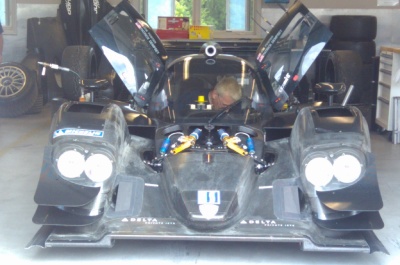
Not too far away from where I’m currently living is Virginia International Raceway, or VIR as it’s known to locals and racing enthusiasts. Back in June, American LeMans held a test day at VIR for several teams. I had no idea when my dad first mentioned going that Dempsey would be there. All I cared about was seeing the amazing cars.

I’ve been watching non-Nascar racing for quite some time now. We primarily watch F1 but given that there are no F1 tracks nearby, we settle for Grand-Am and now American LeMans if local events are attended.

I woke up early on June 14th to make the trek to VIR with my dad. After we paid for our entrance, we made our way to the Oak Tree corner to get started. The first race car came screaming around the curve, leaving me breathless. Then we went down to the top of the RollerCoaster, which was where I first saw Dempsey’s car pop over the hill. Only I didn’t know it was Dempsey’s car. It was quite simply, the most beautiful vehicle I’d ever seen on a racetrack.

It wasn’t until later in the day while meandering around the Pits that I realized Dempsey Racing was there. Then we overheard some VIR employees discussing his performance the day before. I whispered to my dad that if Patrick was indeed there, I simply had to meet him and he had to get a picture.

Dempsey’s car in the garage

As we continued to wander down through Pit Row, the sky darkened and we decided to go grab some lunch. Rain dropped down on us right as we reached the concession area but cleared up before we were through with our BBQ sandwiches and beer. We headed back over to Pit Row as all drivers are required to take at least an hour break during test days.

Thankfully, (or luckily) we managed to see Patrick as he stepped out of his trailer. He is a genuinely nice guy. The picture above was taken very quickly as he was heading somewhere on a scooter shortly after. He took the time to chat with my dad for a few minutes though and I was left in awe that I’d just met McDreamy.

This is where the story gets interesting.

I tweeted about meeting him (in a very 14 year old giggly girl manner):

So….I just met Patrick Dempsey. SQUEEEE.

— Lauren Hale (@unxpctdblessing) June 14, 2012


My phone barely had any power left but I received this response:

@unxpctdblessing Saw ur tweet re: Patrick (awesome, isn’t he?!) BUT my BFF suffers from PPD & PP psychosis. Reading website, linking her!!

— Erin (@lainey_vb131) June 14, 2012


So you see – Dempsey has this knack for saving lives and playing the hero without even trying.

@lainey_vb131 participated in #ppdchat the following week and still follows the chat, finding support with us even though she herself doesn’t suffer from Postpartum Depression.

When you do something you truly love, everything in your life is touched by it and nothing you do escapes without somehow translating into your primary function in life. Things like this prove again to me that I’m meant to help others with their journey through Postpartum Mood & Anxiety Disorders. I’ve been struggling a bit with that but it’s what’s in my heart and what will always be in my heart. Just like racing is what’s in Patrick’s. Well, that, and heroically saving lives. Even when he doesn’t realize he’s doing so.

Thank you Patrick, for taking just a few seconds to say hi to me and agreeing to a quick picture. Because of your graciousness, another mom found my blog and the community surrounding it –so did her best friend– and now they are no longer alone. You rock.

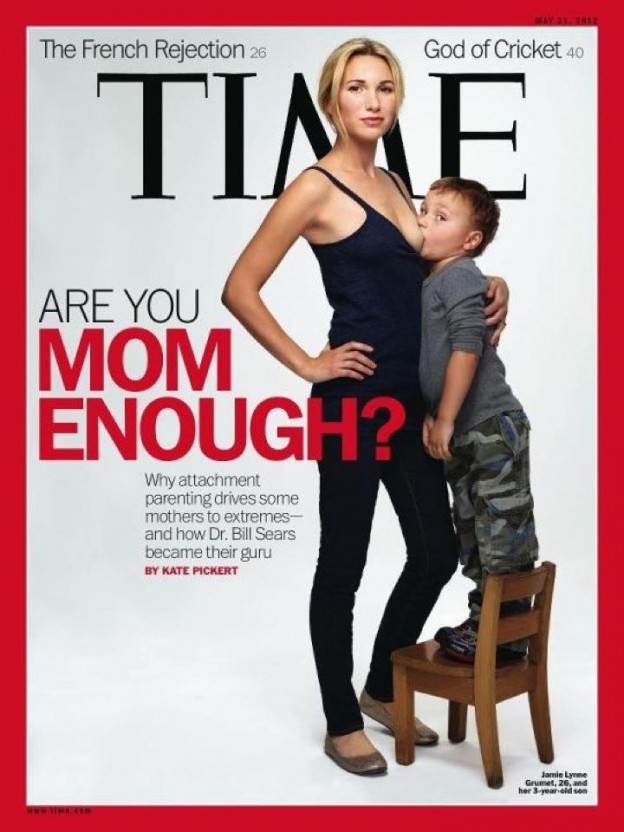
Time - Are You Mom Enough

TIME Magazine fails to support mothers

When Jamie Grumet was tapped for an interview and photo-shoot for the most recent issue of TIME magazine, her goal was not to raise our hackles. Her goal, according to a Q&A at Time was: “There seems to be a war going on between conventional parenting and attachment parenting, and that’s what I want to avoid. I want everyone to be encouraging. We’re not on opposing teams. We all need to be encouraging to each other, and I don’t think we’re doing a very good job at that.” Read more: http://healthland.time.com/2012/05/10/q-a-with-jamie-lynne-grumet/#ixzz1uUnnAmrE

I have to say —I kind of agree with Jamie— but I disagree with about where the judgment is originating. For instance, this weekend is Mother’s Day weekend. Instead of celebrating motherhood for the amazing and difficult job it is –regardless of your approach– TIME magazine instead chooses to share an incredibly divisive article with an even more divisive headline, “Are you MOM Enough.” The real title, as accessed at their website is: “The Man Who Remade Motherhood.”

As for the photographer, Martin Schoeller, who took the photo, in an article focusing on “Behind the Cover,” he stated: “I liked the idea of having the kids standing up to underline the point that this was an uncommon situation.” He also further stated, “It was important to show that there’s no stereotypical look for a mom who practices this kind of parenting.” Oh Martin. There’s no stereotypical Mom either – aside from, you know, a woman who has a child. Beyond that though, everything is up for grabs.

It’s time to stop judging each other for our choices. To stop allowing the media to get us all riled up. To stop thinking “Am I Mom Enough?” You are. No “as long as…” attached. There are, of course, mothers who don’t even try, mothers who have truly given up and are absent. But we’re not discussing mothers who are absent. We’re talking about mothers who give enough of a damn to raise their hackles in response to an article like this.

I don’t want to play the game anymore. But, as a mom who blogs and actively supports mothers who struggle with Postpartum Mood & Anxiety disorders, I feel I would be remiss in not addressing this topic.

Mothers, all of us, are different. We are unique in our approach to how we mother our children. These philosophies are rooted in how we are raised, how we relate to our partner, how our children relate to us, and the needs of our children. We adjust our lives in order to provide the best for our children with the resources we have and the beliefs which live deep within our hearts. If your children are secure, happy, and loved, there really isn’t any issue as to what your parenting philosophy is or if it’s any better than the mom next door.

All that matters is that what you’re doing WORKS FOR YOU.

This weekend, don’t wonder if you’re Mom enough.

KNOW you are. And know I love you for it.

PND in Dads is not a fallacy

The main reason I started this blog was to lend a voice to the experience of having a baby after postpartum depression. At that time, my advocacy for families struggling with Postpartum Mood & Anxiety Disorders was in its infancy.

Over the past few years, my experiences, both personal and online, have lent to an understanding that it’s not only moms who experience depression after the birth of a child.

I’ve interviewed dads like Joel Schwartzberg and Jeff Tow who have personally experienced it. I’ve lived with a dad who experienced it. I’ve spoken with experts who have conducted research in the area and also with experts such as Dr. Will Courtenay, who provide counseling and support for men who experience what is properly termed as “Paternal Postnatal Depression.”

Yesterday, The Guardian published a piece by Barbara Ellen entitled, ” ‘Postnatally depressed’ dads? Give me a break.” I read it this morning as yesterday I was on the road. Barely awake and still blinking to bring words into focus, I saw a tweet on my timeline referring to the article. I clicked. It was a response post by the folks over at Mind Hacks. I knew this required more response than I could provide via Twitter. So here I am.

[tweet https://twitter.com/mindhacksblog/status/191478302169501696 align=’center’]

The Guardian has a less than stellar record when it comes to Postnatal Depression stories to begin with so I’m not terribly surprised they allowed something such as this to be posted. More often than not, stories involving PND at The Guardian include gruesome details with no trigger warnings, and they also link to further triggering articles. No resources or further information is ever given.

Let’s begin by examining the definition of postnatal:

post·na·tal (pst-ntl) adj. Of or occurring after birth, especially in the period immediately after birth.

It states “after birth,” yes? It does not state “after giving birth.” Postnatal depression, for most women, is intrinsically linked to childbirth, but according to Ms. Ellen, adoptive parents are also excluded from the experience of Postnatal depression because they fail her test for the qualifications to achieve proper “Postnatal Depression” legitmacy:

“Were hormonal levels tested? Was postpartum bruising measured? How about the emergence of a human head in what – in deference to what might be your leisurely Sunday breakfast – I will refer to as the front-bottom area?”

What about women who had a cesarean section? Given that their child also did not technically emerge from “the front bottom area”, are they also excluded from experiencing Postnatal depression?

Ms. Ellen, in her bashing of men who experience Postnatal Depression, does not just bash them. She completely denigrates any experience of Postnatal Depression. It’s clear she read the research but I wonder if she bothered to even talk to any men who have experienced Paternal Postnatal Depression. Or frankly, if she even cares to, given her obvious feelings on the topic:

“The research from Oxford University is all about new fathers becoming stressed and depressed, their condition triggered by the sleepless nights, strain and the responsibilities of parenthood. I believe the official medical term for this is: “Pissed off, knackered and yearning to be carefree again.” “

The addition of an infant, to any relationship, is a difficult one. There are sleepless nights, there is strain, and there absolutely are responsibilities of parenthood. Some of us fight even darker demons after the birth of a child, regardless of our gender, regardless of how (or even if) we gave birth, and, regardless of our socioeconomic status.

I watched my former spouse fight Paternal Postnatal Depression as I fought my own battles with Postpartum OCD, Depression, and PTSD. His experience is no less valid than my own, and I certainly did not feel as Ms. Ellen states I should have felt,

“…were having to put up with such exhausting narcissists as partners – men incapable of hiding their sulky self-absorption…”

There’s an importance in acknowledging men with depression after the birth of a child. Why? Because men are far more likely than women to complete suicide. They are also more likely to TAKE THEIR FAMILIES WITH THEM.

This is not solely a male v. female issue. This is not men attempting to lay claim to “…a foul, debilitating condition directly related to the physical act of pregnancy and childbirth?” This is a family issue, just as it is with a mom. This is a mental health issue. Men, yes, are capable of experiencing depression. It doesn’t make them any less of a man, it doesn’t mean we suddenly have to contend with “male PND.” It means we should be understanding, accepting, and supportive of fathers, a group who is largely forgotten after the birth of a child and is simply assumed to carry on as if his life has not changed.

Men are more involved in the childbirth experience than ever before. They are in the delivery room, they are staying home to take care of their children, and they are engaging in their children’s lives. Why shouldn’t we acknowledge their struggle? Men experiencing emotion is not new. It’s simply not accepted by society and therefore brushed under the rug.

Let’s stop doing this.

As I told my son, who broke down in tears after Skyping with his Dad, it’s okay for him to cry. Anyone telling him any differently is wrong. It’s okay for a man to cry. It’s possible for a man to be depressed after the birth of a child – it’s not him feeling “pissed off, knackered, or yearning to be carefree.”

Stop giving ignorance a platform, dear media. Just stop.

Postpartum Voice of the Week: Bravado Designs

Tuesday morning began like any other. Until I saw a tweet from @phdinparenting referencing an earlier tweet by @postpartumprogr, Katherine Stone. This tweet questioned the title of a giveaway post at BabyCenter involving Bravado Designs products. At the time, the title of the post was “Can Color Cure PPD?”

I discussed it briefly on Twitter then decided to do some research into the legitimacy of colour and PPD. I’m always wary when someone, anyone, claims to be able to “cure” PPD. It turns out Chromotherapy does indeed exist and has a long history. But nothing I found directly linked it to treatment of PPD, let alone a cure.

Having read the post at BabyCenter, I decided to write a reactionary piece here at my blog. There was a growing concern within the #ppdchat community regarding the approach used by BabyCenter in the giveaway post.

Within minutes of my post appearing, I was in touch with marketing from Bravado. She was concerned about the reaction the piece was receiving and interested in elevating the discussion to educate new moms, something to which Bravado is very dedicated.

By the end of the day, after a few edits, the piece at BabyCenter moved well away from claiming to “cure PPD.” The piece is now titled “Can color help the baby blahs” and an italicized paragraph in the beginning of the post states the following:

Special Note: While color therapy can never cure anything as serious as PPD, which is a very serious condition best left to a doctor’s treatments, there is something to be said of boosting your mood through color therapy. There have been many studies that have shown an improvement of mood due to exposure to certain “happy” colors.

BabyCenter also publicly tweeted an apology regarding the article.

But the real gem in all of this is the apology note at Bravado’s website from their CEO. It’s respectful, engaging, and acknowledges the struggles moms with Postpartum Depression face, stating they should never be taken lightly.

If you’ve not read it, you really should. Go here to do so. 

Thank you, Bravado, for diving in and taking a stand in a situation gone wrong. We, mothers who have fought and are fighting Postpartum Depression, deeply appreciate your willingness to listen and react to our concerns.

Huge thanks too, to all of the #ppdchat community who raised your voices as the awareness of this grew. Many of you were fearless in speaking out against this. Don’t ever stop speaking up. It makes a difference.