Category Archives: advocate

Sharing the Journey with David Klinker

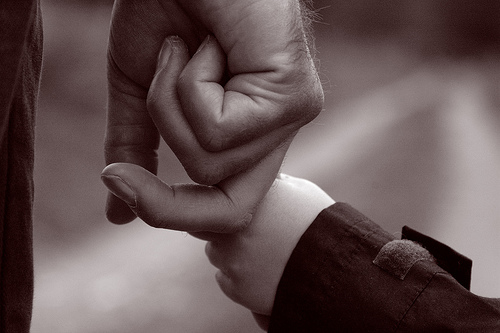
 There is a reality as powerful and profound as Motherhood. It’s Fatherhood.

This month we’ll be focusing on the Father’s point of view through interviews with David Klinker, the Father’s Coordinator with PSI, Dr. William Courtenay, a psychologist and Men’s Coordinator for PSI (meaning he works with men who are suffering from PPD – yes, that happens too), Michael Lurie, author of My Journey to Her World, and my own husband’s experience with my PPD.
Today you’ll read about David Klinker, his survival through his wife’s PPD and his website, Postpartum Dads, which is designed to be a resource for new Dads. David is wonderful and I often send families his way because I belive that the entire family needs to heal and recover – not just mom. Thanks David – for your hard work and for supporting Dads everywhere. You are doing amazing things! 

 Fatherhood” © 2005 Paul C. Smits

© 2005 Paul C. Smits

1) What is it like for a partner to witness a Postpartum Mood Disorder in action?

Things for us spiraled down very quickly.  In some ways things happened so fast that I felt like I was taking part in some made for TV drama.  At times I felt almost detached, like I was just playing a role.  At other times I felt devastated thinking about losing Denise and all that we had together.  I was very lucky to have supportive family and friends; otherwise, I know it would have been much worse.  Fortunately, just as quickly as things spiraled down, Denise got better.   


 2) Would you share your family’s experience with PPD? When did you first realize something wasn’t quite right and what steps were taken to get help?

 Here is our story:  https://home.comcast.net/~ddklinker/mysite2/Johns_Story.htm


3) Has becoming a Father changed you?

 The moment I looked into my daughter’s big brown eyes for the first time, I was a changed person.  I felt a huge sense of responsibility come over me as I sat there in the delivery room holding her.  The greatest changes came from needing to consider her needs over my own. 


4) What aspect of being a Father is the most challenging? The Least?

 I think the most challenging aspect of being a father is dealing with the fear of doing it wrong.  How do I know that the choices Denise and I make are the right ones?  Are we doing enough for the kids, or too much?  What makes us qualified to shape the lives of two wonderful human beings?  I deal with these fears but remembering that Denise and I are there to provide opportunities, guidance, and boundaries for our kids.  They shape their own lives, we just have to do our best to help them make good choices in their lives.

The least challenging aspect of being a Father is enjoying the special times together when everything seems right with the world.  Whether it watching them ride their bike for the first time, watching them catch their first fish, or just driving home after a softball game.  There have been many times where I know I’ve gotten the father thing right and it’s a great feeling.


 5) How did you get involved with PSI and how rewarding has it been to work with Fathers who are where you have been?

I got involved with PSI the same way many other volunteers have, I talked with Jane Honikman.  I knew that I wanted to do something to help other dads and Jane was very encouraging.  PSI has recognized the importance of reaching out to partners for a long time and needed someone to take the role as Father’s Coordinator.  I volunteered and was very warmly welcomed in the organization.  I have met many wonderful people through PSI and it has been a great experience for me.

My main involvement at PSI has been talking to fathers on the phone, responding to emails, and maintaining my website.  I usually only have 5-10 calls and maybe 10-15 email contacts within a year.  Most of the calls are from dads that feel cut out and rejected by their wives.  These dads feel devastated and powerless to doing anything about the situation.  I have several stories on the postpartumdads.org website from dads dealing with rejection.  I have to say, these calls are tough and I often feel inadequate to provide the kind of help these men desperately want.

On a more positive note, I have had several phone calls where I do feel I have made a difference.  It is very rewarding when I feel like I have helped someone through a tough time.  I have also received a lot of positive feedback on the website, especially the stories. 


6) What led you to develop your website for fathers/partners?

After taking some courses through Landmark Education I knew that I wanted to make a difference in the world.  While talking with a friend whose wife was experiencing PPD I realized I didn’t know what to say to help him.  I talked to him about my experience but I didn’t know what resources were available to help.  After looking for resources on the internet I saw that there was very little directed towards the needs of dads dealing with the depression of their wives.  I came up with an idea to develop a website that featured stories from other dads with very practical suggestions.  I got some great encouragement from the local PSI coordinator Shelly Ashe and from Jane Honikman.  With very little experience creating website, I figured out the basics and started with my own story.  I have been fortunate to have other dads contribute stories and I am very proud of what we have created.


7) Just as women with PPD learn that taking care of themselves is important, this is a lesson that Fathers should heed as well. What do you do on a regular basis to feed your soul and ensure that you stay in a good place?

I “feed my soul” by doing projects around the house, riding my mountain bike, taking walks, and playing with the kids.  I’m currently building a retaining wall in the back yard and I get great satisfaction out of seeing the progress I make each week.  It’s the most physical labor I get during a week.  I try to mountain bike once a week and the 20 minutes of flying down hill, after the 1 hour going uphill, are the best therapy possible.  Everyday at lunch I take a 20 minute walk that helps to clear my mind.  I also like to spend as much time with the kids as possible.  I enjoy being with them and it’s a great way to see the world through their eyes.


8 ) Did PPD strengthen or weaken your marriage? Do you feel that you both are in a better place now than prior to PPD?

PPD strengthened our marriage.  Denise and I have been through some very tough times together and we have been able to support each other through them.  Each time we have made it through the tough times we have felt closer as we have more invested in each other.  Watching Denise recover from PPD, as well as a life-threatening illness, has been an inspiration to me and many people around her.


9) What aspect of Fatherhood should be celebrated the most?

I see my primary role as a father to be setting the boundaries for my kids.  This means keeping them safe, but it also means allowing them to take risks and sometimes going further then their mom would allow.  I see myself as being there to back them up as they try new things, from riding a bike, to the first day at a new school.  I think the role that fathers play in fostering independence and confidence should be celebrated.


10) If there was one piece of advice you could give to an expectant father (new or experienced), what would it be and why would this be important for him to hear?

My one piece of advice to new dads is to trust your instincts.  If something doesn’t seem right it probably isn’t.  That applies to dealing with PPD was well as dealing with setting boundaries.   


Absolutely OUTRAGED

UGH!

As if it’s not enough that we already face enough during PPD, the stigma, the refusal of acknowledgement, the confusion over baby blues, postpartum depression, other mood disorders, and Postpartum Psychosis – then along comes an article like this one: Woman found insane in Baby Blues Case seeks Sanity Restoration with the subtitle specifying: Sheryl Massip was found not guilty by reason of insanity 20 years ago for killing her infant son while suffering from post-partum psychosis.

Cover your ears. Prepare your eyes. i’m about to yell. And I mean YELL.

THE BABY BLUES ARE NOT AT ALL SIMILAR TO 

POSTPARTUM PSYCHOSIS!!!!!!!!!!!!!!


Get your facts straight Mr. Welborn. (by the way, you can email him and call him (714 834-3784.) Let him know that he is seriously mistaken with his usage of terms.

Let’s revisit the facts, shall we?

According to an article by Helen Jones at the Postpartum Support International website, the baby blues affect up to 80% of new moms and involve crying for no reason or general stress or anxiety that dissipates after the first few weeks.

Within the same article, Jones defines Postpartum Psychosis as:

Postpartum Psychosis (PPP)

The onset is usually sudden, with symptoms including: delusions (strange beliefs) and/or hallucinations; feeling very irritated, hyperactive and unable to sleep; significant mood changes; and using poor judgment in making decisions. Women who are more vulnerable are individuals who have a previous history of psychiatric disorders, previous postpartum mood disorders, or a family history of psychiatric disorders. Women who display any of these symptoms should contact their health care provider immediately. Family members should be alert for these symptoms as well, since they are often able to recognize serious symptoms sooner than the mother does.

 Do these even SOUND like they’re in the same ball park?

NO.

In fact, Baby Blues aren’t even classified as a mental health disorder.

Could referring to PPP as the baby blues scare a brand new mother who may be feeling a little weepy or be starting to become seriously depressed? HECK YEAH.

To make matters worse, Mr. Welborn also later refers to PPP as an extreme form of Postpartum Depression. Let me make one thing crystal clear. POSTPARTUM DEPRESSION IS NOT THE SAME THING AS POSTPARTUM PSYCHOSIS. It’s an entirely different creature consisting of a break with reality. From what I understand, Postpartum Depression cannot develop into Postpartum Psychosis. (I’m doing some checking into that and will get back with you regarding research on that point)

I am very disappointed in Mr. Welborn’s apparent lack of tact and compassion for new mothers struggling with this range of disorders. And even more disappointed that the newspaper he works for would publish this article without such a brazen irresponsibility and lack of concrete understanding into the condition on which they are reporting. VERY DISAPPOINTED. Did I mention I’m pissed too? Or have you already figured that out?

Those of you who either read this blog regularly or know me should recognize that I don’t do this very often but when I do, I mean it and I am truly, deeply saddnened that this is still happening. Media sensationalism of these cases is a barrier to treatment for women – I’ve had many women share with me that they or their husbands are fearful of admitting they have postpartum mood issues for fear that what happens to the women they read about in the paper may happen to them. UGH! I can’t personally guarantee that you won’t develop PPP but I CAN tell you that it is rare – extremely rare BUT these cases are the ones who make the news. Not the positive cases of recovery – no – the ones that end in sheer tragedy and will bring in viewers.

Email Mr. Welborn. Call him. Contact the OC Register’s Editorial Staff and Operating Management. Let them know we won’t stand for this. Let them know that if they’re going to cover a PPD story they need to get their facts straight and focus on the positive rather than the negative. BE SENSITIVE not only to the people in the story but the people who may be reading the story. They owe us that much.

Give An Hour

I found this article on my cell today and wanted to share it with you. Please pass this information on to anyone you know that will find it useful OR can volunteer. Give an Hour is working very hard to help our soliders and their families.

Here’s their mission statement with the article below:

Our Mission
Our mission is to develop a national network of volunteers capable of responding to both acute and chronic conditions that arise within our society. Our first target population is the U.S. troops and families who are being affected by the current military conflicts in Afghanistan and Iraq. Give an Hour is asking mental health professionals nationwide to literally give an hour of their time each week to provide free mental health services to military personnel and their families. Research will guide the development of additional services needed by the military community, and appropriate networks will be created to respond to those needs. Individuals who receive services will be given the opportunity to give an hour back in their own community.


Psychiatrists Volunteer to help soldiers

WASHINGTON – Thousands of private counselors are offering free services to troops returning from Iraq and Afghanistan with mental health problems, jumping in to help because the military is short on therapists.

On this Memorial Day, America’s armed forces and its veterans are coping with depression, suicide, family, marital and job problems on a scale not seen since Vietnam. The government has been in beg-borrow-and-steal mode, trying to hire psychiatrists and other professionals, recruit them with incentives or borrow them from other agencies.

Among those volunteering an hour a week to help is Brenna Chirby, a psychologist with a private practice in McLean, Va.

“It’s only an hour of your time,” said Chirby, who counsels a family member of a man deployed multiple times. “How can you not give that to these men and women that … are going oversees and fighting for us?”

There are only 1,431 mental health professionals among the nation’s 1.4 million active-duty military personnel, said Terry Jones, a Pentagon spokesman on health issues.

About 20,000 more full- and part-time professionals provide health care services for the Veterans Administration and the Pentagon. They include psychiatrists, psychologists, psychiatric nurses, social workers and substance abuse counselors.

According to veterans groups and health care experts, that is not enough for a mental health crisis emerging among troops and their families.

“Honestly, much is being done by the Department of Defense and the Department of Veterans Affairs,” said retired Army Brig. Gen. Stephen Xenakis, a psychiatrist. “But the need to help these men and women goes far beyond whatever any government agency can do.”

About 300,000 of those who have served in Iraq and Afghanistan are estimated to have anxiety or post-traumatic stress, a recent private study said. Add in spouses left home to manage families and households without their partner as well as children deprived of parents during long or repeated tours of duty, and the number with problems balloons to 1 million, Xenakis said.

The VA says it has seen 120,000 Iraq and Afghanistan veterans who have symptoms of mental health problems, half with post-traumatic stress disorder. Although rates are high from those two wars, most of the 400,000 patients seen in VA last year for PTSD were Vietnam-era veterans, officials said.

Civilian groups are trying to step in for troops from the current conflicts.

“There are over 400,000 mental health professionals in our great country,” said Barbara V. Romberg, a clinical psychologist who practices in Washington. “Clearly, we have the resources to meet this challenge.”

Romberg founded Give An Hour, a group of 1,200 mental health professionals donating one hour of free care a week to troops, veterans or family members. They have to commit to doing it for a year.

Romberg, in cooperation with the American Psychiatric Foundation, hopes to find 40,000 volunteers over the next three years, or about 10 percent of available civilian professionals. The effort to get the word out to those who need the help and to recruit and train volunteers is being backed by a $1 million grant from the Lilly Foundation.

Romberg’s group is the largest of a number across the nation.

Nearly 200 also have volunteered for the Soldiers Project, started by psychiatrists at the Ernest S. Lawrence Trauma Center of the Los Angeles Institute and Society for Psychoanalytic Studies – and now operating in Chicago, Seattle and New York.

The Coming Home Project in the San Francisco area has dozens of volunteers. A group of veterans, psychotherapists and interfaith leaders, it offers everything from retreats and workshops to yoga and other stress management programs as well as the counseling.

“Thousands of therapists across the country are donating their time to give vital treatment and support to our soldiers, sailors, airmen, Marines, veterans and families,” Xenakis said at a recent news conference announcing the Lilly grant. “These young men and women volunteered to defend our nation, and now our nation can volunteer to serve them.”

The government acknowledges there might be a place for such groups.

“While the military health system does not endorse volunteer health care organizations, we recognize that groups such as this one offer more options for our warriors and their families,” said the Pentagon’s Jones.

“If these mental health caregivers are willing to give and learn about our warriors, they may be more willing to become TRICARE providers,” he said, referring to the network of more than 300,000 physicians and specialists and 55,000 pharmacies that support the department’s military medical facilities and uniformed medical corps.

The military health care system serves about 9.2 million people – active duty, and guard and reserve components for all the services, as well as their families and retirees and their families.

Jones said there are 3,000 mental health professionals available under TRICARE in addition to the 1,431 in uniform. The VA said it has 17,000 full- and part-time mental health workers, 3,800 of which it has hired in the past few years.

The services are trying to hire about 575 more. Also, about 200 mental health officers from the U.S. Public Health Service will be detailed temporarily to the Pentagon to work in military facilities, Jones said. An agreement between the Pentagon and the Health and Human Services Department is to be signed in the coming weeks to finalize the arrangement.

The Pentagon has made a special effort to hire since a yearlong task force last year found it had neither enough money nor staff to support the military and family mental health needs during peacetime, let along during war.

Staffing was not the only issue. Officials have worked to change the military culture in which there is a stigma in seeking help and a fear doing so will harm careers.

They have tried to make mental health care more accessible, embedding more workers with troops, offering suicide prevention training and advising troops how to recognize mental problems in themselves and others.

The military also is working to assess mental health among troops, screening them before and after deployments and sending mental health teams to the front each year to measure morale, the amount of mental health problems, availability of care and related matters.

Programs to help families with housing, child care and other issues have been bolstered. Troops get mental-health training in a program called “Battlemind” that teaches about common problems to expect at home as they readjust to domestic life.

Still, some emotional difficulties are a normal reaction to war.

“No one who goes to war comes home the same person,” said Patrick Campbell, a medic for an infantry unit who served in Iraq in 2004-2005. “There are things you have to unlearn to emotionally feel again.”


By PAULINE JELINEK     Associated Press Writer

A Closer Look at Charlotte Perkins Gilman

Charlotte Perkins Gilman


Why write about Charlotte Perkins Gilman at a blog about Postpartum Depression you might ask. She suffered a near nervous breakdown after the birth of her first child, leading her to author The Yellow Wallpaper, an intense short story about a woman’s treatment during a nervous breakdown, a story that one led a Boston Physician to state in The Transcript that “Such a story ought not to be written, he said; it was enough to drive anyone mad to read it.” Possibly so, but a physician from Kansas also wrote that “it was the best description of incipient insanity he had ever seen, and–begging my pardon–had I been there?” (Perkins Gilman)

Sadly, her nervous breakdown led to divorce and leaving her daughter in the custody of her ex-husband. Turning to writing as a way of earning money,  Gilman eventually found herself as a spokesperson regarding “women’s perspectives on work and family.” Perkins Gilman believed that men and women should share household duties and particularly that women should be taught to be economically independent from a very early age (DeGrazia, Jodi), a topic she focused on in her work, Women and Economics, penned in 1898.

The Yellow Wallpaper has been a favorite story of mine since first read, love at first words. I identified with the main character well before experiencing motherhood and my own brush with insanity shortly thereafter. Perkins Gilman did an exquisite job of breathing a realistic insanity into her main character as well as exposing the mental health diagnoses and “cures” of the day for what they truly were – sadly insufficient and ignorant of treating the illness and instead closeting away those who suffered in hopes of recovery or at least not be part of mainstream society and  therefore remain to be a “figment” of one’s imagination, the dark family secret.

In 1887, Perkins Gilman sought treatment for continuous nervous breakdown from the best kThe Yellow Wallpapernown nervous specialist in the country. The rest cure applied and she responded well physically; however, the physician then declared all was well; sending her home with “solemn advice to ‘live as domestic a life as far as possible,’ to ‘have but two hours’ intellectual life a day,’ and ‘never to touch pen, brush, or pencil again’ ” for the remainder of her days. Gilman then writes regarding the effectiveness of this advice, saying “I went home and obeyed those directions for some three months, and came so near the borderline of utter mental ruin that I could see over.” (Perkins Gilman)

Engaging the help of a close friend and gathering what strength she had left, Perkins Gilman picked up her artistic work again and began to recover, finding strength within her work and “ultimately recovering some measure of power.” This experience is what led her to write The Yellow Wallpaper. Perkins Gilman admits to embellishments, stating she “never had hallucinations or objections to my mural decorations”. Written as a celebration of return to her success, her true motivation behind sharing her story, albeit in a fictional world, lay within the hope of saving others from her fate of mistreatment and the nearly paralyzing insanity following soon after.

In Perkin Gilman’s own words regarding her authorship of The Yellow Wallpaper, she states:

It has, to my knowledge, saved one woman from a similar fate–so terrifying her family that they let her out into normal activity and she recovered.

 But the best result is this. Many years later I was told that the great specialist had admitted to friends of his that he had altered his treatment of neurasthenia since reading The Yellow Wallpaper.

 It was not intended to drive people crazy, but to save people from being driven crazy, and it worked.

The number one reason I hear when women have chosen to share their experience with a Postpartum Mood Disorder is the hope that it will provide comfort to another as she travels down the same road. It is with the same spirit Perkins Gilman penned The Yellow Wallpaper that I share my story. Recovery is a hard road and sometimes a lonely road. I said from the very beginning of reaching out to others with a helping hand that if I could help even one woman, it would all be worth it.

The screaming, the agony, the tears, the lifting of the fog – it would all begin to somehow make sense and instead of continuing to drag me down, it would lift me up. The fog did not begin to lift until I reached out for help and found it – drenching myself in the stories of others who had been where I no longer wanted to be and read with new understanding and an intensity I had never known before just how they were able to escape the depths of depression and reach the light, breathing in sweet fresh air again.

Determined to shine a light on the path for those behind me and around me, I dove full force into sharing my story. Every time I shared my experiences with a woman who believed she had no hope left and found herself ashamed of her condition and witnessed what an impact my openness and vulnerability had on her, I knew supporting Mothers was my calling.

So I write about Charlotte Perkins Gilman in order to better explain my mission here at this blog and in life. I refuse to let another woman suffer alone and in silence. Not on my watch.

Sharing the Journey with Helena Bradford

Welcome to the second interview in this month’s series, Mothers of Women who have Struggled with PPD. Today’s interview is with Helena Bradford, mother to Ruth. Helena has courageously dedicated her life to helping women with PPD through her foundation, the Ruth Rhoden Craven Foundation. She tragically lost Ruth to PPD as a result of inadequate medical care and lack of information provided by medical professionals and is passionate about not letting that happen to anyone else. Helena has a wonderful quote as part of her email signature and it has immersed itself in my life and has kept my bad days limited to being singular in occurence as I remind myself of WHO holds my tomorrow. I want to share it with you and thank Helena for sharing it with those who email her.

I don’t know what tomorrow holds,
but I know Who holds tomorrow.

Helena truly has turned her tragic loss into such a powerful and wonderful shining light, filling those who are suffering with hope and allowing them to know that yes, there are people who care and they are NOT alone in their suffering. Thank you Helena, for your bravery, optimism, perseverance, and compassion. All four are awesome traits needed in the PPD world and we are indeed a lucky community to have your dedication to improving and spreading knowledge and resources to women and families who need it!


What was it about your daughter’s experience with PPD that led you to start the Ruth Rhoden Craven Foundation?

 The fact that she received exceptionally poor treatment and died as a result. We received no information about PPD, no guidance in how to help Ruth stay alive, and no support from the medical community. We were certainly never told PPD was temporary and totally treatable, so these are some of the services we provide to the public through our Foundation. 

 How soon after your daughter gave birth did you begin to notice something wasn’t quite right with her? What were some of her primary symptoms?

 Shortly after delivery – like a day or two. Ruth’s symptoms included:  

  • I’m not sure I’m capable of taking care of this baby
  • Social withdrawal; behavior totally out of character

    Ruth made the statement she felt she needed to be institutionalized and that scared her to death

  • MEGA frustration and feelings of inadequacy – how can I do everything that has to be done and do it in a manner acceptable to me?

  • “Freaking out”, internally, every time the baby cried even though she knew there was someone there to take care of Andrew when she didn’t feel she could. Felt it was her responsibility – not someone else’s

  • Couldn’t sleep because her brain wouldn’t quit racing about how she was going to get everything done for the baby as well as her normal, everyday duties – mega problems with sleep deprivation

  • Found her on the floor in a corner between two large pieces of furniture one morning. When asked why she was there, she said she was hiding.


  What were some things that you drew strength from during this difficult time with Ruth?

 My faith in God and the support of friends and church family. 

 Has working with the Ruth Rhoden Craven Foundation taken Ruth’s tragedy and turned it into something positive for you?  

   Absolutely! I believe God has taken Ruth’s totally needless death and saved many lives through the story of her tragedy.  

 How uplifting is it for you when you are able to successfully help a woman and family in need?  

 Indescribably powerful and affirming. Being able to rescue moms and their families from the devastation of postpartum depression/perinatal mood disorders removes some of the senselessness of Ruth’s death. It gives positive meaning to her life and to the beautiful person she was.  

  Do you feel that the resources available to women with PPD have improved? 

 Yes they have, but we still have an exceptionally long way to go to eliminate tragedies and devastated lives and families as a result of PPD. I would say the majority of medical care givers and lay people are still totally ignorant of facts surrounding perinatal mood disorders and their treatment. That’s unacceptable.  


 What were some of the things you did as a mother to try to help Ruth?  

 I lived with Ruth and took care of her, the house and the baby for nearly 6 weeks. In addition, I brought her home with me a couple of times. For 2 ½ months, I was with Ruth more than I was away from her. Although that kind of support is crucial in battling PPD, it may not be enough if bad medical treatment is being received. It certainly wasn’t for Ruth. 

I tried to find good medical care for her but was unsuccessful. I wish I had taken her to Raleigh, NC where there is a PPD support group. I think she would have benefited tremendously from the group. 


 Tell us about your Walk/Run coming up in September that helps to raise awareness for PPD as well as funds for your organization. How did it get started? 

 Well, that’s a really neat story. One of the sweetest men in the world came to our house one night about five years ago to deliver an oxygen machine to my husband that his doctor had prescribed. While Gary was explaining the operation of the machine to us, we got off on the subject of the Foundation. After hearing Ruth’s story, Gary was in tears and said he wanted to do a fundraiser for us. THAT was the birth of the PPD Awareness Walk/Run. 

 The Run is held annually at Hampton Park in Charleston, SC. (For more information, please visit our web site at www.ppdsupport.org.) Both runners and walkers are invited to participate. Each year folks from all over our country, who work with PPD issues, travel to Charleston to participate. To me, that’s the most fun part because I get to meet the dedicated, passionate professionals and volunteers (some are PPD survivors) with whom I work throughout the year. 


 In your opinion, what should all expectant mothers know about PPD? 

  Postpartum Depression is totally treatable and is a temporary illness. No one needs to die as a result of it.  

  • There is help available. Please reach out for it, and don’t hesitate to change doctors if you feel you are receiving improper treatment or if you are not being heard. Postpartum depression is a valid illness that is equally as serious as bipolar disorder or schizophrenia. Thank God, it is temporary if treated early on and properly

  • Although there are definite risk factors for experiencing PPD, to my knowledge there is no way to know who will experience it and who won’t. That’s why I feel good PPD information should be provided in all birthing classes.

Have a plan in place before symptoms appear – just in case you happen to experience PPD. Some of the things a plan should include are:

  • a psychiatrist who is experienced in treating PPD

  • a night nurse or postpartum doula to take care of the baby at night so the mom can get plenty of sleep at night. This is critical.

  • friends/family members who will help the mom for several weeks (minimum) after she comes home from the hospital 


 Any advice for other mothers whose daughters are struggling with a Postpartum Mood Disorder?

 Make sure your daughter finds the best available medical care. Help her understand medication is necessary in most cases, and there is nothing wrong with taking that medication any more than it is to take medication for heart problems, diabetes or a whole host of other physical ailments. PPD is a physical illness that just happens to affect the brain instead of some other “more acceptable” organ in the body. No one deserves or asks for PPD!