Tag Archives: stigma

Postpartum

Guest Post: @momgosomething – “You Never Know What Lies Behind a Perfect Smile”

There aren’t enough words in the universe powerful enough to explain how I feel about Kim from All Work and No Play Makes Mommy Go Something Something. We met on Twitter, through #ppdchat. She’s become one of my friends, even though we’ve never met in person. (God, I love the Internet for that!) She is real, she is honest, and the girl can write. She’s hilarious. Also, obsessed with Chuck Norris, which is just awesome. I’m honoured to have her writing here for Mental Illness Awareness Week. Without further ado, here are Kim’s words.
It was 9 in the morning when she had called and asked if she could come see him. I looked down at my pajama bottoms and the state of my kitchen. Bottles stacked one up against the other waiting to be sterilized, breakfast dishes left on the table, and his swing covered haphazardly with a blanket speckled with spit up.
“Of course you can come over,” I said with an exaggerated chipper tone.
She said in 2 hours.
In those 2 hours I cleaned the kitchen.
I dressed myself, including doing my hair and make-up.
I dressed my son in the finest clothing that was hung neatly in his colour coordinated closet.
I made the beds.
I swept the floors.
I got on my hands and knees and plucked out any noticeable lint and dog hair from the carpet.
I had just finished wiping down the bathroom with antibacterial wipes when the dog started barking at the door.
There she was.
My Aunt held a bouquet of daisies, my favourite, and an outfit for my son.
She immediately swooped him up in her arms and looked me over.
“You look so beautiful. I mean that. When I was 2 weeks postpartum, I was still in the same pajamas I had worn home from the hospital.”
She roamed my house with my newborn son, holding him tightly on her chest.
I watched her anxiously, looking for any indication that she had figured out that there was something seriously wrong with me.
“Your beds, they’re made. Kimbers, your house is absolutely spotless. Did you hire someone to do this?”
I bowed my head, “No. I do it.”
“Kimbers, you should be resting when the baby rests.”
I nodded in agreement.
When she finally left, she told me she was proud of me; that I was “rocking” motherhood with ease.
And as her car pulled out of my driveway, I took a breath of relief.
I fooled another person into believing that everything was ok.
In the days following, I went to great lengths to conceal my internal struggle.
If I looked perfect, if my son looked perfect, if my home looked perfect, no one would know.
It was so easy to hide my internal battle behind the cheerful facades that I had created.
And why did I do this?
Because I was scared that I would be labeled as a terrible mother.
Weak.
Failure.
Monster.
Crazy.
Not to be trusted with her child.
For weeks, and even after my diagnosis, I still kept a perfectly pretty barrier between me and my personal hell.
When I finally admitted to friends and family that I was diagnosed with postpartum depression and postpartum anxiety, they all had the same reaction:
“I had no idea. You looked like you had everything under control.”
Postpartum depression and anxiety does not have a face.
People cannot see it.
What they do see is what is portrayed on television, in the newspapers, tabloids, internet, etc.
They see monsters, psychos, nuts, disheveled, with twitches in our eyes and all the other horrible words and images that are associated with mental illness.
This sort of exaggerated misinformation breeds stigma like a wild fire. This is why so many men and women suffer in silence when they don’t have to.
Just like I did.
That’s why we have to stand up. We have to use our collective voice to teach others about our illnesses.
They need to understand that the way we experience depression looks completely different from everyone else’s.
This was me at 4 weeks postpartum.
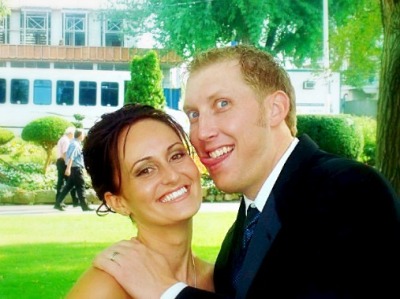
 
Can you tell that I was crumbling inside?
More importantly, we need to keep talking to Moms. We need to ask those difficult questions like, “Are you ok?”

Even if they get offended, just ask them.
You never know what lies behind a perfect smile.
You could save a life.

 
Kimberly is a Registered Nurse, Mom and wife to a beautiful 4 year old son. She is a 4 year postpartum depression and postpartum anxiety disorder.

She writes on her personal blog, All Work And No Play Makes Mommy Go Something Something.

#HAWMC: Why I write

After I fell down the rabbit hole so far that only a weekend in a mental hospital helped me, I realized I wanted one thing. To talk to another mom. I needed to know that my crazy wasn’t permanent. That I was okay, normal, and I would be well again. Even if I wasn’t going to be well again, I told myself, I need to know I’m not here in crazyland by myself.

During my stay, a psych nurse told me something which has stuck with me for over six years and I suspect will stay with me for quite some time. She told me I didn’t have to tell anyone where I had been that weekend. I know, you’re hearing the record scratch in your head too, right?

It’s a moment in my story I have discussed several times here at my blog. But it’s an important moment, I think, one which truly sums up the state of mental health awareness in our country, even among those who are involved in directly treating those struggling. The message it sends is chilling.

Sssshhhhhhhh. Don’t tell anyone you’ve been to the crazy house.

Why the fuck not?

Why would I remain quiet about this? Why do I deserve to be judged for something which is no more my fault than the breast cancer? Would a nurse dare tell a patient in for Chemo they don’t have to tell anyone where they’ve been?

I get that health is private, HIPAA and all that. We have a right to remain quiet about our health, physical or mental, but to suggest to someone that it’s absolutely not necessary to tell anyone where they’ve been is simply neurotic. This did not happen while signing papers or during admission. No, this happened during a casual conversation during my first day there.

What, was I supposed to go home and pretend I’d gone to Bermuda? Would I be given parting gifts to help fake my weekend tropical get away? Quite frankly, if they wanted me to believe I’d been in Bermuda, they should have given me stronger drugs. But I’ve digressed.

The more we give into this culture of silence and stigma surrounding mental health, the more we enable the stereotypes to stand. Yes, I had depression and a whole slew of other issues (OCD, PTSD, suicidal ideation, intrusive thoughts…) but you know what? I’m a perfectly normal person. I’m just like you. I think, I eat, I breathe, I function quite well most of the time. I hit a rough patch and needed help to get through it. It’s no different than someone being hospitalized for a serious injury or infection. At least, it shouldn’t be any different.

This is why I write. I write because it’s important to acknowledge that people with mental health issues aren’t of the insane Hollywood variety. We are normal people you see every day. We are your sisters, your wives, your cousins, your mothers, your aunts, your friends, your co-workers. We are human too. Treat us as such.

Postpartum Voice of the Week: Bravado Designs

Tuesday morning began like any other. Until I saw a tweet from @phdinparenting referencing an earlier tweet by @postpartumprogr, Katherine Stone. This tweet questioned the title of a giveaway post at BabyCenter involving Bravado Designs products. At the time, the title of the post was “Can Color Cure PPD?”

I discussed it briefly on Twitter then decided to do some research into the legitimacy of colour and PPD. I’m always wary when someone, anyone, claims to be able to “cure” PPD. It turns out Chromotherapy does indeed exist and has a long history. But nothing I found directly linked it to treatment of PPD, let alone a cure.

Having read the post at BabyCenter, I decided to write a reactionary piece here at my blog. There was a growing concern within the #ppdchat community regarding the approach used by BabyCenter in the giveaway post.

Within minutes of my post appearing, I was in touch with marketing from Bravado. She was concerned about the reaction the piece was receiving and interested in elevating the discussion to educate new moms, something to which Bravado is very dedicated.

By the end of the day, after a few edits, the piece at BabyCenter moved well away from claiming to “cure PPD.” The piece is now titled “Can color help the baby blahs” and an italicized paragraph in the beginning of the post states the following:

Special Note: While color therapy can never cure anything as serious as PPD, which is a very serious condition best left to a doctor’s treatments, there is something to be said of boosting your mood through color therapy. There have been many studies that have shown an improvement of mood due to exposure to certain “happy” colors.

BabyCenter also publicly tweeted an apology regarding the article.

But the real gem in all of this is the apology note at Bravado’s website from their CEO. It’s respectful, engaging, and acknowledges the struggles moms with Postpartum Depression face, stating they should never be taken lightly.

If you’ve not read it, you really should. Go here to do so. 

Thank you, Bravado, for diving in and taking a stand in a situation gone wrong. We, mothers who have fought and are fighting Postpartum Depression, deeply appreciate your willingness to listen and react to our concerns.

Huge thanks too, to all of the #ppdchat community who raised your voices as the awareness of this grew. Many of you were fearless in speaking out against this. Don’t ever stop speaking up. It makes a difference.

Postpartum Voice of the Week: Afterbirth by @angiekinghorn

Music. The way feelings sound.

The above is a quote featured in a picture I shared at my Facebook account not too long ago. I believe in it, strongly. Music, for me at least, is one of the most powerful ways to enhance or change mood. It’s powerful, all-encompassing. Hidden in the beats, rhythms, and lyrics of certain songs, there are memories. Some blissful, others haunting and terrifying.

I blogged about overcoming the haunting memories which Linkin Park’s album Reanimation held for me. It’s the album I listened to as my then 9 day old daughter had major surgery for the first time in her life. It was while listening to this album I first slid under the waves of the sea of Not Okay and wanted to stay there, drowning in my terror at the hard swirling around me. It took me five years to listen to the album in it’s entirety.

Yesterday I read Afterbirth over at Angie Kinghorn’s blog. In it, she recounts how a specific song, “Lines Upon Your Face” by Vertical Horizon, holds similar memories for her. Angie writes, “I’ve tried playing it in small doses to get used to it, musical allergy shots, if you will, but the violin pulls my heartstrings out and flays them bloody every time.” 

Unlike me, she didn’t play this song purposely, it simply happened to play on her iPod as she sat in the dark in the nursery after a traumatic birth, her father in pain in his illness, and the fear it brought forth within her soul.

With each verse, she swirled deeper into the darkness, just as I did while listening to Linkin Park. The darkness was comforting for me, but for Angie, it broke her wide open, shattering her into pieces, ultimately leading her to the realization she needed help.

I’m listening to the song Angie listened to that night in the dark right now via Grooveshark. I understand how it could break someone apart.

Go read Angie’s post. Show her some love for sharing such a powerful experience with the world. It takes courage to fight your way out of the dark but it takes even more courage to share it as Angie has done at her blog.