Tag Archives: pregnancy

Just Talkin’ Tuesday: The Power of Peer Support

When I was in the darkest days of my Postpartum, I found myself at the hospital, wandering, wishing for another mom to talk with about the thoughts in my head.

Yet, there I was. All alone. Deflated. Lost. Confused. Worried. Scared. Frustrated. Numb. Angry. Trapped in a giant whirlwind of emotions with no map out.

What the hell? How did I get here? How would I leave? I was drowning.

I knew one thing beyond a doubt though – Moms struggling like me needed to be connected to other moms.

As I began to recover, I searched and searched for a way to begin to support other moms. Through this search, I found the wonderful Jane Honikman and Postpartum Support International. Jane encouraged me. So did Wendy Davis, now the Program Director with Postpartum Support International. These two strong and amazing women nurtured me as I grew in my capabilities and strengthened my skills in peer support. There was a time when I questioned my abilities. Wendy assured me I was a natural at social support. Pec Indman would do the same down the road.

Then, I became pregnant. It was not a planned pregnancy. To be honest, not even a wanted pregnancy at the beginning. As I stated last week, I used to pray my doctor’s office wouldn’t find my baby’s heartbeat and then weep with guilt when I felt disappointment at hearing the normally reassuring thump thump of my unborn child’s heart. What should have brought me joy instead filled me with pain and heartache. Eventually this was replaced with joy and happiness as I blogged, continued with therapy, and medication. One of my biggest turning points was the opportunity to interview Karen Kleiman for my blog. Her book, What Am I thinking: Having a Baby After Postpartum Depression inspired me to start blogging to begin with as I attempted to reframe my pregnancy. Interviewing her was almost full circle for me.

During all of this, I also became Community Leader over at iVillage’s Postpartum & Pregnancy Depression Board. I had been a CL before but found myself unable to relate to moms with “normal” lives after my own life had suddenly turned upside down and scattered all over the floor. As I scrambled to pick up the pieces, it felt like those moms were busy eating bon bons as they looked down on me scurrying about to pick up the shattered china. I also served as a moderator at the Online PPD Support Page for a bit.

Connecting with moms like me saved me. It saved my sanity. It provided a camaraderie which I no longer had with normal moms. It became my calling and purpose in life.

I wake each and every day with the goal of helping at least one family.

I have yet to fail.

I have no plans to stop anytime soon.

So….

Do you have a special someone in your life who has provided invaluable peer support as you went through Postpartum? Tell us about it here. Have you helped someone? Did it help you recover? Why do you help others? What drives your passion?

Want peer support? Have a question or concern? Leave it in the comments. Someone’s bound to read it and respond.

Did you miss out on in person peer support? Need help finding peer support? Leave a comment. You’re not alone anymore.

Let’s get to just talking!

Just Talkin’ Tuesday: Unhappily Pregnant

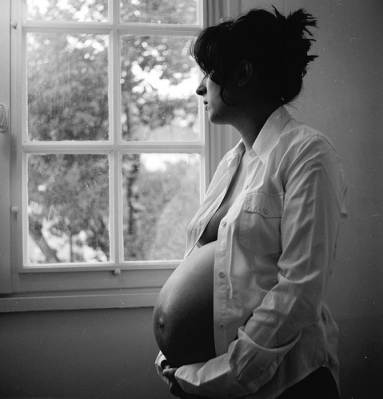
Derniere ligne droite or Pregnancy Last Days

"Derniere ligne droite or Pregnancy Last Days" by f. clerc @ flickr.com

#PPDChat yesterday focused on Pregnancy and Depression. A lot of questions came up and I wanted to continue the conversation today. Welcome to Just Talkin’ Tuesday.

Have you ever tried to find a photo of a pregnant woman in which she is not smiling or glowing?

It’s HARD.

I found one, but it was not easy.

Everywhere you look there are glowing happy pregnant women. Here’s a page from a modeling agency dedicated to providing pregnant models. Every single last one of them is grinning.

Pregnancy, just as postpartum, is supposed to be one of the happiest times of a woman’s life. But what if your mood doesn’t match the one you are supposed to have? The one we are groomed to have? After all, even as young girls, many of us spent hours upon hours playing with baby dolls, fantasizing about having a baby of our own one day. I used to shove stuffed animals under my shirt and “give birth.” Oh, if only it were that easy!

No one mentions the natural mood swings. No one mentions that more women may become depressed during pregnancy than after pregnancy. No one tells us the anxiety pregnancy may rain down upon us. No one tells us the immense guilt waiting to consume us as we are overwhelmed and consumed with thoughts of suicide. No one tells us these things. Instead, we are continually bombarded with pictures of perfection, conflicting advice about everything from how to cope with morning sickness to how get rid of those annoying stretch marks to what to buy for our baby’s bedding to what diapers to buy to how to feed our children. Can you say Information Overload? It’s enough to get a mentally healthy mom super stressed at a time when she is supposed to be avoiding stress to begin with!

A pregnant mother’s depression may be triggered by a number of things. It may be an unexpected pregnancy, her partner or family may not be supportive, she may be experiencing unrelated stresses, she may already have children at home and the physical stress of a pregnancy may have her more than worn down, or she may already struggle with depression or another mental illness. Whatever the cause may be, it’s simply not expected for a mom to be anything but happy during a pregnancy.

So who should mom turn to? Where should she go? How can she tell the difference between pregnancy mood swings and something more serious? Mom can start with her doctor. If he dismisses her and she feels in her gut that something more than pregnancy hormones is causing her issues, she can (and should) seek a second opinion. Ask your original doctor or friends for a referral to another physician. She can also contact Postpartum Support International and speak with a Coordinator in her area who will help her locate a knowledgeable doctor or therapist. Telling the difference between mood swings and something more serious involves paying attention to your weeks rather than your days. If you have weeks filled with more down days, anxiety you just can’t kick, and nothing you do seems to bring you out of your funk, then it’s a very real possibility you may need to speak with a professional about how you’re feeling.

I found myself depressed during my second pregnancy. My first episode of postpartum was not treated. I believe this fed into my depression during my second pregnancy. I had not learned any coping methods or of the importance of taking care of myself. I drifted further and further into the darkness, swallowed whole by morning sickness (all-day sickness for me), the lack of desire to eat, take care of our 16 month old daughter, and no desire to take my prenatal vitamins because they triggered nausea. I even thought at one time what would happen if I didn’t  take my prenatal vitamins. Then my daughter was born nearly 5 weeks early with a cleft palate. Turns out there was nothing I could have done to keep her cleft palate from occurring as it forms within the first 4-6 weeks of pregnancy, well before many women are even aware they are pregnant. Still, I beat myself up about not taking my vitamins. I still do every now and then. But I now enjoy spending time with my daughter.

I also found myself depressed during the first 6 months of my third pregnancy. It was an unplanned pregnancy. I would go to every visit and wish they would not find a heartbeat. If the heartbeat wasn’t there, the baby wasn’t there and this pregnancy would just become a figment of my imagination. It hurts me to type that. As I would lie on the table waiting for the nurse to check the heartbeat with the doppler, I closed my eyes and prayed so hard she wouldn’t find it. Many times she had a hard time finding it and I would get excited. But then she would find it, pronounce it healthy and leave the room. I would cry as I stared blankly out the window, disappointed that once again, the baby had survived another month. I know this sounds horrible. I know it’s harsh and I know there are mothers who try very hard to have children or have angel babies. But there I sat, beyond words filled with heartbreak about this growing gift in my belly. I never talked to anyone about either depression. I wish I had. The difference between the two was that with my son, I was already on medication as I had suffered severe and debilitating Postpartum OCD after the birth of our second daughter (fed, I’m sure, by the depression I suffered during my pregnancy with her).  I was also in counseling. I found therapy very helpful in reframing things. And by the time this pregnancy was underway, I was also blogging here and getting started in Postpartum Advocacy. Things were looking very different indeed. I focused more on preparing for myself and caring for myself which then allowed me to take care of my family and the little one inside my belly. With my son, the fog eventually lifted and once I could feel him moving inside me, things began to look up. I realize I am fortunate the fog lifted. It didn’t magically lift though as it took a lot of hard work on my part and the help of professionals.

Please don’t struggle alone if you are pregnant and suspect you may be depressed. There is help. There is hope. Medication while pregnant is one of the biggest concerns for depressed moms. But there are medications you can take during pregnancy that have a minimal risk to mom and baby. Talk with your doctor about your options in this department.

Have you struggled through depression during pregnancy? Worried you might end up with depression during pregnancy because you’ve had a Postpartum Mood Disorder? Share your concerns, tips, and success stories here. When you comment, you’ll be entered to win a copy of Pregnant on Prozac by Shoshana Bennett. This is one of the best resources out there for mamas when it comes to pregnancy and mental illness. I happen to have an extra copy of the book here and want to pass it on to someone who could really use the information within it’s pages. This give away is not sponsored or endorsed by Shoshana Bennett, just something I’m wanting to give away to a mama in need. If you win the book and don’t need it for yourself, perhaps you could share it with your OB, Midwife, or Therapist so they could pass it on to someone who would find it helpful. All you have to do to enter is leave a comment by Monday, September 13 at 8pm EST. I’ll be choosing the winner that night via Random.org. For an extra entry, please Tweet about this post and then leave an additional comment with a link to your tweet. You can also receive an additional entry by subscribing to My Postpartum Voice via Email and leaving an additional comment telling me you’re subscribed (and if you’re already subscribed, that counts!)

So let’s get to talking about Pregnancy & Depression. It doesn’t deserve to live in the darkness any longer.


Just Talkin’ Tuesday 05.25.10: How long does recovery take anyway?

Lately, I’ve had this question thrown my way by more than just a few of you.

It’s a tough question to answer.

There is no defined recovery time we can hand out. It’s not like going to a deli, pulling a number, having your number called and then walking out the door into the wild blue yonder with your neatly wrapped item. Ok, so maybe it’s kind of like that. If it’s a busy deli and the wait is long. And then they’re out of the meat you need. And then you have to start the process all over again somewhere else or settle for something like ham when you really wanted corned beef pastrami.

Bottom line though – recovery is not something your local deli guy will wrap up neatly in butcher paper and tie off with a pretty bow.

Recovery is messy. It can take a long time. It can go quickly. It can involve lots of starts, stops, and side trips.

And in the end, you may be recovered but there will always be the organic memory of the experience of your Postpartum Mood Disorder to jump out at you and mess with you.

So how the heck do I know if I can consider myself recovered from my PMD?

Here are my three humble signs of recovery (always check with your caregiver/therapist and don’t every stop treatment cold turkey!)

1) You have more good days than bad days.

2) You are able to laugh at things.

3) Your world has returned to vibrant colors instead of the dimmed down twilight you’ve been living in for the last several nights.

I remember the day I saw that brighter world. I was on my way home from my therapy appointment. It had rained that morning so everything had been rinsed clean. The sun shone down and the trees burst forth with new growth as they strained for freedom at the birth of spring. As I breathed in the clean scent of rain and honeysuckle, my heart soared. The trees were greener, the sky was bluer, everything sparkled. And not just because of the rain.

Just a few weeks later I discovered I was indeed pregnant with our third child. Scared to death, I worried all my progress would be all for naught. But it was not. I continued to move forward. Not because I had to but because it was what I wanted. Once I got past the shock of our unexpected pregnancy, I focused all my energy on preparing for postpartum support instead of getting ready for baby. It was time well-spent. I educated those around me, created a postpartum plan, and thankfully I thrived. Not all mothers are this fortunate though.

Every mother has  a different story, different doctors, and different reasons for struggling.

What helped you recover and if you’re fully recovered, how long did it take you to recover? What advice would you give to a still struggling mother?

One of my favorite songs when I was struggling was “Breathe” by Anna Nalick.My favorite lines?

There’s a light at each end of this tunnel, you shout
But you’re just as far in as you’ll ever be out.

To me, it means keep on going forward. Because it’s FORWARD motion that’s so very healing.

Let’s get to just talkin’!

Danish research and SSRI use during pregnancy

An article at medpage.com heralds a new study released September 25, 2009 by Danish researchers. The article carries the sensationalized title “SSRIs in Pregnancy Hike Risk of Heart Defects.”

While the title itself raises eyebrows, the researchers themselves state that they were unable to conclude if the results were because of medication or the underlying depression. Also important to keep in mind is that this research is based on women who had prescriptions filled for SSRIs but does not appear to have checked to see if these women actually took the medication. Instead, they rely on data from a national registry.

Pedersen and colleagues analyzed national registry data on more than 493,000 births in Denmark from 1996 to 2003. The data included prescriptions filled by mothers-to-be as well as the medical status of their babies at birth.”

And directly from the study:

Our results, however, depend on a correlation between redemptions of prescriptions and drug use. Non-compliance might be a problem for this type of exposure definition and could mask true associations if some of the “exposed” were in fact unexposed.

The most interesting piece to come out of this research is that of the studied SSRI’s, Paxil appeared to have the least risk of septal heart defects. I find this very interesting considering that Paxil is the only SSRI to currently carry a heart defect specific warning.

As with all studies and research, you should always examine all sides and aspects and educate yourself rather than relying on the word of others when making your final decision. Ask yourself if the person presenting the information has your best interest at heart or is merely trying to frighten you with inflated facts and figures. (Click here to read a previous post full of tips on how to find solid medical advice on the web.)

Dr. Shoshana Bennett, author of “Pregnant on Prozac” released this statement regarding this research:

Finally, treatment for the serious and potentially life-threatening illness of prenatal depression (for both mom and therefore baby) is being formally discussed. Fifteen percent of clinically depressed pregnant women try to take their lives – a bit more risky for the baby than mom taking an antidepressant, wouldn’t you say? If the pregnant woman can be non-depressed without a medication, that’s optimal. Some form(s) of treatment, however is essential. If natural and alternative approaches to wellness are not enough, it is regarded by those in the know to be safer for her (and her developing baby) to take an antidepressant than to remain depressed. Depression itself – it is quite clear from the research – crosses the placenta and alters the uterine environment causing negative consequences to the baby. In the latest research there appears to be low (0.9%) chance of a septal heart defect in babies whose mothers had taken certain antidepressants. However, what fear-mongers do not report, is that the researchers themselves could not be sure whether it’s the antidepressant or the underlying depression itself that caused the defect. Women need all relevant information and education about options for treatment during pregnancy so they can make the best decision for themselves and their family. Watch out for alarmists who are not interested in actual data – they are simply invested in promoting fear in women who are at their most vulnerable.

Shoshana Bennett, Ph.D.

http://DrShosh.com

Increased risk was determined by “redemption” of more than one SSRI prescription. Those who redeemed more than one prescription had infants with a higher percentage of septal heart defects. But again this begets the question of whether or not this result lay with the SSRI or the underlying depression/mental illness/stress the mother may have been experiencing in order to receive said prescription.

Bottom line here: Don’t think for a second that becoming a Mom starts at birth. It starts at conception. And we owe ourselves AND our infants the best start possible. This means researching by asking questions and seeking out solid answers. It means finding physicians who will be your co-pilot instead of an uncooperative Auto-Pilot unaware of the pot-holes facing them. It means putting together the best support you can with what you have access to at the time. I happen to agree that a SSRI free pregnancy is absolutely optimal. I also think you should run (not walk) out of any doctor’s office if said doctor is quicker with the script pad than the warm shoulder. But we have to remember that every situation is different. Every person is different and every pregnancy is different. And sometimes we may just have to take medication. It doesn’t make you weaker, it doesn’t make you stupid, and it doesn’t make you a bad mom. And above all, remember that the decision to take or not to take a SSRI during pregnancy is your decision. Make it with an empowered spirit, stick to it, and don’t look back.

Low Omega-3 Fatty Acid Intake from Fish correlates with High Levels of Depressive Symptoms in Pregnancy

Published in the July issue of the Journal Epidemiology, researchers put to the test the relationship between fish intake and depression based on the observation that “Although common in western countries, depression appears to be virtually absent in countries with high seafood intake.” (Abstract, High Levels of Depressive Symptoms in Pregnancy with Low Omega-3 Fatty Acid Intake from Fish)

The researchers collected data from women as they progressed in their pregnancy during 1991-1992. At 32 weeks, the women then completed a questionnaire which included symptoms of depression as well as a food frequency questionnaire from which the amount of Omega-3 Fatty acid from fish was calculated.

The results? Both adjusted and unadjusted analyses showed that lower maternal intake of omega-3 from fish was associated with high levels of depressive symptoms.

So just how much fish do you have to eat in order to achieve these results? Women consuming more than 1.5g of Omega-3 from seafood vs. those consuming none were less likely to have depressive symptoms. And how much fish equals 1.5g of Omega-3 fatty acids? FDA guidelines suggest women and children eat up to 12 oz of fish per week. Some of the healthier fish to eat (in order to avoid mercury build-up) are: Anchovies, Catfish, Crab, Herring, Mackerel, Mussels, Wild Salmon (Alaskan), Sardines, and Whitefish (source: Fish Intake During Pregnancy, Dietriffic.com)

What if you don’t like fish? You can take a supplement and there are non-fish sources of Omega 3 such as walnut, kiwi-fruit, flax seeds, pecans, hempseed, hazel nuts, and butternuts. Eggs and milk from grass fed chickens and cows are also higher in levels of Omega-3 fatty acids than other eggs and milk. But remember this particular study dealt specifically with Omega-3 from fish.

You can also check out the following blog, Rebuild from Depression, for additional sources and information regarding Omega-3 fatty acid sources.

I have been taking Omega 3/6/9 for quite some time now as part of my regular routine. I can tell when I forget to take my supplement as well. (So can my husband!) Make sure you talk to your physician before adding a supplement to your routine though. Also discuss adding more fish to your diet as well to make sure it fits with your particular situation.

Powered by ScribeFire.