
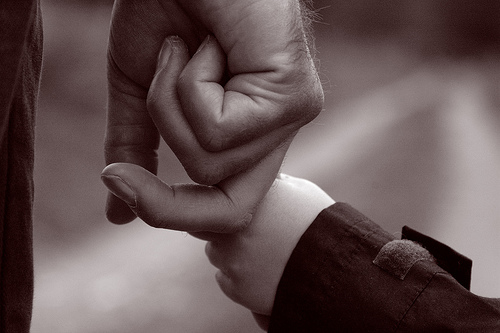
There is a reality as powerful and profound as Motherhood. It’s Fatherhood.
Fatherhood” © 2005 Paul C. Smits
Things for us spiraled down very quickly. In some ways things happened so fast that I felt like I was taking part in some made for TV drama. At times I felt almost detached, like I was just playing a role. At other times I felt devastated thinking about losing Denise and all that we had together. I was very lucky to have supportive family and friends; otherwise, I know it would have been much worse. Fortunately, just as quickly as things spiraled down, Denise got better.
2) Would you share your family’s experience with PPD? When did you first realize something wasn’t quite right and what steps were taken to get help?
Here is our story: https://home.comcast.net/~ddklinker/mysite2/Johns_Story.htm
3) Has becoming a Father changed you?
The moment I looked into my daughter’s big brown eyes for the first time, I was a changed person. I felt a huge sense of responsibility come over me as I sat there in the delivery room holding her. The greatest changes came from needing to consider her needs over my own.
4) What aspect of being a Father is the most challenging? The Least?
I think the most challenging aspect of being a father is dealing with the fear of doing it wrong. How do I know that the choices Denise and I make are the right ones? Are we doing enough for the kids, or too much? What makes us qualified to shape the lives of two wonderful human beings? I deal with these fears but remembering that Denise and I are there to provide opportunities, guidance, and boundaries for our kids. They shape their own lives, we just have to do our best to help them make good choices in their lives.
The least challenging aspect of being a Father is enjoying the special times together when everything seems right with the world. Whether it watching them ride their bike for the first time, watching them catch their first fish, or just driving home after a softball game. There have been many times where I know I’ve gotten the father thing right and it’s a great feeling.
5) How did you get involved with PSI and how rewarding has it been to work with Fathers who are where you have been?
I got involved with PSI the same way many other volunteers have, I talked with Jane Honikman. I knew that I wanted to do something to help other dads and Jane was very encouraging. PSI has recognized the importance of reaching out to partners for a long time and needed someone to take the role as Father’s Coordinator. I volunteered and was very warmly welcomed in the organization. I have met many wonderful people through PSI and it has been a great experience for me.
My main involvement at PSI has been talking to fathers on the phone, responding to emails, and maintaining my website. I usually only have 5-10 calls and maybe 10-15 email contacts within a year. Most of the calls are from dads that feel cut out and rejected by their wives. These dads feel devastated and powerless to doing anything about the situation. I have several stories on the postpartumdads.org website from dads dealing with rejection. I have to say, these calls are tough and I often feel inadequate to provide the kind of help these men desperately want.
On a more positive note, I have had several phone calls where I do feel I have made a difference. It is very rewarding when I feel like I have helped someone through a tough time. I have also received a lot of positive feedback on the website, especially the stories.
6) What led you to develop your website for fathers/partners?
After taking some courses through Landmark Education I knew that I wanted to make a difference in the world. While talking with a friend whose wife was experiencing PPD I realized I didn’t know what to say to help him. I talked to him about my experience but I didn’t know what resources were available to help. After looking for resources on the internet I saw that there was very little directed towards the needs of dads dealing with the depression of their wives. I came up with an idea to develop a website that featured stories from other dads with very practical suggestions. I got some great encouragement from the local PSI coordinator Shelly Ashe and from Jane Honikman. With very little experience creating website, I figured out the basics and started with my own story. I have been fortunate to have other dads contribute stories and I am very proud of what we have created.
7) Just as women with PPD learn that taking care of themselves is important, this is a lesson that Fathers should heed as well. What do you do on a regular basis to feed your soul and ensure that you stay in a good place?
I “feed my soul” by doing projects around the house, riding my mountain bike, taking walks, and playing with the kids. I’m currently building a retaining wall in the back yard and I get great satisfaction out of seeing the progress I make each week. It’s the most physical labor I get during a week. I try to mountain bike once a week and the 20 minutes of flying down hill, after the 1 hour going uphill, are the best therapy possible. Everyday at lunch I take a 20 minute walk that helps to clear my mind. I also like to spend as much time with the kids as possible. I enjoy being with them and it’s a great way to see the world through their eyes.
8 ) Did PPD strengthen or weaken your marriage? Do you feel that you both are in a better place now than prior to PPD?
PPD strengthened our marriage. Denise and I have been through some very tough times together and we have been able to support each other through them. Each time we have made it through the tough times we have felt closer as we have more invested in each other. Watching Denise recover from PPD, as well as a life-threatening illness, has been an inspiration to me and many people around her.
9) What aspect of Fatherhood should be celebrated the most?
I see my primary role as a father to be setting the boundaries for my kids. This means keeping them safe, but it also means allowing them to take risks and sometimes going further then their mom would allow. I see myself as being there to back them up as they try new things, from riding a bike, to the first day at a new school. I think the role that fathers play in fostering independence and confidence should be celebrated.
10) If there was one piece of advice you could give to an expectant father (new or experienced), what would it be and why would this be important for him to hear?
My one piece of advice to new dads is to trust your instincts. If something doesn’t seem right it probably isn’t. That applies to dealing with PPD was well as dealing with setting boundaries.