Finding yourself faced with depression during pregnancy is a confusing prospect indeed. How do you treat it? Do you tough it out and hope there is no effect on your pregnancy? Or do you risk medication and the potential effects that course may have on your baby as well? In addition, many care-givers are hesitant to medicate a pregnant mother for depression or even worse, are not familiar with ante-partum depression and negate the mother’s concerns over her mental health. If your caregiver brushes aside your concerns as normal pregnancy ups and downs yet you know in your gut it’s more, get a second opinion or ask for a referral to a therapist at the very least.
A recent study by Dr. Katherine Wisner, M.D., M.S., found that continuous exposure to either SSRI or Depression during pregnancy results in pre-term delivery rates in excess of twenty percent while mothers with no exposure to either depression or SSRI over the course of their pregnancy experienced rates of pre-term delivery at six percent or lower. The study looked at 238 women with no, partial, or continuous exposure to either SSRI treatment or depression and compared infant outcomes. They found that exposure to SSRI’s did not increase birth defects or affect infant birth weight but the importance of this study lies within the finding that the pre-term delivery rates were the same with depression exclusive of SSRI treatment, leading the researchers to state that it is “possible that underlying depressive disorder is a factor in preterm birth among women taking SSRIs.” You can read more about this study by clicking here.
“This study adds evidence that depression in pregnancy can negatively affect birth outcome. Although women treated with SSRI’s throughout the pregnancy may experience pre-term birth, the factor causing the problem may in fact be the depression and not the SSRI. More research is needed to tease out what is causing the changes in the uterine environment. As research comes forth, what continues to be clear is that treatment for depression in pregnancy is important. ‘Treatment’ doesn’t necessarily mean medication, but for everyone’s sake the pregnant woman needs to receive a plan for wellness.” Dr. Shoshana Bennett shares when asked about her take on Dr. Wisner’s research.
You may recall a recent study posted also regarding birth weight of infants. The study concluded that Prenatal Depression restricted the fetal growth rate. This study concluded that depressed women had a 13% rate of pre-term delivery as well as a 15% greater incidence of lower birth weight. This study’s results examined cortisol levels to determine risk of pre-term delivery and birth weight prediction, which leads us to another study examining the reliability of cortisol to predict short gestation and low birth weights. The study concluded cortisol levels were indeed a reliable manner in which to predict both.
So what’s a pregnant depressed mama to do?
Throw her hands up in the air?
Scream?
Cry?
Tough it out?
None of the above – she should work in partnership with her doctors to weigh the risks. There are other treatments available for depression and anxiety during pregnancy besides SSRI’s. Therapy is always an option. (Yes, more studies to be quoted ahead) A study examining the effectiveness of a Mindfulness based intervention for pregnant mothers found women receiving the intervention experienced less stress and anxiety during their third trimester and postpartum period. There was no data collected regarding pre-term delivery or birth weight in relation to this particular study.
There’s also a wonderful article at wellpostpartum.com that discusses how cortisol impacts mothers. Included in this article are some terrific (and natural) suggestions on how to keep cortisol at bay.
Alrighty now. You’ve shared your precious studies with us. What about some real life advice? What did YOU do when faced with the Hamlet conundrum of medicating during pregnancy?
I read.
Voraciously.
The two biggest sources of help for me were Karen Kleiman’s What Am I Thinking? Having a Baby After Postpartum Depression and Kornstein/Clayton’s Women’s Mental Health. Karen’s book allowed me to realize my emotions were right on target for a woman facing pregnancy (expected or not) after surviving a PMD episode while Women’s Mental Health laid out the risk factors in a no-nonsense manner. I was convinced to stay on medication after I read my risk for relapse went up by 50% if I discontinued my medication during pregnancy. With my risk factor already 50% higher than women having never experienced a PMD, there was no way I was giving myself a 100% risk of traveling down that road.
I stayed on my medication. I stayed in therapy. I talked to my family and developed a postpartum action plan, spending more time on preparing for my possible fall than for my son’s arrival. And you know what, it paid off big time. I did not experience a PMD the third time around, even though (yes, more studies) having a boy may put you at a higher risk for developing a PMD and the risk for experiencing a PMD after two episodes is almost 100%. I beat the odds and don’t think a day doesn’t go by that I don’t give thanks to God for carrying me through.
I always encourage women I come in contact with to weigh their options with their caregivers. To educate themselves and make the best decision possible with the information at hand. Your doctor is on your team and should be willing to listen to your plan and at least consider your requests. If he/she does not respect your wishes, it may be time to find another physician for care during the prenatal period.
I would also encourage you to get a couple of books, the first being Dr. Shosh’s Pregnant on Prozac, in which she examines the relationship of psychiatric medications to pregnancy. It’s a must have resource for mothers facing the decision of psychiatric medication for an existing condition or a newly diagnosed condition. Also pick up a copy of Karen Kleiman’s Therapy & The Postpartum Woman. While this book is ultimately aimed at clinicians and the postpartum woman, pregnant women facing a mood disorder would glean quite a bit from this book as well and may consider gifting it to their caregiver as well, a paying it forward action if you will.
And if you’re interested in complementary or alternative treatment methods that don’t include SSRI’s, a great place to start researching is over at Well Postpartum. Run by Cheryl Jazzar, this blog has just about everything you could ever want to know about alternative care during the Perinatal Period.
The final thought on all of this? Do your homework. Don’t be afraid to ask questions or stand up for yourself (and your child). Above all, make the decision and agree not to second guess yourself or blame any outcome on yourself. As long as you make the best decision with the best information at your fingertips at the time, there is no blame. (And hey, the fact that you’re reading this article right now speaks pretty highly of your motivation to educate yourself!)
No matter how alone you may feel in that dark pit of depression during pregnancy or postpartum, you’re not. There are plenty of other women there with you and there are lots of us reaching our hands down to help you out. All you have to do is reach out and grab.

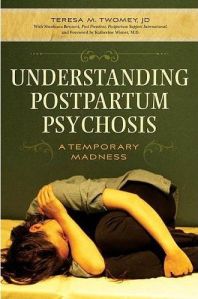 A new book by Teresa Twomey with Shoshana Bennett became available today. This book is not for the faint of heart.