Category Archives: public awareness

Dr. Zachary Stowe reprimanded by Emory

Dr. Zachary Stowe, a well-known researcher in the field of anti-depressant usage during pregnancy and postpartum, has been disciplined by Emory University for failing to disclose a conflict of interest while conducting research using a NIH grant during 2007 and 2008. Dr. Charles Nemeroff, also of Emory, was also found to have existing conflicts while conducting research just a few months ago.

These disheartening discoveries are becoming too commonplace. What’s happened to honest, decent morals? What’s happened to working for the greater good instead of the not-so-almighty dollar?

I must say that my initial reaction was one of very deep disappointment as this is all unfolding in my own backyard. Emory is one of the most well known resources for Postpartum support here in Georgia. Without Emory, there’s not much left to the support and knowledge of Postpartum Mood Disorders and their treatment here. (Trust me, I’ve worked to find one!)

I sincerely hope both Dr. Nemeroff and Dr. Stowe have learned important lessons through all of this. I also hope other researchers will realize the importance of honesty when disclosing relationships during research.

The public deserves un-biased data when it comes to our health. Has that even become too much to ask for?

FDA forms “Transparency Task Force”

In a press release today, the FDA announced the formation of a Transparency Task Force.

It’s about time the FDA opened the doors to it’s process. As consumers, we deserve to know all the risks involved with anything we ingest as food or use to treat our mental or physical illnesses. For far too long companies have been able to use the FDA’s slow process as a shield to hide behind, harming consumers in the process. This abuse has to stop if we are to have any hope of a fair economy. We need to be able to trust in those who provide our sustenance and medications.

The FDA invites public opinion and has scheduled an open meeting for June 24th. They also have a blog dedicated to this Task Force at their website that will run for the next six months.

“Our administration is committed to making government open and transparent,” said Health and Human Services Secretary Kathleen Sebelius. “The Transparency Task Force will give the American people a seat at the table and make the FDA more open and accountable.”

“President Obama has pledged to strengthen our democracy by creating an unprecedented level of openness and public participation in government, and the FDA looks forward to participating in this process,” said FDA Commissioner Margaret A. Hamburg, M.D. “I have asked the Transparency Task Force to deliver recommendations to me for ways to make more information available and foster better understanding of decision-making.”

Taken directly from the FDA’s press release, the following are goals of the Task Force:

The Transparency Task Force will:

  • Seek public input on issues related to transparency;
  • Recommend ways that the agency can better explain its operations compatible with the appropriate protection of confidential information;
  • Identify information the FDA should provide about specific agency operations and activities, including enforcement actions and product approvals;
  • Identify problems and barriers, both internal and external, to providing useful and understandable information about FDA activities and decision-making to the public;
  • Identify appropriate tools and new technologies for informing the public;
  • Recommend changes to the FDA’s current operations, including internal policies and guidance, to improve the agency’s ability to provide information to the public in a timely and effective manner;
  • Recommend legislative or regulatory changes, if appropriate, to improve the FDA’s ability to provide information to the public; and
  • Submit a written report to the commissioner on the Transparency Task Force’s findings and recommendations.

Sharing the Journey with Helen Ferguson Crawford

I met Helen at Facebook. (Yes, I spend entirely TOO much time there) She’s a wonderfully brave soul who is opening up about her recent experience with Postpartum Depression and Thyroiditis. Did I mention her daughter also had kidney reflux? Helen is one tough chick and I can’t wait to share her journey with you. In fact, let’s get started now!
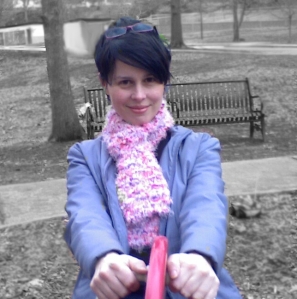
HFC

Tell us a bit about yourself. Who is Helen Crawford when she’s just HELEN?

Hey Lauren! I am a happy, confident, empathic soul.

Every day I am a being that is – a mother, wife, architect, artist, advocate, gardener, speaker, and big city lover. Our children, Joe (age 5 1/2) and Nora (age 19 months) are hilarious, engaging little people.

Did your pregnancy and birth go as you expected or were there some unexpected experiences thrown in for good measure?

Both pregnancies were good! You know normal stuff – morning sickness, back aches. I was busy doing things that I love to do both times.

My due date for both my children was the same day, October 16th. Ironically, it is also the day my husband asked me to marry him. Now, were they born on that day? Of course not!

With just about every pregnancy and post-natal period there are unexpected experiences large and small. With my son Joe, it was a c-section, and a lousy bout of mastitis afterward. I did not have PPD following his birth. However, after the birth of my second child, Nora in Oct 2007, everything was great until the fourth month post-partum. I started feeling tired, overwhelmed, and my hair was falling out. I was always cold, and my skin was rashy. I was anxious and sluggish. Thus began a very confusing, insidious spiral downward, a complete descent into more than one post-partum related illness.

You too have tread down the bumpy cobblestone avenue of Postpartum Depression. Just how bumpy was that road for you? How did your journey start out?

Severe bumps. I have seen clinical depression up close many times, as a witness. Depression runs in these genes, and having it myself was one of my biggest fears.

In March 2008, my OBGYN tested my thyroid. The numbers were off and I was sent to an endocrinologist. I was diagnosed with (temporary) Post-Partum Thyroiditis. Post-Partum Thyroiditis mimics symptoms of depression and anxiety. Since I had wacky blood work – that must have been it right? The source of the anxiety attacks and lost feeling? That proved to be wrong. It took 6 months for my thyroid to return to normal, and when it did the panic attacks increased. In late August 2008 when my daughter was 10 1/2 months old, I stopped sleeping and eating entirely. And then I knew, PPD was here. Full, clinical post-partum depression/anxiety had been here the whole time, hiding behind abnormal blood work, an thyroid in overdrive, increasing anxiety about my daughter’s kidney reflux, and my role as a mother and practicing architect.

What were some of the things you did to get through your darkest days? How were you received when you sought help?

I pulled myself together as best as anyone in the scariest place they have ever been could. Used every inch of energy I had to find a psychiatrist that would see me immediately. I found a great one and also called my therapist, whom I had not seen since Nora’s kidney diagnosis in June. She met me after hours immediately. I saw the psychiatrist 36 hours later and started medication. Medication was and still is necessary for me. On that day I went the the psychiatrist, I called my office and was honest. My office was accepting. And then crawled back into bed to begin recovery, whatever it would become, and is becoming.

Oh – Practiced breathing. Meditation. I accepted what was now – this depression and that I was doing everything in my being to crawl out of it. Once the medication started working and my appetite nourished my strength, I started painting and writing again. I wrote about what it felt like to have this monster. I drew strength from these words and images. Here is a diary entry that I read and reread often:

Dear Post Partum Depression,

After the birth of my daughter, you silently slipped in, and settled down. I recovered from birth, hugged my family, and watched autumn change to winter, while you slowly grew. You hid behind other temporary, post partum illnesses, undetected. You fed on stress. You fed on fear, until I found myself in a black hole so deep, dark and terrifying. The sides were wet, damp and crumbly dirt; the width of my arms. Up far above, the sky was barely visible. Sometimes I could feel the sun for seconds. There in that place, I accepted that you were here. With intense fear, I stood up and gathered my army – friends, family, therapist and psychiatrist. But even at night, when I lay on the cool floor of my porch, listening for anything – birds, trains, wind – waiting for the anxiety attacks to stop, waiting weeks for the medication to work, waiting for sunlight, sleep and appetite to return, I knew you were not me. Depression, you are something that happened along the way – a situation. I accept this. You do not define me. I laugh, sleep, play with my children, talk with my husband, draw, paint, smile, pray, cry, spend days with friends and live. I climb, inch by inch, fingers dug in the sides, pulling myself up. Each inch I climb is a triumph. I am on this path that is life. My light shines from within.”

Support from a spouse/partner or family and friends is invaluable during recovery from a Postpartum Mood Disorder. What was your experience with family and spousal support as you recovered?

Everyone needs an army. My parents came for 3 months to take care of us. My in-laws supported us in many ways. My husband went to therapy with me and took care of the children every night for 4 months, as I was getting stronger. I am truly blessed. It’s been 8 months since I sought treatment, and I am heading towards remission. I’ll still be on medication for a while and that’s OK.

Name three things that made you laugh today.

I overheard the 19 month old say to her big brother, “stop whining Joe Joe.”

A Jon Stewart clip.

My son break/karate dancing like a pro.

What do you find the most challenging about parenting? The least?

The dynamics are always changing – this is the hardest. The least challenging of course is loving the pure joy these two bring us. Beats all the hard work!

Self-care is so important. Often we forget to Mother the most important person in our lives – OURSELVES. Share with us what you do when taking time for yourself.

Every mother knows that this is one of the hardest things to do, find time. I realized with the help of my husband and therapist that I always sabotaged my own free time. I didn’t let free time for me happen, because I did not know how. Now I paint and practice yoga – by myself. I see my friends more.

At Facebook, you host a group encouraging the support of the MOTHER’S Act. Tell us about your support of this legislation.

I am still amazed that there is not much understanding of this illness including in the medical profession. Research and public awareness are necessary! This is REAL. It’s not momentary sadness, weakness or weepy, female emotions. The women whom get through this are the bravest, strongest women in the world. Listen to their voices.

The Facebook group is starting to take off. Its called “Sign This- Post Partum Depression Mothers Act.” All the names are sent to the national petition list that Susan Dowd Stone is compiling. Names are sent per state, so remember to let us know where you live!

On the group page there is an opportunity to contact your individual senators.

And last but not least, let’s say you have an opportunity to share some advice with an expectant (new or experienced) mom about Postpartum Mood Disorders. What would you tell her?

There is no shame in having this illness or possibly having this illness. Sometimes it just happens along the way. It is awful, but treatable, and temporary with help. I would hug her and remind her she did nothing wrong, EVER. She just had a beautiful baby and the body is having bumpy time trying to recover. Speak up, seek help and find peace within, even if it means medication and an army of support. My daughter is the happiest girl I have ever met. As I recover, I laugh out loud about how I gave her all my happiness to go forth in the world. So now I’m in the process of re-growing mine!

Sharing the Journey with Diane Ashton

Diane Ashton is the PSI Co-Coordinator for the state of Hawaii. Sasha Williams serves as the other Coordinator for the state of Hawaii. Diane is awesome. I’ve really gotten to know her via email and facebook (we’re both on Facebook WAY more than we should be). Diane is funny, honest, and a wonderful woman. I am thrilled she agreed to a very last minute interview (sorry diane! but thanks!) To learn more about the support Diane offers in Hawaii, visit her website, PPD Support Hawaii. Now here’s Diane’s story in her own words.

Tell us about Diane. Who is she when she’s not providing support to women with PPD?

Hi Lauren!  It’s kind of funny how self-identified with postpartum issues a person can become!  I know I’m singing to the choir here to say that PPD advocates are a passionate bunch!  Along with my obsession, avocation, I am the mom to two older children–they’re 15 & 20 now, although I have no idea how they grew up so fast.  You know how that is.  And all my cherished skills I learned from and with the two of them. We grew up together, in many ways. We’re all a bunch of computer nuts, and are sitting in a 10 x 10 room on our own computers right this minute.  It’s more fun than housework.


You’ve experienced PPD and describe it at the PSI website as a mystery/horror movie. Share with us your journey through this strange place.

It’s been over 14 years, so I tend to be a bit removed from the experience now.  Maybe that’s encouraging to moms going through it now–knowing that eventually PPD won’t feel like something you live and breathe every. single. day.  Why I described it as a mystery/horror movie was that, even though I’d probably been depressed in the past, I’d never been to the depths like I was with PPD.  I’d also never been so sleep deprived.  It was a sleep deprivation due to depression, not because my kids weren’t sleeping through the night.  They were.  I was too anxious to sleep; it was that kind of anxious/depression.  And that was part of why it made it so hard to figure out what was going on with me.  I didn’t feel “depressed”.  I felt, like so many other moms have described, like I was “going crazy”.  It was a mystery to me what was wrong.  With all that came intrusive thoughts that were very gory.  And they weren’t thoughts so much as very vivid images.  They scared me and made me think someone would take my kids away from me, and me away from society forever–pretty much a horror.

What made you realize your moods after giving birth were not quite right? How were you treated when you sought help?

I…actually, …I waited until my daughter was around eight months old before I started sliding into that PPD pit.  It was partly due to her big brother going off to kindergarten with all his little friends we’d seen every week for …4+ years.  But kindergarten is somehow a big shift anyway, and can put moms off-balance for a bit.  Or maybe it’s just us moms who’ve been on the PPD ride are more sensitive to changes.  Anyway, by mid-October (6, 7 weeks into kindergarten) I was losing it.  But no way was I admitting to it.  Although I tried to look stuff up (1994–not much of an internet to surf then) I couldn’t find anything that described what I was experiencing.

Finally my husband took me for “a Sunday drive” to the ER, where they kept and observed me for a while.  I stayed at the hospital for a bit and, well, my peers there were very interesting.  The main thing was though that I finally got on a medication (Zoloft) and it started working.  I began to feel a lot like myself again within a couple of weeks.


How did your family help you during this difficult time?

They were great.  My in-laws had dd while I was in the hospital.  Dh had ds at home, and took him to school each day.  Afterwards, I stayed with my in-laws for more support and to get up to some kind of speed again.  There were other times they stepped in in BIG ways over the next year too–I don’t know what we would have done without them.


Name three things that made you laugh today.

  • A video the kids pointed me to, on youtube had us all cracking up.  A bit on the potty humor side, but we laughed.
  • Talking with a couple of my girlfriends about calling, texting, to American Idol–like we’re a bunch of tweenagers–how many phones each person uses to vote.
  • Swapping stories with my fellow former classmates tonight at dinner.
What do you find the most challenging about parenting? The least?

Still occasionally wondering if we bonded well, if I messed the kids up for life, etc.  But I imagine other moms who didn’t go through PPD wonder this as well.  Also challenging… the age of 13.  EEYuh…challenging.  The least challenging–the easiest–is loving my beautiful, vibrant kids every day!


As fellow PSI Coordinators, we’ve had the concept of self-care proven to us time and again. What do YOU do for yourself that is not a need and soothes your soul?

The beach soothes me.  Body boarding especially, but just getting in the ocean water balances me in emotional and visceral ways.

You work with women struggling with PPD all the time. Tell us a bit about what made you decide to turn your experience into advocacy and support. How empowering is it to do what you do?

It is partly because I didn’t get the name for the exciting journey I had until five or so years later–Oprah had Marie Osmond on, talking about her book about some illness called “postpartum depression”.  I sat there pointing at the TV again and again. “That was ME! That was ME!!”  I finally had a name for it.  I Googled and found online information and bulletin boards where I then made myself at home.  It was because I could find nothing here to help with PPD, and with my experience on the boards that I decided to become an Area Coordinator with Postpartum Support International.  Might as well make some lemonade from the PPD lemons.

How empowering is doing what I do?  What I’ve done for 5 years now is telephone support, email support, a weekly support group, and some speaking.  –the support calls, email and the group empower the parents and are validating for both of us.  Speaking to groups still feels empowering; our recovered moms/volunteers get a chance to speak at various events. I remember my first time too–it was empowering.  People, providers, wanted to know what it is like, what could be done, how would you know.  And they listened.  There’s a threshold you cross when you speak publicly about your experience.  What a great question Lauren.  I have to tell my therapist how much it meant to me that she asked me to speak a number of times. It allowed me to step out of my shame and into myself.


Now that your children are older, have you spoken with them about your experience? If so, how did they handle the information? How do they feel about your current work with women?

They are around when I’ve been on phone calls with moms or providers, so they do hear my end of conversations occasionally.  It’s just a part of our lives.  I weave information in to our conversations when opportunities arrive, much like I have with sex education.  Dd just had one of those “pretend baby” exercises where she had to care for a hard-boiled egg for 2 weeks as if it were her baby.  Of course I wove in some PPD talk!


Last but not least, let’s say you have an opportunity to speak with an expectant mother (new or experienced) about Postpartum Mood Disorders. What would your advice be?

It would really depend on the situation.  I used to be tempted to pass out information to every new parent I saw, just so they could avoid the journey I endured.  Barring accosting new parents in the grocery aisles, what I would say though is that you’re not alone if you have a PMD, they are very treatable, they are not your fault and that honestly, I found a gift in my experience, eventually.  Maybe it was my biggest experience of “whatever doesn’t kill you outright makes you stronger.”  And in the case of PPD, as many mothers say, it loosens your judgments, revealing compassion.

Aloha!

Sen. Menendez holds Press Conference at Valley Hospital

This past Monday, Senator Menendez held a press conference at Valley Hospital to speak about the MOTHER’S Act. Susan Stone, Sylvia Lasalandra, and Mary Jo Codey were all in attendance.

Emphasized was the fact that the MOTHER’S Act does NOT mandate screening. According to the Susan Stone’s blog post announcing the press conference, Dr. Fred Rezvani, Chair of the Department of Obstetrics and Gynecology at Valley Hospital in Ridgewood NJ, emphasized the need to include all forms of treatment for new mothers suffering from these disorders including nutrition, massage and acupuncture and other complementary therapies, to home services, social support and psychological counseling.

Senator Menendez was presented with a petition of national organizations and individual constituents representing millions of Americans who understand the need for this legislation can no longer be ignored. With the bipartisan support that currently exists for the legislation, its likelihood of passage among the priority of healthcare reform seems likely, but the advocacy efforts must continue! The entire audience expressed their thanks to Senator Menendez for his determined advocacy on behalf of America’s mothers.

~Susan Stone~

You can read more about the press conference by clicking here.