Category Archives: postpartum depression

Ivy Book Cover

Guest Post: Ivy Shih Leung – Why I wrote my book

Ivy Shih Leung is a fellow PPD Blogger and someone I consider to be a friend. She’s had a rocking journey through PPD as well, but her path is unique. Ivy is ferocious, fearless, and doesn’t mince words. I asked her to write this post as part of this week’s theme focusing on books about PPD. Ivy’s book, “One Mom’s Journey to Motherhood: Infertility, Childbirth Complications, and Postpartum Depression, Oh My!” can be purchased through Amazon. The link is not an affiliate link of mine so I don’t stand to make any money off of your purchase. Read on for what motivated Ivy to share her story.


Thank you from the bottom of my heart, Lauren, for letting me share info about my book to your blog readers! I would like to share how fulfilling an experience writing this book has been for me, what factors motivated me to write my book, and what I hope to accomplish with my book.


Writing my book has not only been an amazingly cathartic experience, it has turned out to be one of the most fulfilling accomplishments of my life and a tremendous confidence builder. Writing this book has boosted my self confidence in such a way that negative thoughts and attitudes of those around me— people who are competitive, jealous or just plain mean-spirited—no longer have the same crippling effect on me as they had before I finished my book. About a decade ago, I remember telling a former manager (who was, quite simply, a totally callous and condescending jerk): “There’s nothing more satisfying than being creative and seeing the fruit of your labors,” while he just sat there and gave me this “I don’t give a damn” look. Well, eat your heart out!

If asked what motivated me to write my book, aside from my personal goal for over a decade of wanting to create a piece of work I could feel proud about, I would answer in the following chronological order based on the circumstances that presented themselves:

  • The 2005 infamous words “There’s no such thing as a chemical imbalance” were my initial trigger. Tom Cruise is a name that resonates negatively the most, I think, among moms who have experienced a PMD and thus realize how idiotic his infamous words were. If it weren’t for him, I’m not sure my creative juices would’ve flowed the way they did. Over the past few years, I’ve learned that I write the most passionately and words seem to flow more naturally and quickly when I am angry.
  • I needed a means to release pent-up anger, emotions, thoughts and feelings. Starting in June 2005, my manuscript became my journal that enabled me to release and process pent-up anger, emotions, thoughts and feelings, as well as keep track of the chronology of my experiences. In February 2009 I decided to try to reach a wider audience via my blog before my book was done. It’s at that point that I realized there are many more moms who have experienced, or are in the process of experiencing, a PMD than I had previously realized.
  •  I wanted to help other moms feel less alone in their experience. Remembering how alone and anxious I felt during my bout with PPD, I wanted to share my experiences to help expectant mothers become knowledgeable about PMDs so that, if they succumb to a PMD, they won’t be totally caught off guard. Being ignorant about PMDs causes unnecessary fear, anxiety, guilt, and inability to appreciate one’s baby for the mom who succumbs to a PMD. For example, insomnia after the third week postpartum is a common first symptom of PPD. Since my blog is hit numerous times each day via Google and other search engines using words relating to insomnia in the days and weeks following childbirth, to me that means that there are many moms out there who are going through what I went through, in terms of insomnia as one of the initial symptoms of PPD. Had I known about PPD and its symptoms BEFORE my daughter was born, I would not have been as scared as I was as to why I had insomnia and couldn’t sleep even though I was exhausted beyond words and even when my baby slept. My fear would not have escalated into full-blown anxiety attacks. I would’ve recognized other symptoms like loss of appetite and quick weight loss. As soon as I started to have insomnia, instead of merely taking the Ambien prescribed to me by my OB/GYN, I would’ve immediately known to question it as a sign of PPD and gotten the right treatment then, and I might have been able to prevent the panic attacks from ensuing. As they say, hindsight is 20/20….but at least now I can help other moms know that insomnia is an indication that they need to seek medical and/or mental healthcare right away.

I find that, and I’m sure others will agree, pregnancy books and magazines focus too much on how moms can quickly get their pre-pregnancy figure, weight and libido back—things that shouldn’t really matter but somehow do—and not enough about the silent epidemic of PMDs experienced by as many as one in eight new moms, plus child-care complications like colic, eczema, and cradle cap that add to the anxiety levels of first-time moms.

So, I wanted to write a book that would let me share the following with other moms (and their significant others and loved ones):

  • Just as the title suggests, my journey to motherhood, comprised of infertility issues, childbirth complications, and postpartum depression (PPD).
  • Practical tips from what I learned from my journey, including things to know/do to minimize risk of a postpartum mood disorder (PMD) before baby arrives and things to know/do if a mom were to develop a PMD.
  • My experience with child-care complications like colic, eczema, and cradle cap, so new moms wouldn’t be as anxious and in the dark as I was on how to cope with these types of issues.
  • The biopsychosociology of PMDs—as there is a biological, psychological and sociological element to PMDs—including a brief introduction to the biology of the brain and reproductive hormones (to debunk the ignorance behind the expression “there’s no such thing as a chemical imbalance”), as well as PMD symptoms and risk factors (nature vs. nurture).
  • Info on how to get help (medical, mental, social) and the kinds of help available (e.g., doctors and medication, therapy and therapists, postpartum doulas/baby nurses), including the historical perspective of social support and why it is so crucial, yet lacking, in the early postpartum weeks.
  • How far we’ve come in the past decade and how much further we need to go to improve postpartum experiences, reduce PMD rates, improve public awareness and combat stigma, and improve patient experiences with medical/mental healthcare professionals.

Johns Hopkins Study Says Moms with Depression have Shorter Kids

A friend of mine on FB commented on an article at MSN Now this morning. The title of the article? “Study links mother’s depression with shorter kids.”

Um. ‘Scuse me?

Apparently, researchers at Johns Hopkins, clearly with nothing better to do, filled their time  reviewing up to 6500 mother/child dyads to discover that children of mothers with depression of the postpartum variety were 40% more likely to have children of shorter stature. Their grand conclusion? “We don’t know why the hell this happens, it clears up by the time the kid’s 5, and well, moms with Postpartum Depression need support.”

Can we just file this under “Shit I didn’t need to worry about and well, DUH?”

Because.

Sighs.

Dear Researchers – if you’re going to bother to study something associated with Postpartum Mood & Anxiety Disorders? PLEASE make sure it matters and serves a purpose other than to make us worry about something that, well, frankly, isn’t worrisome. There’s absolutely nothing wrong with kids of a shorter stature and to blame it on depression is just an anxiety attack waiting to happen because yanno what? When you have Postpartum Mood Disorders, you worry about the stupid stuff like this. So thanks. No, really, thanks.

Postpartum Voice of the Week: @ksluiter’s “heavy alphabet soup”

It’s been awhile since I’ve done this but this past week, I read a post worthy of being highlighted as Postpartum Voice of the week. In fact, it’s inspired me to dive back into blogging here – I’ll be somewhat changing direction but it’ll still have the same Postpartum Mood & Anxiety Disorder focus. More about that in an upcoming post though. For now, I want to simply highlight this very deserving post.

Kate Sluiter blogs over at Sluiter Nation and has been doing so for 5 years now. Her writing is amazing regardless of the topic but when it comes to her experience with Postpartum Mood & Anxiety Disorders, it’s phenomenal. Kate is an open book, bravely sharing her experience after the birth of her first son, during her pregnancy with her second son, and now, after the birth of her second son.

Last week, Kate hit publish on a post entitled “heavy alphabet soup.”

It’s a MUST READ for any parent with or married to a partner with mental health issues. She is brutally honest, transparent, courageous, and personable in this post.

My favourite part of the post is here:

“I still feel very angry that I have to deal with this at all.  I don’t want it.  Any of it.  I don’t want to be on meds, not because I don’t want to be better, but because I don’t want to have all these letters.


I know they don’t define me.  But they are part of who I am. They are part of my biological make up.  They are chemical imbalances in my brain.”

Amen, Kate.

In writing these two paragraphs, especially the last one, she clarifies something very important – mental illness/letters do not define us. They are a part of us yes, but they absolutely do not define us.

Go. Read her post, “heavy alphabet soup.” Leave her some love.


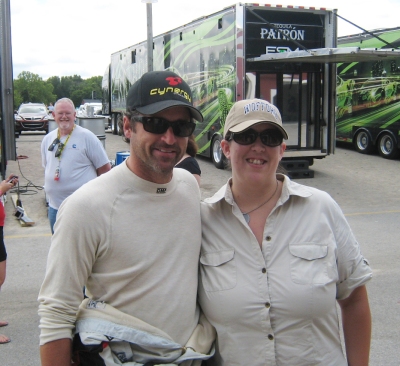
Patrick Dempsey VIR June 14 2012

Dempsey races into the #PPDChat world

McDreamy. That’s how most women in America refer to the fabulous Patrick Dempsey. Then we sigh and our minds wander. There’s just something about him, isn’t there?

In addition to the portrayal of Dr. Derek Shepherd on Grey’s Anatomy, Patrick Dempsey also races cars. He’s been racing through Dempsey Racing, which formed in 2002. Racing is so important to Dempsey that recent contract negotiations for his continued appearance on Grey’s hinge on his ability to have time off to race – “The biggest point for me in negotiations is getting time off to come race, so if I don’t miss races, I’ll probably stay on ‘Grey’s Anatomy.’”  (quote source: Huffington Post)

Not too far away from where I’m currently living is Virginia International Raceway, or VIR as it’s known to locals and racing enthusiasts. Back in June, American LeMans held a test day at VIR for several teams. I had no idea when my dad first mentioned going that Dempsey would be there. All I cared about was seeing the amazing cars.

I’ve been watching non-Nascar racing for quite some time now. We primarily watch F1 but given that there are no F1 tracks nearby, we settle for Grand-Am and now American LeMans if local events are attended.

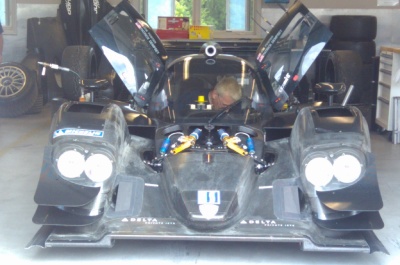
I woke up early on June 14th to make the trek to VIR with my dad. After we paid for our entrance, we made our way to the Oak Tree corner to get started. The first race car came screaming around the curve, leaving me breathless. Then we went down to the top of the RollerCoaster, which was where I first saw Dempsey’s car pop over the hill. Only I didn’t know it was Dempsey’s car. It was quite simply, the most beautiful vehicle I’d ever seen on a racetrack.

It wasn’t until later in the day while meandering around the Pits that I realized Dempsey Racing was there. Then we overheard some VIR employees discussing his performance the day before. I whispered to my dad that if Patrick was indeed there, I simply had to meet him and he had to get a picture.

Dempsey’s car in the garage

As we continued to wander down through Pit Row, the sky darkened and we decided to go grab some lunch. Rain dropped down on us right as we reached the concession area but cleared up before we were through with our BBQ sandwiches and beer. We headed back over to Pit Row as all drivers are required to take at least an hour break during test days.

Thankfully, (or luckily) we managed to see Patrick as he stepped out of his trailer. He is a genuinely nice guy. The picture above was taken very quickly as he was heading somewhere on a scooter shortly after. He took the time to chat with my dad for a few minutes though and I was left in awe that I’d just met McDreamy.

This is where the story gets interesting.

I tweeted about meeting him (in a very 14 year old giggly girl manner):

So….I just met Patrick Dempsey. SQUEEEE.

— Lauren Hale (@unxpctdblessing) June 14, 2012


My phone barely had any power left but I received this response:

@unxpctdblessing Saw ur tweet re: Patrick (awesome, isn’t he?!) BUT my BFF suffers from PPD & PP psychosis. Reading website, linking her!!

— Erin (@lainey_vb131) June 14, 2012


So you see – Dempsey has this knack for saving lives and playing the hero without even trying.

@lainey_vb131 participated in #ppdchat the following week and still follows the chat, finding support with us even though she herself doesn’t suffer from Postpartum Depression.

When you do something you truly love, everything in your life is touched by it and nothing you do escapes without somehow translating into your primary function in life. Things like this prove again to me that I’m meant to help others with their journey through Postpartum Mood & Anxiety Disorders. I’ve been struggling a bit with that but it’s what’s in my heart and what will always be in my heart. Just like racing is what’s in Patrick’s. Well, that, and heroically saving lives. Even when he doesn’t realize he’s doing so.

Thank you Patrick, for taking just a few seconds to say hi to me and agreeing to a quick picture. Because of your graciousness, another mom found my blog and the community surrounding it –so did her best friend– and now they are no longer alone. You rock.

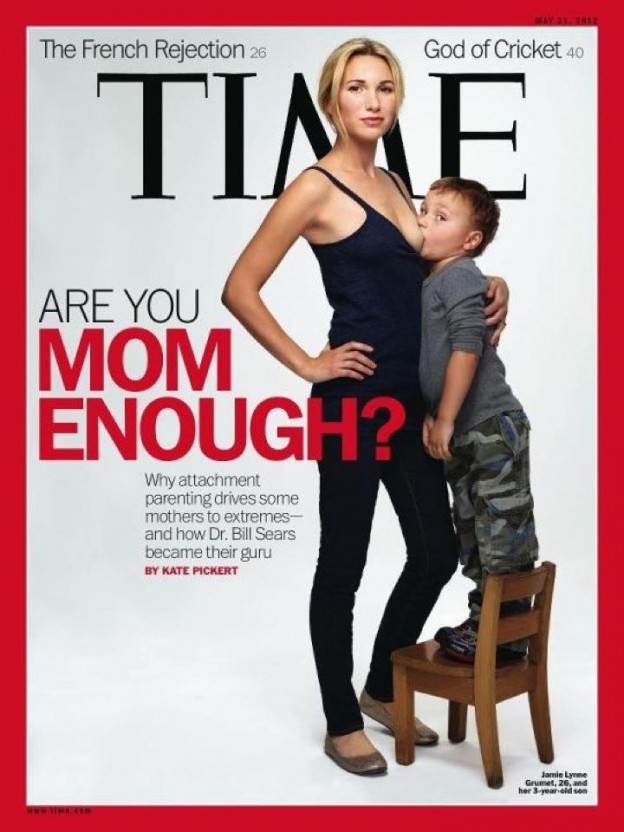
Time - Are You Mom Enough

TIME Magazine fails to support mothers

When Jamie Grumet was tapped for an interview and photo-shoot for the most recent issue of TIME magazine, her goal was not to raise our hackles. Her goal, according to a Q&A at Time was: “There seems to be a war going on between conventional parenting and attachment parenting, and that’s what I want to avoid. I want everyone to be encouraging. We’re not on opposing teams. We all need to be encouraging to each other, and I don’t think we’re doing a very good job at that.” Read more: http://healthland.time.com/2012/05/10/q-a-with-jamie-lynne-grumet/#ixzz1uUnnAmrE

I have to say —I kind of agree with Jamie— but I disagree with about where the judgment is originating. For instance, this weekend is Mother’s Day weekend. Instead of celebrating motherhood for the amazing and difficult job it is –regardless of your approach– TIME magazine instead chooses to share an incredibly divisive article with an even more divisive headline, “Are you MOM Enough.” The real title, as accessed at their website is: “The Man Who Remade Motherhood.”

As for the photographer, Martin Schoeller, who took the photo, in an article focusing on “Behind the Cover,” he stated: “I liked the idea of having the kids standing up to underline the point that this was an uncommon situation.” He also further stated, “It was important to show that there’s no stereotypical look for a mom who practices this kind of parenting.” Oh Martin. There’s no stereotypical Mom either – aside from, you know, a woman who has a child. Beyond that though, everything is up for grabs.

It’s time to stop judging each other for our choices. To stop allowing the media to get us all riled up. To stop thinking “Am I Mom Enough?” You are. No “as long as…” attached. There are, of course, mothers who don’t even try, mothers who have truly given up and are absent. But we’re not discussing mothers who are absent. We’re talking about mothers who give enough of a damn to raise their hackles in response to an article like this.

I don’t want to play the game anymore. But, as a mom who blogs and actively supports mothers who struggle with Postpartum Mood & Anxiety disorders, I feel I would be remiss in not addressing this topic.

Mothers, all of us, are different. We are unique in our approach to how we mother our children. These philosophies are rooted in how we are raised, how we relate to our partner, how our children relate to us, and the needs of our children. We adjust our lives in order to provide the best for our children with the resources we have and the beliefs which live deep within our hearts. If your children are secure, happy, and loved, there really isn’t any issue as to what your parenting philosophy is or if it’s any better than the mom next door.

All that matters is that what you’re doing WORKS FOR YOU.

This weekend, don’t wonder if you’re Mom enough.

KNOW you are. And know I love you for it.