Category Archives: postpartum depression

Sharing the Journey Teaser!

Wow!

I just got Dr. Will Courtenay’s interview today and make SURE you check back on Thursday!

The interview is chock-full of information (including symptoms) and tips on PPND’s (Paternal Postnatal Disorders)

Here’s just a quick look into Dr. Courtenay’s passion for helping men:

It really pains me to see so many men suffering alone, and in silence. Especially since depression, anxiety and the other emotional problems that affect us are effectively treatable. So, helping men to lead the most fulfilling lives they can – primarily through raising public awareness and through my psychotherapy practice in Berkeley, California – remains a lifelong passion

Good News if you live in Springfield, MO!

Some serious kudos to Dana Lewis and Jennifer Stephens for their hard work in this area! So many moms will benefit from this! Keep up the hard work!


The Women’s Center is first in the region to offer postpartum depression support group

The birth of a baby is supposed to be a joyous occasion in a woman’s life. The reality is up to 80 percent of new mothers experience feelings of emotional instability, known as ‘Baby Blues” in the first weeks after pregnancy. Up to 20 percent suffer from a more severe form of depression known as postpartum depression.

The Women’s Center at CoxHealth announces the creation of two support groups designed to address topics affecting new mothers, including postpartum depression.

The first, “Mom’s New Groove“, is a series of six educational classes. The initial class in the series will be at 12:30-1:30, Wednesday, June 18 at The Turner Center conference room, 1000 E. Primrose. The classes are ongoing, so women can begin at anytime and continue until attending all six classes, which will be held at the same time and place each week.

“In the entire state of Missouri, there is only one postpartum depression support group, and it is in St. Louis, so there is a huge need in this region,” says Dana Lewis, women’s health educator at The Women’s Center.

Lewis and Jennifer Stephens, a student at Missouri State University, developed the series, which is supervised by health care professionals. Stephens suffered from postpartum depression after the birth of her first child.

“Our biggest goal with this education is to normalize postpartum depression. These classes will help women understand that they are not alone, that they shouldn’t feel bad about themselves for having these feelings and that there is now somewhere to go for help,” says Stephens.

The six classes in the “Mom’s New Groove” series include handling major adjustments in a woman’s life, understanding baby’s needs, learning safety tips, and transitioning back to work. Two classes will focus on postpartum depression. Women will learn the signs of postpartum adjustment disorder, how to cope and how a baby can change relationships. These two classes will be led by Wanda Holloway, a clinician at The Burrell Center.

Women who need additional support dealing with the strain of caring for their new baby will be encouraged to attend the second support group, “Beyond Baby Blues.”  This support group will begin after the first six weeks of “Mom’s New Groove”, and will be led by Wanda Holloway.

For more information, call The Women’s Center, 269-Lady.

Sharing the Journey with David Klinker

 There is a reality as powerful and profound as Motherhood. It’s Fatherhood.

This month we’ll be focusing on the Father’s point of view through interviews with David Klinker, the Father’s Coordinator with PSI, Dr. William Courtenay, a psychologist and Men’s Coordinator for PSI (meaning he works with men who are suffering from PPD – yes, that happens too), Michael Lurie, author of My Journey to Her World, and my own husband’s experience with my PPD.
Today you’ll read about David Klinker, his survival through his wife’s PPD and his website, Postpartum Dads, which is designed to be a resource for new Dads. David is wonderful and I often send families his way because I belive that the entire family needs to heal and recover – not just mom. Thanks David – for your hard work and for supporting Dads everywhere. You are doing amazing things! 

 Fatherhood” © 2005 Paul C. Smits
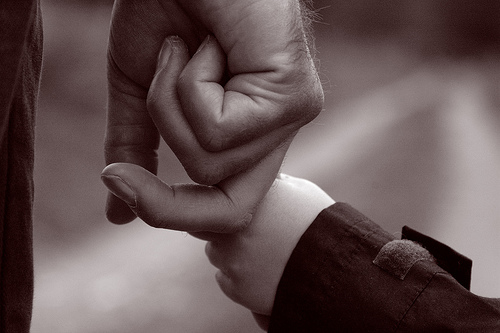
© 2005 Paul C. Smits

1) What is it like for a partner to witness a Postpartum Mood Disorder in action?

Things for us spiraled down very quickly.  In some ways things happened so fast that I felt like I was taking part in some made for TV drama.  At times I felt almost detached, like I was just playing a role.  At other times I felt devastated thinking about losing Denise and all that we had together.  I was very lucky to have supportive family and friends; otherwise, I know it would have been much worse.  Fortunately, just as quickly as things spiraled down, Denise got better.   


 2) Would you share your family’s experience with PPD? When did you first realize something wasn’t quite right and what steps were taken to get help?

 Here is our story:  https://home.comcast.net/~ddklinker/mysite2/Johns_Story.htm


3) Has becoming a Father changed you?

 The moment I looked into my daughter’s big brown eyes for the first time, I was a changed person.  I felt a huge sense of responsibility come over me as I sat there in the delivery room holding her.  The greatest changes came from needing to consider her needs over my own. 


4) What aspect of being a Father is the most challenging? The Least?

 I think the most challenging aspect of being a father is dealing with the fear of doing it wrong.  How do I know that the choices Denise and I make are the right ones?  Are we doing enough for the kids, or too much?  What makes us qualified to shape the lives of two wonderful human beings?  I deal with these fears but remembering that Denise and I are there to provide opportunities, guidance, and boundaries for our kids.  They shape their own lives, we just have to do our best to help them make good choices in their lives.

The least challenging aspect of being a Father is enjoying the special times together when everything seems right with the world.  Whether it watching them ride their bike for the first time, watching them catch their first fish, or just driving home after a softball game.  There have been many times where I know I’ve gotten the father thing right and it’s a great feeling.


 5) How did you get involved with PSI and how rewarding has it been to work with Fathers who are where you have been?

I got involved with PSI the same way many other volunteers have, I talked with Jane Honikman.  I knew that I wanted to do something to help other dads and Jane was very encouraging.  PSI has recognized the importance of reaching out to partners for a long time and needed someone to take the role as Father’s Coordinator.  I volunteered and was very warmly welcomed in the organization.  I have met many wonderful people through PSI and it has been a great experience for me.

My main involvement at PSI has been talking to fathers on the phone, responding to emails, and maintaining my website.  I usually only have 5-10 calls and maybe 10-15 email contacts within a year.  Most of the calls are from dads that feel cut out and rejected by their wives.  These dads feel devastated and powerless to doing anything about the situation.  I have several stories on the postpartumdads.org website from dads dealing with rejection.  I have to say, these calls are tough and I often feel inadequate to provide the kind of help these men desperately want.

On a more positive note, I have had several phone calls where I do feel I have made a difference.  It is very rewarding when I feel like I have helped someone through a tough time.  I have also received a lot of positive feedback on the website, especially the stories. 


6) What led you to develop your website for fathers/partners?

After taking some courses through Landmark Education I knew that I wanted to make a difference in the world.  While talking with a friend whose wife was experiencing PPD I realized I didn’t know what to say to help him.  I talked to him about my experience but I didn’t know what resources were available to help.  After looking for resources on the internet I saw that there was very little directed towards the needs of dads dealing with the depression of their wives.  I came up with an idea to develop a website that featured stories from other dads with very practical suggestions.  I got some great encouragement from the local PSI coordinator Shelly Ashe and from Jane Honikman.  With very little experience creating website, I figured out the basics and started with my own story.  I have been fortunate to have other dads contribute stories and I am very proud of what we have created.


7) Just as women with PPD learn that taking care of themselves is important, this is a lesson that Fathers should heed as well. What do you do on a regular basis to feed your soul and ensure that you stay in a good place?

I “feed my soul” by doing projects around the house, riding my mountain bike, taking walks, and playing with the kids.  I’m currently building a retaining wall in the back yard and I get great satisfaction out of seeing the progress I make each week.  It’s the most physical labor I get during a week.  I try to mountain bike once a week and the 20 minutes of flying down hill, after the 1 hour going uphill, are the best therapy possible.  Everyday at lunch I take a 20 minute walk that helps to clear my mind.  I also like to spend as much time with the kids as possible.  I enjoy being with them and it’s a great way to see the world through their eyes.


8 ) Did PPD strengthen or weaken your marriage? Do you feel that you both are in a better place now than prior to PPD?

PPD strengthened our marriage.  Denise and I have been through some very tough times together and we have been able to support each other through them.  Each time we have made it through the tough times we have felt closer as we have more invested in each other.  Watching Denise recover from PPD, as well as a life-threatening illness, has been an inspiration to me and many people around her.


9) What aspect of Fatherhood should be celebrated the most?

I see my primary role as a father to be setting the boundaries for my kids.  This means keeping them safe, but it also means allowing them to take risks and sometimes going further then their mom would allow.  I see myself as being there to back them up as they try new things, from riding a bike, to the first day at a new school.  I think the role that fathers play in fostering independence and confidence should be celebrated.


10) If there was one piece of advice you could give to an expectant father (new or experienced), what would it be and why would this be important for him to hear?

My one piece of advice to new dads is to trust your instincts.  If something doesn’t seem right it probably isn’t.  That applies to dealing with PPD was well as dealing with setting boundaries.   


Sleepy, oh so sleepy!

Cameron’s brush with teething (no pun intended) pain has wrecked my sleep habits yet again.

But hey, it’s motherhood – should I really be surprised?

No.

I just want a routine back!

He has a routine now and typically goes to bed between 9p and 10p now however, my body is still used to him getting up at least a few more times after that and therefore I am staying awake until 1a or later some nights, only to be woken up at 6 or 7 by Cameron wanting to nurse, which of course, throws my whole day off and *yawn* by the time I can get a nap, I’ve caught my second wind and by the time he goes to bed for the night, I’ve gotten my third burst of energy and wham! I’m stuck in quite a nasty cycle.

I NEED TO SLEEP!!!!!!!!!!!!!!!!!!!!!!!!!!!!!!!

Nurturing your Soul

old fashoned photo frazzled momLet’s face it – parenting is rough. I mean, I’d almost rather play full contact football with the NY Giants on the really hard days. I certainly feel like I have at the end of the day. It’s at the end of those days especially that I force myself to sit back and nurture my soul. I’ve nurtured everyone else’s by then and doggone it, I deserve some lovin’ too.

As moms with PPD, we are in a unique class indeed. We marvel at moms in public who seem so put together, at moms in playgroup who calmly soothe their babies. We wonder what is wrong with us and why we are not like that. We need an entirely different set of skills and yet there is no one nearby to share these skills with us and sadly many of us are left to fend for ourselves as families find more and more distance between what used to be right next door or down the street.

Thankfully PPD is becoming more and more recognized and more information is available to us today than ever before. Slowly the stigma is being removed and women and even lawmakers are talking about PPD and coming up with solutions. In the meantime, all we can do is keep the communication lines open, learning to ask for help as well as accept help when it is offered.

I will start by sharing a few methods I’ve used to get through what I call “High Stress Moments.” You know, the moments when the baby is screaming (and has been for hours), the dogs are barking, the mailman is banging on the door, the phone starts to ring, the dishes need to be done, your toddler is throwing a tantrum in the middle of the floor because Cookie Monster didn’t pick the right letter for the day and all you want to do is for Calgon to take you away. Now. Actually, five minutes ago would have been perfect.

Tip #1: Prioritize. The baby will be just fine in his or her crib if you need a few moments to yourself, even if you just step outside or go to your room and scream or sob into your pillow. Or write it down and then tear it up if you don’t want anyone to read it. This accomplishes two things – gets it off your chest and soothes the frustration with tearing. (You could also keep bubble wrap around!) And the mailman? Well he can just leave a note. The phone? Thank goodness for voice mail. Leave a message with updates about the baby and informing callers that mom and baby are resting. Visitors? A mom I know created a letter stating what visitors would be expected to do if they came by. She had her midwife sign it to make it official. Another mom I know had a list of stuff to be done on the refrigerator and yet another mom kept her bathrobe at the door so that she could appear to have been napping if anyone happened by.

Tip#2: Take time for you. And yes, that even means just grocery trips by yourself. Never before has a grocery trip been such a luxurious indulgence and I usually treat myself to something special and it does not have to be high in calories or fat. (Although chocolate ice cream is a favorite of mine!)

Tip#3: Make time for you & your significant other. Does not have to be sexual, just a coffee or even a nice dinner at home once baby has gone to bed or nap. Go to the following website: www.postpartumstress.com and click on their Family Support Link. They have a Postpartum Pact for you and your partner to complete. This will help your partner better understand how they can help you. They also have cards you can print out and hand out to loved ones.

Tip#4: Try to educate those around you about PPD. If you are unable to do this on your own, recruit your physician to get handouts and maybe even make an appointment for both you and your loved one to talk with your doctor about PPD.

And last but not least, please remember that you are not alone, you are not to blame, and you will be well with help.