Category Archives: medication

Sharing the Journey with Diane Ashton

Diane Ashton is the PSI Co-Coordinator for the state of Hawaii. Sasha Williams serves as the other Coordinator for the state of Hawaii. Diane is awesome. I’ve really gotten to know her via email and facebook (we’re both on Facebook WAY more than we should be). Diane is funny, honest, and a wonderful woman. I am thrilled she agreed to a very last minute interview (sorry diane! but thanks!) To learn more about the support Diane offers in Hawaii, visit her website, PPD Support Hawaii. Now here’s Diane’s story in her own words.

Tell us about Diane. Who is she when she’s not providing support to women with PPD?

Hi Lauren!  It’s kind of funny how self-identified with postpartum issues a person can become!  I know I’m singing to the choir here to say that PPD advocates are a passionate bunch!  Along with my obsession, avocation, I am the mom to two older children–they’re 15 & 20 now, although I have no idea how they grew up so fast.  You know how that is.  And all my cherished skills I learned from and with the two of them. We grew up together, in many ways. We’re all a bunch of computer nuts, and are sitting in a 10 x 10 room on our own computers right this minute.  It’s more fun than housework.


You’ve experienced PPD and describe it at the PSI website as a mystery/horror movie. Share with us your journey through this strange place.

It’s been over 14 years, so I tend to be a bit removed from the experience now.  Maybe that’s encouraging to moms going through it now–knowing that eventually PPD won’t feel like something you live and breathe every. single. day.  Why I described it as a mystery/horror movie was that, even though I’d probably been depressed in the past, I’d never been to the depths like I was with PPD.  I’d also never been so sleep deprived.  It was a sleep deprivation due to depression, not because my kids weren’t sleeping through the night.  They were.  I was too anxious to sleep; it was that kind of anxious/depression.  And that was part of why it made it so hard to figure out what was going on with me.  I didn’t feel “depressed”.  I felt, like so many other moms have described, like I was “going crazy”.  It was a mystery to me what was wrong.  With all that came intrusive thoughts that were very gory.  And they weren’t thoughts so much as very vivid images.  They scared me and made me think someone would take my kids away from me, and me away from society forever–pretty much a horror.

What made you realize your moods after giving birth were not quite right? How were you treated when you sought help?

I…actually, …I waited until my daughter was around eight months old before I started sliding into that PPD pit.  It was partly due to her big brother going off to kindergarten with all his little friends we’d seen every week for …4+ years.  But kindergarten is somehow a big shift anyway, and can put moms off-balance for a bit.  Or maybe it’s just us moms who’ve been on the PPD ride are more sensitive to changes.  Anyway, by mid-October (6, 7 weeks into kindergarten) I was losing it.  But no way was I admitting to it.  Although I tried to look stuff up (1994–not much of an internet to surf then) I couldn’t find anything that described what I was experiencing.

Finally my husband took me for “a Sunday drive” to the ER, where they kept and observed me for a while.  I stayed at the hospital for a bit and, well, my peers there were very interesting.  The main thing was though that I finally got on a medication (Zoloft) and it started working.  I began to feel a lot like myself again within a couple of weeks.


How did your family help you during this difficult time?

They were great.  My in-laws had dd while I was in the hospital.  Dh had ds at home, and took him to school each day.  Afterwards, I stayed with my in-laws for more support and to get up to some kind of speed again.  There were other times they stepped in in BIG ways over the next year too–I don’t know what we would have done without them.


Name three things that made you laugh today.

  • A video the kids pointed me to, on youtube had us all cracking up.  A bit on the potty humor side, but we laughed.
  • Talking with a couple of my girlfriends about calling, texting, to American Idol–like we’re a bunch of tweenagers–how many phones each person uses to vote.
  • Swapping stories with my fellow former classmates tonight at dinner.
What do you find the most challenging about parenting? The least?

Still occasionally wondering if we bonded well, if I messed the kids up for life, etc.  But I imagine other moms who didn’t go through PPD wonder this as well.  Also challenging… the age of 13.  EEYuh…challenging.  The least challenging–the easiest–is loving my beautiful, vibrant kids every day!


As fellow PSI Coordinators, we’ve had the concept of self-care proven to us time and again. What do YOU do for yourself that is not a need and soothes your soul?

The beach soothes me.  Body boarding especially, but just getting in the ocean water balances me in emotional and visceral ways.

You work with women struggling with PPD all the time. Tell us a bit about what made you decide to turn your experience into advocacy and support. How empowering is it to do what you do?

It is partly because I didn’t get the name for the exciting journey I had until five or so years later–Oprah had Marie Osmond on, talking about her book about some illness called “postpartum depression”.  I sat there pointing at the TV again and again. “That was ME! That was ME!!”  I finally had a name for it.  I Googled and found online information and bulletin boards where I then made myself at home.  It was because I could find nothing here to help with PPD, and with my experience on the boards that I decided to become an Area Coordinator with Postpartum Support International.  Might as well make some lemonade from the PPD lemons.

How empowering is doing what I do?  What I’ve done for 5 years now is telephone support, email support, a weekly support group, and some speaking.  –the support calls, email and the group empower the parents and are validating for both of us.  Speaking to groups still feels empowering; our recovered moms/volunteers get a chance to speak at various events. I remember my first time too–it was empowering.  People, providers, wanted to know what it is like, what could be done, how would you know.  And they listened.  There’s a threshold you cross when you speak publicly about your experience.  What a great question Lauren.  I have to tell my therapist how much it meant to me that she asked me to speak a number of times. It allowed me to step out of my shame and into myself.


Now that your children are older, have you spoken with them about your experience? If so, how did they handle the information? How do they feel about your current work with women?

They are around when I’ve been on phone calls with moms or providers, so they do hear my end of conversations occasionally.  It’s just a part of our lives.  I weave information in to our conversations when opportunities arrive, much like I have with sex education.  Dd just had one of those “pretend baby” exercises where she had to care for a hard-boiled egg for 2 weeks as if it were her baby.  Of course I wove in some PPD talk!


Last but not least, let’s say you have an opportunity to speak with an expectant mother (new or experienced) about Postpartum Mood Disorders. What would your advice be?

It would really depend on the situation.  I used to be tempted to pass out information to every new parent I saw, just so they could avoid the journey I endured.  Barring accosting new parents in the grocery aisles, what I would say though is that you’re not alone if you have a PMD, they are very treatable, they are not your fault and that honestly, I found a gift in my experience, eventually.  Maybe it was my biggest experience of “whatever doesn’t kill you outright makes you stronger.”  And in the case of PPD, as many mothers say, it loosens your judgments, revealing compassion.

Aloha!

Adrienne Einarson responds to Vogue’s “Pregnant Pause”

On April 29, I posted a piece entitled Thoughts on exploring a “Pregnant PauseFocused on an article appearing in this month’s Vogue magazine, I methodically refuted and balanced the article’s bias against medicating with anti-depressants during pregnancy.

Yesterday morning I woke up to find an email notification regarding a new comment on the piece. The author? None other than Adrienne Einarson, one of the most dedicated researchers in the field of SSRI usage during the prenatal period. Adrienne currently serves as Coordinator for the International Reproductive Psychiatry group at Motherisk in Toronto. She has published several studies in her areas of interest which include psychiatry, nausea and vomiting of pregnancy, and alternative medicine. Her RN specialities include psychiatry and midwifery.

Adrienne’s comment deserves its own post. Her voice deserves to be heard. She states up front that she does not often comment or blog but that the bias of the Vogue article upset her so greatly she felt the need to speak out. This letter has been sent to Vogue but has not received any response as of yet. (I have also submitted my piece directly to Vogue but also have not received a response.) She has granted permission for me to share her letter directly with you.

“I do this because I care about women who have to go through this and if my research can help, I will continue doing it.” ~Adrienne Einarson~

Without further ado, I give you Adrienne Einarson’s response to Vogue’s “Pregnant Pause”:

I am writing to you on behalf of an international group of individuals who are involved with reproductive mental health, as either clinicians, researchers and in some cases both. We would like to voice our concerns regarding your recent piece entitled “Pregnant Pause,” which we felt, did not achieve a balanced perspective on this issue, which was surprising to us, coming as it did from such a highly esteemed publication as Vogue.

We appreciate that you decided to do a piece on this often controversial issue, which can make deciding whether or not to take an antidepressant when pregnant, an extremely complicated decision for both the patient and her health care provider. However, we were very disappointed by the extremely biased approach that you took when writing this article. First of all, the data that you quoted is not as recent as you stated, these studies were published in 2005/2006, they were preliminary and the results have not been confirmed in more recent published papers, which you brushed off as not being important.

It is unfortunate that the women you quoted in your piece, thought that they had a baby with a heart defect because they took Paxil® and are suffering unnecessary guilt because of it, as if women don’t have enough to feel guilty about already in these complicated times. You acknowledged that there are probably 250,000 pregnant women taking antidepressants in the US, and you must understand before you can make any conclusions, that 1-3% of all pregnancies involve a baby with a birth defect of some kind, whether a woman takes any medications or not and 1/100 babies are born with a heart defect. That is why, researchers who conduct the best quality studies, use a group of exposed women (taking an antidepressant) with a group of unexposed woman (not taking an antidepressant) and compare the rates of adverse events in both groups. The studies that were conducted in this fashion, did not find a difference in the rates of malformations between the groups, including heart defects with Paxil®. Bottom line, if you do the simple math, it is evident that a large number of women would have had a baby with a defect whether they took an antidepressant or not, including the women in your article.

Another disturbing theme that came up several times in the article, is that physicians hand out antidepressants like candy, and physicians in our group were most offended by this statement as they are very careful about prescribing antidepressants and would not give them to someone who not does not require treatment. Every decision is made with great care, all the while weighing the risks/benefits of antidepressant treatment, and especially with pregnant women, ultimately to ensure the best possible outcome for both the baby and the mother.

Finally, and I am sure this was not your intention, several of our group members who are psychiatrists have reported that their pregnant patients have decided to stop taking their antidepressant since they read your article and I will leave you with one example of the damage you may have caused by this highly biased and often inaccurate article.

After reading this article, a woman called her psychiatrist and informed her that she was not going to take her Prozac anymore. She had had no less than seven consultations with psychologists and psychiatrists and all had agreed that she needed to be on medication because of her severe depression and possibility of suicide and concern in the post-partum period. She had finally agreed to go on the medication and at 34 weeks she was doing very well and looking forward to the birth of her baby and then read your article…………

Adrienne Einarson, Coordinator, The International Reproductive Psychiatry group

Sharing the Journey with Cynthia Olkie

A fellow Coordinator with PSI first emailed me about Cynthia Okie’s Project, It’s Not So Black and White. The project is a photo essay book focusing on stories and photos of survivors of Postpartum Mood Disorders. I immediately posted about the project, following up with an email to Cynthia with a request for an interview. I am so excited to be sharing her journey with you today! She’s still accepting submissions for the book from survivors so if you have a story to share and can squeeze it out in 650 words or so, shoot Cynthia an email at fleurphoto@aol.com. If you’re in the L.A. area you’ll even get a free photo shoot! Certainly can’t beat that!

Thanks, Cynthia, for working on what I am sure will be an invaluable contribution to the every growing body of work from survivors.

blog-pic-copy

Tell us about Cynthia. Who is she when she’s relaxing and hanging out?

I can’t say I stay put for very long.  If I am being creative I am happy.  That could include taking a walk on the beach with my husband, step-son and daughter, having visits with my family where we just hang out and talk (most of them with Long Island accents), taking photographs, doing an art project, etc.  If I get quiet time I do enjoy reading a good book.  Once in a while I will watch TV.  Reality shows are my vice.

Share with us your daughter’s birth story. Was pregnancy and delivery anything like what you expected?

I had a wonderful pregnancy and thank goodness no complications.  The birth was a different story.

My daughter was pushing 2 weeks overdue and they scheduled me to be induced at midnight on a Sunday night.  For the next 43 hours I went through 2 rounds of Cervidil and 2 rounds of Pitocin.  Not dilating at all I ended up having a  c-section.  Had I known how easy the surgery was I would have just opted for that and not go through the pain and uncomfortable process of inducing.

My daughter was born and I went to recovery.  I was in the recovery room for nearly 5 hours and the last 20 minutes completely by myself.  The nurse left to find out what was happening in the postpartum rooms.  It was a bit scary because my legs were still a bit numb from the epidural.  I had visions of being in a horror film where someone comes in with a knife and i can’t run because my legs were numb.  I rang the buzzer and asked for a nurse and finally was taken to a room.

The next 3 1/2 days were anything but enjoyable.  All of the nurses gave me different information about nursing-“hold the breast up”, “squeeze the nipple”, “don’t do this, do that”.  Even though I took a class once my daughter was in my hands it was totally different.  The nurses were a bit inconsiderate and contradicted each other.

Since my daughter had lost more weight then they say they like they told us we might have had to supplement with formula.  As soon as my husband left to go pick up my mother the nurse came in and said “bottle or syringe?”.  Syringe?? What is that?  Needless to say she stuck a bottle in my daughters mouth.  That got my hormones a bit in an uproar.

On Saturday before we were checking out the pediatrician and lactation consultant came in.  They were both amazing and said the nurse did not follow instructions and was supposed to wait until the end of the day and if anything do syringe feeding.  We were glad to go home and get our new family going.  We had a lactation consultant come over and she got us back up and nursing full time.

Postpartum Depression can be a dark and scary place. Share with us what your stay there was like.

After my daughter was 4 months old we had her Baptism.  Family that never come to Los Angeles came and we had a full house for almost a week.  It was a Wednesday morning and my brother who was going to stay with us for a few more weeks and I drove my mother and aunt to the airport.  It was the final send off which is always hard for me.  As soon as we walked into the door and sat down there was an earthquake.  Now,  earthquakes and I do not get along.  It was my catalyst that set me off like a light switch.  It got my adrenaline running and I got hot flashes. From that moment on I had a very difficult time trying to care for my baby.  Apparently I was holding her so tight in the door frame my brother took her from me.

Although the earthquake was the switch, the fact that I was completely exhausted and overwhelmed with being a new mom contributed greatly.  I found it too scary to wake up in the morning because I knew as soon as my daughter woke up that I had to be on duty and I couldn’t bear the thought.  The only thing I wanted to do was nurse her and then hand her off to someone else.  I had support through my local MOMS Club which was incredible because all of the doctors and medical personal I tried to contact gave me the quick brush off.  I finally got a prescription for medicine which I knew would take a few weeks to kick in.  I spent about a month crying every day and calling my family on the east coast at 4 am Pacific Time which I knew was right when they would get up.  I barely ate if at all, had no desire to do anything and wanted to escape.


How did your husband and family support you through your recovery? What were some of the things they did that helped the most?

My husband and brother blew me away with their support.  Being men I thought they would get scared, crawl up in their hole and try to ignore anything was going on.  Instead my husband took over with feedings which we had switched to bottles during the day only, made me food which I would try to eat and offered to do anything he could.  My brother who was staying with us also took over where he could.  He sat with me for hours patiently listening to me repeat the same things over and over and told me how great of a mother I was and that I would overcome this.  They both were there for me, my daughter and each other and owe them everything.  I also had a wonderful friend who came over when she could and was their for me every step of the way as well as my Aunt and Cousin on the East Coast who listened to me every single day for days on end and were struggling themselves to help me from afar.

In my journey I needed to constantly be talking to someone even though I would say the same things over and over.  I can’t say I found much professionals very helpful or supportive which was very disappointing.

Tell us about 3 things that made you laugh today.

My daughter’s silly face she makes.
My husbands goofy dances
How scared I was when I was sitting so quietly alone at my computer when I though the cat wanted to eat my piece of cheese and was all over the desk only to find out he was trying to get the HUGE moth crawling next to me. I don’t like bugs.

You’re working on a photography and essay compilation book. What started the inspiration for this project?

During the darkest of my days in postpartum I went to the park to cry and call my Aunt.  While I was sitting there I had a glimpse of my photography and how much I love taking photographs.  Some where out of the blue I came up with the idea to do a photo-essay book on my experience. It was almost as if I went through my experience so that my idea could come to fruition.  I still don’t know how it occurred to me but I do know exactly where I was sitting and how I felt.

What do you find to be the most challenging about parenting? The least?

The most challenging thing about parenting is how I don’t have nearly the same amount of time for myself as I used to. I am grateful to be a stay at home mom for the time being but find it hard to be home and not want to do something for myself.

The least challenging is how easy it is to love my child.  It is the absolute best thing that has ever happened to me.  It is completely unexplainable.  The joy, emotion, warmth and unconditional love surpasses anything I have ever felt.

How did your husband handle your journey through PPD? Do you feel it impacted your marriage?

My husband was there for me through my whole journey.  I think for a few moments he was so nervous he didn’t know what to do but he sure didn’t show that to me.  He was stronger then I have ever seen him.  He would just ask what he could do and all I wanted was a hug.  And a hug from him makes me feel safe.  I am not sure my journey impacted our marriage as much as just the addition of a new person. A marriage needs work and adding a child adds even more.  We manage to work through our issues and we can only hope we are raising a wonderfully kind, gentle, smart  and decent human being.

Here at Sharing the Journey, I encourage mothers to focus on themselves. What are some things you do to take time for yourself every day?

Every day?  Ha! That’s a challenge.  I do cherish a good hot shower without any interruptions.  That’s something I can count on every day.  The hot water cleanses all of my worries even if it’s for a few moments.  I read a little every day even if its a few pages in a magazine.  I talk a walk with my daughter in the stroller which gives me time to breath in the air while she is not running around.

Last but not least, let’s say you have a chance to give an expectant mother (new or experienced) a piece of advice about PMD’s. What would you share with her?

Try to get help as soon as you can and don’t be ashamed.  Lots and lots of people told me “you are not alone”.  Although I know that now….when I was in my dark place it didn’t matter.  I wanted to be a child again myself and have someone take care of me.  Find support.  It’s out there.  Right now we have to do a lot of work to find it but so many people are speaking out about PPD that I pray it will soon get easier.

Thoughts on exploring a “Pregnant Pause”

An article in May’s issue of Vogue entitled “Pregnant Pause” by Alexis Jetter attempts to provide insight into the very confusing world of the pharmacological treatment of depression or mental illness during pregnancy. Ms. Jetter seems to have done her homework. She brings up some very valid points, includes supportive research, referring to specific studies all framed within a heart-tugging story of a boy born with a heart defect as a result of his Mom taking Paxil during her pregnancy. Yet Ms. Jetter forgets to tell both sides of the story. Here’s my take on the article.

In no way am I belittling this Mom’s experience by rebutting some of Ms. Jetter’s claims. As a Mom of a special needs child, I know first-hand how difficult life becomes as you work with and around your child’s needs. I also understand the enveloping guilt which rages inside you every time you see your child suffer or struggle and wonder “Did I do that? Was it my fault?”

You see, I didn’t take my pre-natal vitamins during my second pregnancy. At first it was because of the wretched morning sickness. Then I just didn’t want to take them. I even pondered what would happen if I didn’t take them, thinking it would be a neat little “experiment” to find out.

When my daughter was born with Pierre Robin Sequence which included a complete and bilateral cleft of her hard and soft palate, I felt a guilt that cannot begin to be described by any words known to mankind. It took me nearly two years to admit this to anyone. I lied at the hospital when I was asked if I had taken my prenatal vitamins. Why? Because I knew from my mom’s quick research about PRS that lack of folic acid in the maternal diet increases the risk for this particular condition. The last thing I needed was for the doctors to also blame me for my monumentally bad judgment. Looking back, I’m pretty sure this erratic behavior was directly related to my untreated issues with Postpartum OCD/Depression after the birth of our first daughter.

To this day as my daughter struggles with speech, socialization, and a myriad of other challenges, I still blame myself somewhat. Intellectually I know her problems are not my fault. I have accepted this on that level. But a small part of me will always wonder if she would have these problems if I had just taken my vitamins. So I get it. I get the guilt, I get the hind-sight. I get the anger and outrage. And I definitely get the need for education and informed consent.

What I don’t get is the desire to limit treatment options for other people. Instead of limiting, let’s encourage the development and shared knowledge of non-pharmacological therapies for mild cases of depression during pregnancy such as altering your diet, increasing exercise, natural supplements, psychotherapy, to name a few. Instead of judging, let’s allow women to make their own decisions regarding their mental health treatment. (you can read more on my thoughts regarding the ante-partum medication conundrum here)

Just as with those who are passionate for home-birth and those who are passionate for breastfeeding, there is a caution to be heeded here. We cannot convince a woman who is determined to have a caesarean section to have home-birth just as we cannot convince a woman who is convinced that a pill will solve her problems to try other therapies. All we can do is provide the education, statistics, and support. Then we need to step out of the way and let the woman make the decision with her medical professional team.

We can only fix ourselves, not those around us.

Now, onto the meat of the article, if you will.

After we meet Gina Fromm and hear of her difficult experience as a result of taking Paxil during her pregnancy, we are introduced to Dr. Anick Berard, PhD and Professor of Pharmacy at the University of Montreal. He discusses his study on Paxil, concluding that “..now other people have done the studies, too. And I’m much more comfortable saying that Paxil is a bad drug to take during pregnancy.”

Really, Dr. Berard?

I found a more recent study undertaken by none other than Dr. Anick Berard which concludes that unless the dose of Paxil is above 25mg during the first trimester, Paxil usage is not associated with an increase in congenital cardiac malformations when compared with non-SSRI usage. (Typical therapeutic dosage for Paxil can range anywhere from 10mg to 40mg.) When researching it’s not difficult to find studies to contradict one another but when you find them from the same researcher it’s a bit odd.

Next we meet Carol Louik, Sc.D, author of one of the two studies released in June of 2007 extolling the small risk SSRI’s posed to the human fetus. Turns out Carol’s study was partially funded by GlaxoSmithKline, Sanofi Aventis, and another Pharmaceutical Company. However, at the same time Carol’s study was published in the New England Journal of Medicine, another study was also published. This study was coordinated by the CDC out of Atlanta and did not have any financial disclosures to the Pharmaceutical Companies. Sura Alwan, MSc, and Jennita Reefhuis, RN, were first and senior authors respectively. Their study concluded the absolute risk of exposure vs. non-exposure not to be much different than the standard baseline risk for defects in any healthy pregnancy.

But the Alwan/Reffhuis study results are not present in the Vogue article.

Then we’re tossed this golden nugget – “….SSRI usage dramatically increases the chances that a baby may be miscarried, born prematurely or too small, suffer erratic heartbeats, and have trouble breathing.” The author further states that “Taken together the NEW research caught many experts by surprise.” Yet most of the research articles I located by the researchers quoted were from 2006 or earlier. This is hardly NEW research. In fact, the NEW research contradicts many of the studies referenced in the Vogue Article.

For instance, we’re informed through a quote from Dr. Adam Urato, M.D. That “these antidepressants are portrayed almost like prenatal vitamins that will level out their mood and lead to a healthier baby. But antidepressants have not been shown to decrease rates of miscarriage or birth defects or low birth weight. On the contrary, they’ve been shown to increase those problems.” Then directly after this quote, Ms. Jetters states pregnant women are routinely excluded from clinical tests of new drugs. But she fails to ask a very important question.

Why?

A solid answer can be found in the February 2009 Carlat Psychiatry Report, an unbiased report regarding all things psychiatry related, including medication. According to an article entitled “Psychotropics and Pregnancy: An Update,” the Carlat Psychiatry Report states “the gold standard study will never occur. It will never be ethically permissible to enroll pregnant women into a randomized, placebo controlled trial designed to determine if a drug causes birth defects. For this reason, we are left with less than ideal methods of determining risk.”

To seemingly substantiate Dr. Urato’s quote regarding miscarriage, birth defects, or low birth weight, a study performed by Developmental Pediatrician Tim Oberlander, M.D. At the University of British Columbia is briefly examined. This study concluded after tracking the birth outcomes of 120,000 women that infants exposed to SSRI’s prenatally were born too small and have trouble breathing. Oberlander’s quoted conclusion for the article? “It’s not the mother’s mood,” Oberlander says. “It’s the medication.”

Yet Oberlander’s study is negated by Einarson’s study, “Evaluation of the Risk of Congenital Cardiovascular Defects Associated With Use of Paroxetine During Pregnancy” Einarson also writes a letter to the American Journal of Psychiatry, (located in Vol. 64, No. 7, July 2007) which states the conclusions made by Oberlander and others is not supported by the data presented. Einarson points out that low birth weight was not stated as an investigated outcome and that only average weight of newborns and proportion falling lower than the 10th percentile (ie, small for gestational age but NOT low birth weight. Low birth weight is technically defined as >2500g2.

Einarson’s study combined both prospective and retrospective methodology to examine a large number of women specifically on Paxil. Their conclusion? “Paroxetine does not appear to be associated with an increased risk of cardiovascular defects following use in early pregnancy, as the incidence in more than 3,000 infants was well within the population incidence of approximately 1%.”

Just in case you’re wondering, no, their study was not funded by GlaxoSmithKline. The Carlat Psychiatry Report is quick to point out that seven of the nine authors received no funding from GSK or any other drug company but two have received funding for drug research from other drug companies but not GSK.

The Carlat Report also address what one should do with conflicting information regarding medicating during pregnancy. The best one can do from a “medico-legal perspective is to avoid paroxetine. But the data does suggest that paroxetine – and perhaps by extension, all SSRI’s – may be safer than what has been suggested by other smaller studies.”

Going back to the issue of pre-term delivery as well as low birth weight and their relation to mood or medication, a recent study released by Dr. Katherine Wisner examines this very topic. The study looked at 238 women with no, partial, or continuous exposure to either SSRI treatment or depression and compared infant outcomes. Dr. Wisner’s study found that exposure to SSRI’s did not increase birth defects or affect infant birth weight but the importance of this study lies within the finding that the pre-term delivery rates were the same with depression exclusive of SSRI treatment, leading the researchers to state that it is “possible that underlying depressive disorder is a factor in pre-term birth among women taking SSRI’s.” Dr. Wisner also encourages further research into this topic even though her study was just released this year. You can read more about this study by clicking here.

Rita Suri, M.D. from UCLA also studied this very situation, publishing her research in August 2007 in the American Journal of Psychiatry. Not surprisingly, Suri’s study is quoted in the Vogue article. Her results found that infants born to women taking SSRI’s were three times more likely to be born prematurely (although most were only 1 week early) She also found that the higher the antidepressant dose, the higher the risk of early delivery. However, her results did not show that untreated mild depression had an effect on prematurity. I’d like to add a personal digression here. My second daughter was born at 36 weeks. While not officially diagnosed, I would say that I suffered from untreated depression during that pregnancy. Sure it’s not an official research study but it’s very hard to discount personal experience especially when it agrees with current research.

At this point in the article, we’re introduced to one of the more well-known disorders associated with paroxetine usage, Persistent Pulmonary Hypertension of the newborn. Tina Chambers, Ph.d, a birth-defects researcher from University of California at San Diego is the chosen expert for this topic. She states that this condition normally strikes only one or two infants in 1,000. But Chambers found that rates jumped between six and twelve per 1,000 for mothers who take SSRI’s. In contrast, a recent prospective study by Susan Andrade, ScD, concluded no relationship between SSRI usage and PPHN but did admit that given limitations of the study and small number of confirmed cases, further study in this area may be warranted. In Andrade’s study, 1104 mothers were followed with only 5 confirmed cases of PPHN reported.

Alexis McLaughlin’s story about her daughter’s struggle with PPHN is striking, especially for me, because I’ve seen my daughter struggle for breath immediately after birth. Her quote, “It’s difficult because you need good mental health and a healthy baby,” is very reminiscent. You do indeed need good mental health and a healthy baby. When I was pregnant with Charlotte, we told people we didn’t care about gender, all we cared about was health. But if that doesn’t happen? You do your best to get through it because there is nothing you can do to go back and change what was done in the past. We can only move forward, changing what we can, and if we can’t change it, we change the way we think about it. Even with a normal pregnancy given no SSRI exposure or depressive exposure, a mother faces a 3% risk of giving birth to a child with a birth defect of some kind.

We are then moved into the science behind the affect of an anti-depressant on the human fetus. It’s hypothesized that serotonin is responsible for sending “crucial developmental signals to the fetal heart, lung, and brain….[and that]…SSRI’s, which prevent the body’s natural absorption of serotonin, could be tampering with essential cell growth.” A study by Francine Cote concludes that maternal serotonin is indeed involved in fetal development, precedes the appearance of sertogenic neurons, and is critical for development. The latter hypothesis regarding the interference of SSRI with essential cell growth has been and I’m sure will be studied for quite some time.

Shortly after this, the article winds down by warning of the “small coterie of influential doctors who…underplay the dangers of antidepressants,” again, a quote from Dr. Adam Urato. I do agree whole-heartedly with the latter part of his quote: “We want and need expert opinion that’s free from industry influence and from the appearance of bias,” Urato says. “It’s just outrageous that doctors have to work with that.”

Any of the several women I’ve come across who work with the Perinatal Population will be some of the first to admit that yes, there are risks to taking medications while pregnant or nursing. We even inform women we support to not only weigh the benefits against the risks by researching their options but let the professionals determine if the situation is severe enough to warrant medication.

Dr. Katherine Wisner examined this Risk-Benefit relationship in a study back in 2000. In this study, Dr. Wisner encourages physician and patient communication through the use of informed consent, provided the patient meets the legal definition of competent. She also recommends a family member or friend of the patient be present to help alleviate any anxiety and to ask questions the patient may not think of asking regarding any medication decision.

Many of the recommendations Dr. Wisner sets forth should be commonly used by a competent physician. Unfortunately there are physicians who do not follow informed consent and instead pay attention to the perks offered by Pharmaceutical Companies. However; these perks are slowly disappearing as the medical community awakens to the ethical dangers they pose as a result of increased consumer advocacy for fair and informed treatment when it comes to mental illness. If you should find yourself with a physician who prescribes SSRI’s like m&m’s or refuses to listen to your situation, it is time to find a new doctor for your care. A good doctor will listen, research, and collaborate with you.

I want to close with a quote directly from the Vogue article by Gina Fromm, Mother to Mark Fromm, the little boy with the heart defect as a result of his mother’s usage of Paxil. I couldn’t say it any better than this.

“It is easier to take a pill,” Gina says. “But over the long run, that’s not the best solution. It certainly hasn’t been for my life.”

I agree Gina, I agree whole-heartedly.

In my opinion, society today has gotten in the habit of quick fixes instead of sustaining solutions. I personally think it’s time we change that. But let’s do so in a logical, evidence based, and bias-free manner. Otherwise we’ll all just end up stuck right where we are screaming at each other so loud we can no longer hear ourselves think.

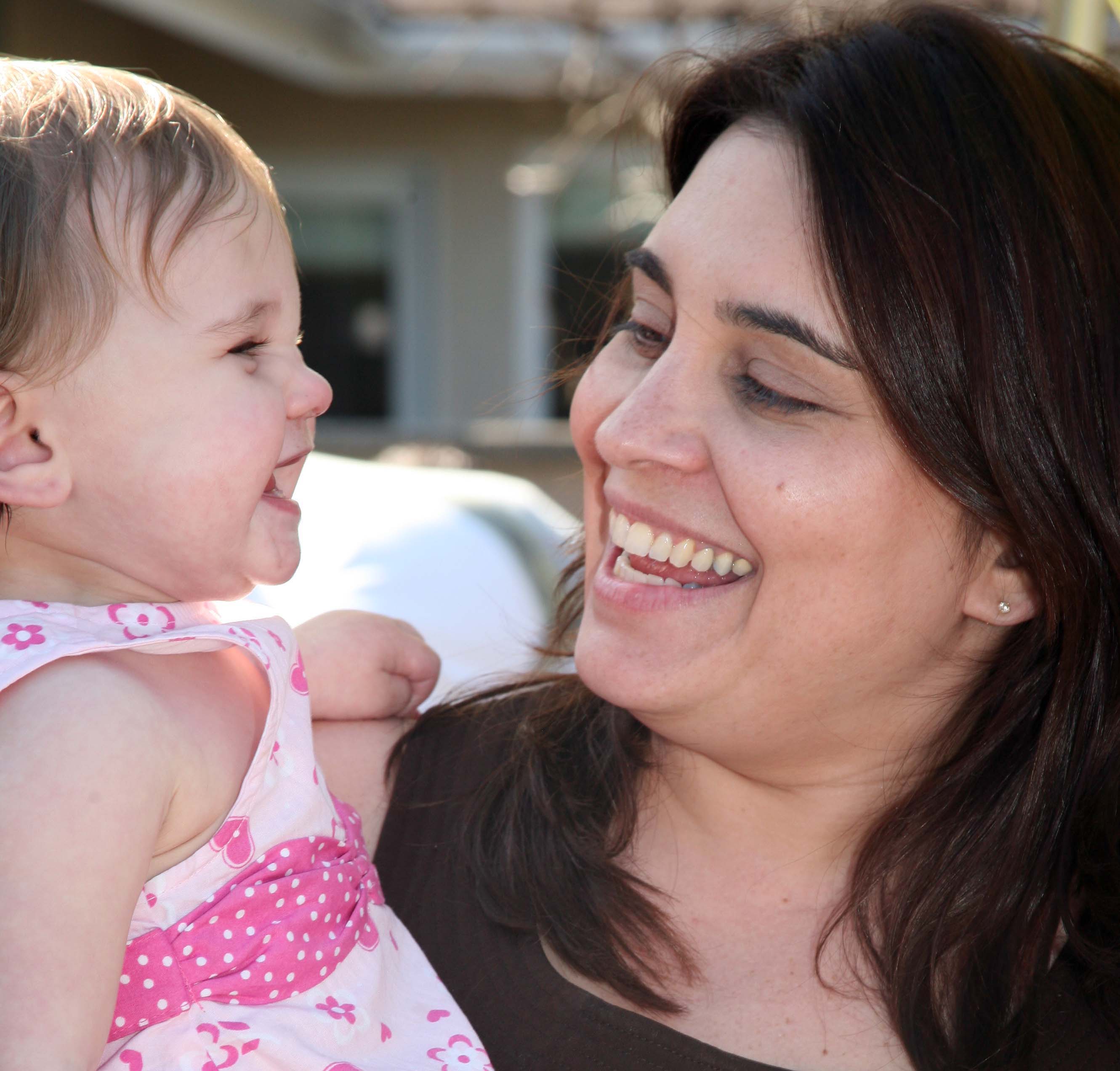
Sharing the Journey with Jamie

Meet Jamie. She’s due in June with her second child. Her first brush with Postpartum Depression started during her pregnancy. Jamie felt depressed, upset and confused. Not feeling ready to be a parent, she even felt resentful when the baby moved. She even cried at her first ultrasound – proof that she was indeed pregnant.

Things went from difficult to worse after her first daughter was born. Jamie “cried constantly, was moody, and felt worthless and suicidal at times.” She finally sought help at six months postpartum. It took some time but Jamie was able to deal with the ups and downs of motherhood without wanting to pack her bags and run.

And now, I’m excited to let Jamie speak about her experience in her words. By the way, Jamie blogs too. She found me via 5 Minutes for Mom’s Ultimate Blog Party. You can keep up with her at Melody of a Mom.

Tell us a little about yourself. What do you do when you’re not being a mother or a wife? What fascinates you?

I was a scrapbooker long before I started having kids. My bookshelves hold probably 15 12×12 completed scrapbooks, four of which are full of pictures from my daughter’s first two years of life. Aside from scrapbooking, I enjoy almost anything that has to do with crafting.

After my daughter goes to bed you can find me reading or writing. I am working on a novel (which I hopefully will complete by the time I’m 30!) and I write songs which I hope to have published someday.

What was your first pregnancy like? Was it what you expected? If not, what happened?

My small amount of knowledge about what pregnancy would be like came from TLC’s A Baby Story and the book “What to Expect When You’re Expecting.” So I guess you could say I had no expectations when my pregnancy started, and I was able to take things as they came.

Postpartum Depression can sneak up on the best of us and knock us flat on our backs. Tell us about your experience.

I would say that my postpartum depression started before I even had my daughter (I call it pre-partum depression). There were intermittent periods of time when the prospect of birthing the baby I was carrying seemed depressing and confining, like some kind of cage I was trapped in. One day I’d be excited about all the pink clothes my baby would wear, and the next day I would wish I wasn’t having a baby at all.

After I had my daughter, the depression was severe and constant. I felt like I wasn’t bonding with her…I knew she had needs and I met those needs, but as far as “falling in love,” that just wasn’t happening.

Much of the time I wanted to pack my bags and leave everything behind. I cried a lot, lashed out at my husband and family, and felt very down.

When did you finally seek treatment for your PPD? What made you realize you needed help?

I knew what I was feeling wasn’t healthy, but it took my dad calling me out before I finally went to a doctor to talk about my PPD. One day, after some incident which I can’t remember, my dad said something to the effect of, “Why are you so negative all the time?” I’m not sure why, but that was the moment I decided to try to get some help.

Name three things that made you laugh today.

My daughter and her friend played “Ring Around the Rosie” over and over and over. When they were done, they were so dizzy they fell down all over again!

My best friend just called me on the phone and called me “Stinky Pete.” She’s random, but she always makes me laugh.

Whenever my daughter catches me looking at my belly in the mirror, she says, “Mommy, you’re pregmint.” That never ceases to make me laugh.

What role did family play in your recovery from PPD?

My husband is incredibly supportive. He picked up my slack when I felt like I couldn’t do what needed to be done for our daughter.

How did your husband handle your journey down PPD lane?

He was great. He never made me feel crazy…he supported me as best as he could even though he didn’t understand what I was going through.

You’re currently pregnant with your second child. Do you think things will be different this time? Why? What are you doing to be pro-active this time around?

As soon as I give birth, I am planning on getting back on the same anti-depressants I was on before I was pregnant. Unfortunately this means I won’t be breast feeding, but it does mean I will be able to function normally during my baby’s first weeks, whereas with my daughter I felt like I was just in a depressed daze.

What do you find the most challenging about motherhood? The least?

The most challenging thing about motherhood is making those daily choices in how/when to discipline and wondering how those choices are going to affect my daughter long term.

The easiest thing about motherhood is loving my child unconditionally. Though it took me longer than most mothers to bond with my baby, she is so special to me now. Nothing she could ever do would change the way I feel about her. It’s the same kind of love that God feels for his children, I believe.

Last but not least, what advice would you give an expectant mother (new or experienced) about PMD’s?

It’s better to ask a doctor if what you’re experiencing is normal than to spend any amount of time detached from your newborn. PPD is hard to deal with, but it is fairly easy to get under control once a mother realizes she needs help.