Category Archives: mom

We Cannot Afford to be Silent Any Longer!

Shhhh…. Don’t tell anyone this but Postpartum Depression is fake!

It’s all a ruse by Big Pharma to get you to spend thousands, er, no, millions, on their products.

And that pesky MOTHER’S Act is at the very heart of the ruse.

The above is what the opposition of the MOTHER’S Act would have you believe about Postpartum Mood Disorders and The MOTHER’S Act.

If this were true, I highly doubt Hippocrates would have first written about Postpartum Depression thousands of years ago. (You know, WAY before Big Pharma even existed)

If this were true, then Big Pharma would have ensured my first OB wrote a prescription instead of turning me away and laughing me out of his office when I presented four years ago with rather significant symptoms at three months postpartum. Did I mention I was not “fed” any psychotropic medication or “propoganda”? I knew that thoughts of hurting my child and myself were NOT part of the normal postpartum experience and sought help to keep both of us safe!

Keep in mind that the MOTHER’S Act has been fighting to be passed for eight years now – more than enough time for Big Pharma to have properly funded a ton of education for lots of doctors and civilians. But wait – why do we have accounts of PPD experiences that go much much further back than eight years? What about Milk Fever? What about the UK’s law from 1922 relating to Postpartum Psychosis and infanticide? Wow. Big Pharma really has been at it for much longer then, huh?

And I suppose Charlote Perkins Gilman, author of The Yellow Wallpaper was paid off by Big Pharma to write her story protesting the very treatment of women struggling with Mood Disorders back in the 1800’s too.

If this were true, then Big Pharma “infected” me (twice) with Postpartum Depression just to get me to spend a ton of money on psychiatric medication.

If this were true, I would have been screened and treated with much more scrutiny during my second and third pregnancies because you know, the risk goes up after one episode. (But alas, I was not) Woohoo! More money for Big Pharma, right?

Oh yeah, that seems completely believable, doesn’t it?

Go, read the bill, and decide for yourself.

The Melanie Blocker Stokes MOTHER’S Act (S 324) does NOT endorse medicating pregnant or postpartum women. It does not even endorse screening of new mothers. The MSB MOTHER’S Act instead provides for a study of screening efficacy, increased education and awareness on both sides – patients and physicians.

Knowledge is power, it is prevention. With each subsequent pregnancy I became more and more educated about my options. I made decisions in consultation with my physicians. As a Coordinator with Postpartum Support International, I encourage women who contact me to explore all their options. I do not encourage medicating specifically but will support whatever decision a mother makes. To medicate or not is a decision to be made between a woman and her doctor. The MSB MOTHER’S Act respects this. PSI respects this. I respect this.

We need to support mothers on their journeys. Twenty percent of new mothers (new or experienced) will experience a mood disorder. And up to 50% of their partners will experience depression as well. The last thing we need to do is to close the door on them. I have had this happen to me with no alternative treatment or options available. It is a very scary place to be indeed and is why I do what I do. I refuse to allow any mothers suffer in silence and fear as I did, holding on for dear life to the precious hope that one day she’ll wake up and be normal again.

Please do not let this happen to any other mothers. Don’t let them suffer in silence. Raise your voice. Let it be heard. Let mothers across the country know they are not alone, they are not to blame, and they will be well, no matter what road they choose towards help. Give them options instead of taking them away. Help us educate physicians. Help us educate American communities and remove the stigma and fear that all too often befalls a new mother struggling with intrusive thoughts, sleepless nights, and sobbing days. Let her know you are there for her. It is time to reach out with open arms and bring back the village that once raised Mothers and Children. The Desperate Village is running out of time and hope. Don’t let your voice be the one that causes their downfall. Speak up now.

(You can Speak up now by visiting Susan Dowd Stone’s website to email her with your name, state, any credentials and affiliated organizations. Your name will then be added to a list of supporters for The MSB MOTHER’S Act which will be delivered to all Senators on Mother’s Day. Won’t you do this one little thing for the Mother in your life?)

Ohio Mother sentenced to 16 years for injuring her infant

An Ashland, Ohio mother begins serving 16 years in jail for the severe beating of her infant today. The judge expressed absolutely no mercy, showing the mother a picture of her injured infant as she doled out the sentence.

Terri Dawson is a single mother with three children, a set of twins and one older child. Her attorney states she became exasperated with the prospect of single parenthood and argued for probation so that Dawson could seek psychological treatment.

Postpartum Depression was listed as a potential cause for Dawson’s behavior but summarily dismissed by the prosecution. Prosecutor Francesconi-Rogers stated Dawson had not been diagnosed with Postpartum Depression in her dismissal of the claim.

Now, I am not at all dismissing the seriousness of infant injury and child abuse. Both are intensely tragic and heartbreaking. But I have to wonder – did Dawson really suffer from a PMD? If so, did she seek treatment? When she sought treatment, did the doctors she saw even know what PMD’s are or how to treat them properly? Who is really at fault here? Is this another case of a Mother who was failed by the system? Or is it a mom who has manipulated the system? We’ll probably never know the answers to those questions but they are worth asking.

This case exemplifies the need for the Mother’s Act if indeed she sought treatment and was turned away. Let’s not forget that mothers of multiples are 43% more likely than mothers of singletons to exhibit symptoms of depression at 9-10 months postpartum. Let’s not forget that more often than not, mothers do not seek help for a Mood Disorder because they fear the stigma attached. Let us also not forget that many physicians are uneducated regarding PMD’s and don’t screen or counsel new mothers about the very real possiblity of experiencing the number one complication of childbirth.

What will it take for this country to wake up and realize we are not supporting our Mothers the best we can? We are failing our families by leaps and bounds. They are suffering and we stand idly by as they fall from grace yet we race to judge and point the finger rather than ask why so we can prevent it from happening again.

Do me a favor. Call your Senator. Tell them they need to pass the MOTHER’S Act. Email Susan Dowd-Stone @ susanstonelcsw(@)aol.com to be added to a list of supporters. Make sure you include your name, state, any credentials you have, and organization/affilitations if applicable.

The time is now. Your voice can save lives.

Sharing the Journey with Teresa Twomey

Teresa Twomey is a fellow Coordinator with Postpartum Support International. Over the past couple of years we’ve emailed back and forth about a few various issues and I’ve really enjoyed my exchanges with her. More often than not, we’ve shared our mutual frustration regarding the mis-conceptions about Postpartum Psychosis vs. Postpartum Depression.

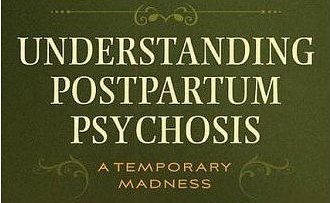
This past Tuesday, her book, Understanding Postpartum Psychosis: A Temporary Madness, released. I immediately scooped her up for an interview this week. Teresa is a survivor of Postpartum Psychosis and other PMD’s as well. In her book she hopes to present a realistic portrait of PPP and aid in removing the stigma so often associated with this misunderstood condition. With no further ado, here is Teresa’s interview. I am honored to share the journey with her!


Click here to purchase Teresa's book

Click here to purchase Teresa's book

Tell us about yourself – who is Teresa when she’s not a mom or a Postpartum Advocate?

Before I had children I was a litigation attorney and a professional mediator. I am now beginning to re-enter the workforce as a professional mediator. I also do some business consulting. I am currently working on a turnaround project for a packaging company.

I also enjoy writing – I have several writing projects going at any given time. Right now I have three children’s stories finished and another two I’m working on. I also am doing some more non-fiction writing that I plan to develop into a book. (In addition to my postpartum book, I co-wrote a chapter on mediation in a newly-released textbook on Employment Law and have had several academic articles accepted as proceedings or for publication in journals.)

I am active in our PTA, our Newcomers Group, our church and I co-lead two Girl Scout troops.

I enjoy doing new things and my latest “hobby” is working with stained glass (the soldered with lead type). I enjoy designing and creating a variety of pieces.

Sometimes I teach as an adjunct at a local university. I’ve taught Business Law, Business Communication, and Introduction to Women and Gender Studies.

As many of the moms who visit this blog, you’ve traveled down the dark road of Postpartum Mood Disorders. Share your experience with us.

After the birth of my first daughter I began to experience many strange things – I had nightmares, hallucinations, I could not read, I was paranoid. I did not know something like that could happen to someone like me – I was totally blindsided. I did not get treatment at the time, although I told everyone who would listen that I could not cope. I had physical complications and I think those around me thought that was the basis for my frustration and complaints. And I think that even the medical professionals did not understand that something like postpartum psychosis could happen to someone like me (educated, smart, capable, personable, and dynamic). After the psychosis I went into a depression. But still I did not identify it and did not receive help. I did not learn the name for my experience until I was on bed rest during my second pregnancy (with twins!) I was frustrated about the lack of information and misinformation. But I was fortunate – I did not have postpartum psychosis following the birth of my twins. Then when Andrea Yates killed her children and I heard many hurtful and ignorant comments, I decided to do this book. (The more detailed version of my story is in the book.)

At what point in your journey did you realize you needed professional help?

I knew I needed some kind of help almost immediately – but I did not know there was help for what I was experiencing. I did not know there was a name for it. I thought maybe I was going crazy. I did keep telling people I could not cope – that I was a terrible mom – that I wanted someone there to help me all the time – but I was afraid (and paranoid) so I didn’t actually describe in detail what I was experiencing. I just remember telling myself “just hold on – just hold on.”

What roles did your husband and family members play in your recovery? How did they handle your diagnosis?

I was better by the time my family learned of it. They expressed shock, dismay, some denial, and concern — all in a loving way.

My husband, mom, dad and brothers have all been very supportive of my work with Postpartum Support International.

You’re now a Coordinator with Postpartum Support International. What made you decide to become an advocate?

I recognized a need. Plus I was profoundly grateful that we had not suffered any loss of life. It felt right to express my gratitude for that by turning around and helping others. Plus, Jane Honikman asked me to be a coordinator. (I sometimes joke that she roped me in – and am usually met with a response like “you and everyone else at PSI,” or “join the club!”) I am honored to be a part of such an amazing organization.

Earlier this week your book, Understanding Postpartum Psychosis: A Temporary Madness, released. Tell us about this book and the concept behind it. What is your hope for this book?

I was dismayed about how little information there is about the actual experience of women with postpartum psychosis and the amount of misinformation most of us have. I believe those contribute to the ongoing mental anguish many women have as a result of this disorder as well as the occasional loss of life. I passionately believe that professionals and the general public need to know more about this disorder. It strikes so seemingly randomly that if people do not become informed until faced with this disorder it may be too late.

Public ignorance and mis-perceptions lead to:

  • Failure to identify and warn women (and their families) who are at high risk of having this disorder
  • Failure to take measures to prevent the illness
  • Failure to properly identify the illness
  • Failure to provide adequate care
  • Failure to take the steps necessary to prevent tragic outcomes
  • Mistreatment at the hands of police and other law enforcement professionals
  • Inequitable treatment by the legal system based on discredited science and societal myths
  • Misinformation and inaccurate portrayals in the media
  • Oppressive social stigma even for those who do not do any harm

In the short term my hope is twofold: First, I hope that this book will educate medical and legal professionals and the public to effect change regarding how we approach this illness. That this change will lead to aggressive steps to identify those at risk, to prevent the illness and when prevention fails, to adequately treat it and protect the woman and those around her. In the long term I hope this book helps to eradicate postpartum psychosis. I believe that could happen in my lifetime.

Secondly, I hope this book helps women (and their families and friends) who have had PPP to heal. I always say there are two levels of healing from this illness: There is the recovery from the psychosis and then there is the recovery from having had this illness — the learning to trust yourself again, dealing with the fear of a recurrence, being tormented by questions of “why me?” and so on. The illness is temporary – women recover from it relatively quickly. However, the emotional pain from having had this illness can last a lifetime. Just as these stories helped me to heal, to know I was not alone, to believe I could be completely well, I want them to be available to help others heal as well.

Name three things that made you smile today.

My girls singing.

Joking with the ladies in my aqua-aerobics class.

Seeing the sunshine.

I know my advocacy has affected those around me and increased their knowledge and understanding of Postpartum Mood Disorders. Have you found the same to be true about your loved ones?

Oh my, yes!

What do you find the most challenging about parenting? The least?

Most challenging: consistency and discipline.

Least challenging: loving, enjoying and genuinely liking my children.

If you had one chance to speak with an expectant mother (new or experienced) about Postpartum Mood Disorders, what would you tell her?

I would tell her that, unless she has a medical history that would indicate otherwise, it is unlikely that she will have a PPMD. But if she does, there is NOTHING she could experience that other women have not thought or felt and that ALL postpartum mood disorders are treatable. So if she does not feel right in any way, she should tell her doctor and contact me OR someone else through www.postpartum.net for peer support and information.

Thank you for this opportunity Lauren.

Sharing the Journey with Ivy Shih Leung

Ivy’s joined the blogging ranks of PPD Survivors recently and I decided to scoop her up for an interview here. She’s been writing some really great stuff over at Ivy’s PPD Blog and is working on a book based on her experience. Check out her blog and enjoy a little slice of her story here!

Tell us about yourself – who is Ivy when she’s not busy being a mom or working?

Hmmmmm……since 3/4 of my life these days revolves around being a mom and working, I have to think a bit on this one. For the past 4 years, I’ve been trying to write a book about my PPD experience. For the past 1-1/2 months I’ve been blogging about my PPD experience, realizing that blogging is an effective means of helping women who are currently suffering from PPD and getting the word out to as many people as possible about PPD in hopes that one day PPD will no longer be so misunderstood, under-diagnosed and under-treated. My motto is: Knowledge is power; information is enabling, and it needs to be shared! Obviously, PPD has shaped my life tremendously. I would like to do more in terms of advocacy and PPD support through telephone support and PPD support groups, as well, but I need to get my book done first.

In terms of what I try to do for fun, I’m a big TV watcher. Nowadays, that’s the cheapest & easiest form of entertainment. I record my favorite TV shows to watch at a convenient time (i.e., after my daughter goes to sleep), like American Idol, Lie to Me, Brothers & Sisters, CSI Miami, Fringe, and Heroes. I try to catch lunch and dinner with friends in NYC a few times a month. I love movies and Broadway musicals, and try to see them as much as I can. I love beaches, shelling, kayaking, and snorkeling in tropical waters. And I love going to craft shows to admire the creativity and talent of artists. I also love to travel, and try to go somewhere different for vacation each year (by plane) and the more exotic the location, the more pictures I take. Last year, my husband and I made it to Athens and Santorini, Greece. I was in photo-op heaven!

You’ve recently joined your voice to increase awareness of PPD. What made you decide to go public with your story?

It was anger of people’s ignorance – those who were my doctors, those whom I’ve talked to and those in the media who say stupid things – that propelled me to write this book. I never would have thought of writing a book had it not been for Tom Cruise’s ignorant ranting that aired on the June 24, 2005 Today Show that “there is no such thing as a chemical imbalance.” I suddenly felt the urge to write a book about my battle with postpartum depression. Rather than just get mad at Tom Cruise’s remarks and sit there and do nothing about it, I decided there weren’t enough people out there telling their personal stories. I would channel all the energy stemming from my anger and do something positive and try to help others. I would tell my story in the hopes of helping and educating as many people as possible about this silent and potentially deadly condition.

I want to reach out to moms currently suffering from PPD. With access to personal stories of PPD survivors, the less alone and ashamed mothers suffering from PPD will feel and the more empowered they will be to seek the help they must get. One of the two things I regret about having PPD is the lost opportunity to bond with my daughter to the fullest extent possible in those months where I was transformed into a different person. The other regret is not having found an understanding individual to help me through the darkest days by assuring me that I wasn’t going crazy, I wasn’t alone and I will get better. Because of this, I want to share my story to give hope to those suffering from PPD and help them feel less alone knowing that there are others who have survived PPD.

I want to reach out and validate the experience of moms who have already suffered from PPD, and encourage them to speak up. The more PPD survivors speak up, the more others will know what PPD is and that it’s a real illness that should be taken seriously. You would think that, of all people, fellow women would be able to empathize with you. But that’s not the case at all. The woman who has never had a child before or who had a perfect pregnancy, delivery and baby tend to be as clueless as men about PPD. Those who have neither experienced PPD firsthand or even secondhand, by way of someone they know and therefore witnessing its devastating effects, cannot understand and empathize with those suffering from PPD. Out of ignorance usually comes pre-conceived notions, or myths, that can’t be farther from the truth. We dispel those myths once and for all.

Finally, I want to reach out to all parents-to-be so they can be knowledgeable about PPD, so that if a new mom succumbs to it, they won’t be totally caught off-guard. When they seek treatment from a doctor, they won’t be at a total disadvantage if the doctor doesn’t spend time to 1) explain to them what is going on so, 2) answer questions she will undoubtedly have, and 3) give reassurance that she is not alone in what she is experiencing and she will be fine, though it takes time for the treatment to be effective.

What was childbirth like for you? Was it what you expected or did things get unexpected and frantic?

I had no expectations of childbirth. I was a bit nervous from not knowing what to expect. All I knew was from what you see on TV and in the movies (i.e., women screaming from pain). Labor and delivery actually went pretty smoothly, which was a tremendous relief. It quickly went downhill from there, though, with the discovery that my placenta would not come out. It turned out to be a rare incident of what they refer to as placenta accreta. Three days after delivery, my doctor had to remove my uterus because the placenta had grown into my uterus. If this weren’t done, I would’ve died. I am absolutely sure that it’s not the traumatic delivery experience itself that caused PPD to rear its head. The following series of events led to my insomnia, the first sign of PPD for me:

  1. negative experience in the hospital-e.g., constant sleep interruptions in the hospital, constant moving from one room to another and changes in hospital staff, multiple attempts to replace IVs in my arms/hands, food deprivation (I only had about 2 meals the whole week I was there….otherwise what I had were ice cubes for the most part, plus an occasional broth or jello), below-par treatment of certain hospital staff, searing pain (felt like someone was burning me) in my abdomen that came & went for 2 days after the surgery
  2. constant sleep interruptions from the noises the baby made throughout the night, plus night feedings
  3. baby’s bad case of eczema and cradle cap
  4. baby’s one week colic

For some Moms, the glow after childbirth simply isn’t there. Instead it gets dark, creepy, and eerie. What was your postpartum journey like?

My childbirth experience was not a glowing, happy experience–at least not until I came out of my PPD fog. And it’s unfortunate that I won’t ever get another crack at this, now that I’m missing a uterus. My experience wasn’t exactly dark, creepy or eerie, either. The 7 days immediately following childbirth were spent in the hospital. It was a negative experience that I try never to think about. You can read more about my hospital experience and my descent into PPD, with insomnia followed by panic attacks at my blog: http://ivysppdblog.wordpress.com. My ignorance about PPD (and my doctors’ ignorance) aggravated my situation. Had I known what PPD was, how to identify risk factors for it, realized that insomnia and panic attacks are symptoms of PPD, and proactively tried to keep risk factors to a minimum (e.g., make sure I got round-the-clock help with the baby and housework), I would not have suffered as badly as I did. Hell, I may not have even suffered from PPD!

What did you find the most helpful in climbing out of the gaping hole of your Postpartum Mood Disorder? What did you learn in the process about yourself?

Firstly, my husband’s love and support (see my response to the next question). Second, Paxil, without which I would not have been able to recover in 4 weeks and get on with enjoying my motherhood experience with my baby. My brain biochemistry was so messed up (due to hormonal changes, delivery complications resulting in a major surgery 3 days after delivery, traumatic one-week hospital stay, constant sleep interruptions throughout the night for a month starting from the time I was in the hospital, sleep deprivation and anxiety), that it’s highly unlikely any other treatment would have cured me as quickly. If I had requested my doctors to test for cortisol levels because my body was undergoing so much stress (“fight or flight” response on overdrive), I’m sure they would have been off the charts (which is probably why I had daily hive breakouts on my arms, legs, butt and mouth…some of them were 2″ long welts).

I learned a couple things about myself as a result of my PPD experience. Firstly, I’ve never been depressed before (I’ve always wondered whether I had been previously). Second, I emerged on the other side of the dark tunnel a survivor and a much stronger and smarter person than before. I realize that my calling is now to help educate others about PPD. I would like to help prevent other mothers from going through what I went through. I wouldn’t have realized this calling had I not suffered the way I did.

How did your husband handle your PPD experience? Did it affect your marriage?

He handled my PPD experience like the trooper that he is. He was there for me EVERY step of the way. I never even had to ask him for help. Though he didn’t really know how to comfort me on those really, really dark days where I just wanted to wither up and vanish into thin air, he did all he could to listen to me, give me hugs, come home from work early whenever a panic attack was setting in, and help with the baby, housework and cleaning–on top of having a full-time job. It wasn’t just a heck of an awful experience for me, it was really tough on my husband as well. He became physically and emotionally drained and didn’t have many people he could turn to for advice. This experience showed me how lucky I am to have him for a husband and how lucky my daughter is to have him for her daddy, and how strong our relationship is to have survived what we both went through.

At your blog, you make reference to a book you’re in the process of wrapping up. Where are you in this process and has it been helpful to write it all down?

If during my high school and college years and even up until before I had the baby, someone had told me I’d be writing a book one day, I would’ve laughed at them. I’ve never even kept a diary. It definitely takes life-altering experiences to motivate you to do something that you think might make a difference in someone else’s life. My husband thought writing a book was an excellent idea, and would certainly be a great outlet for my feelings. I’ve been working on my book for the past four years and plan to finish in the next few months. Writing the book has been such a therapeutic experience.

Name three things that made you laugh today.

Though there were definitely more than three things that made me laugh today, the primary ones that come to mind: 1) my daughter makes me laugh in delight and amazement each and every day in terms of some of the words/phrases she uses; 2) my daughter (again – but why would that surprise you) and the way she loves to dance; and 3) I have to admit that I watched the movie “The Shaggy Dog” (starring Tim Allen) with my daughter and I cracked up throughout the movie. Great comic relief after a long day at work!

What do you find the most challenging about parenting? The Least?

I’m not sure if other parents would agree, but just having to think of ways to stimulate her intellectually, socially and athletically is challenging for me. After all, as a parent, I am responsible for her future and I only get one shot at it. The least challenging is loving her…it comes naturally.

Last but not least, let’s say you have just one chance to provide some advice to an expectant mother (new or experienced) about Postpartum Mood Disorders. What would you tell her?

PPD is the #1 complication of childbirth, with 1 out of 8 mothers experiencing it. You wouldn’t know it, though, because most mothers keep their experiences to themselves. Knowledge about PPD & adequate social support to enable mom to get the rest she needs postpartum are CRITICAL! The more knowledgeable and prepared a mom is for situations that can reduce risk factors for PPD-getting adequate social support is just one example-the better off she will be. No woman is completely immune from PPD after having a baby. With the right combination of risk factors and stressors, any woman-even you-could end up suffering from it.

Pennsylvania Hospital Encourages Quiet Bonding Time for new parents

"Mom and baby" by justhiggy @ flickr

"Mom and baby" by justhiggy @ flickr

Mount Nittany Medical Center has instituted a new policy – Quiet Bonding Time for new parents between 1:00p.m. and 3:00p.m. Visitors are allowed but encouraged to respect the wishes of new parents wishing to take advantage of this bonding time. They are also required to place their cell phones on vibrate and use low talking voices. Non-urgent care is also placed on a hold during these hours.You can read the article for more information here.

I think this is a wonderful idea and hope more and more hospitals implement this practice in their Maternity wings. Not only is there a ton of research extolling the importance of Mom and Baby having time to themselves to bond but if new parents are given the chance to see the difference it makes prior to heading home, maybe more parents will realize that it’s ok to say no to visitors during those all important first weeks home. And let’s also remember that new moms who aren’t as fatigued are less likely to experience postpartum depression as well.