Teresa Twomey is a fellow Coordinator with Postpartum Support International. Over the past couple of years we’ve emailed back and forth about a few various issues and I’ve really enjoyed my exchanges with her. More often than not, we’ve shared our mutual frustration regarding the mis-conceptions about Postpartum Psychosis vs. Postpartum Depression.
This past Tuesday, her book, Understanding Postpartum Psychosis: A Temporary Madness, released. I immediately scooped her up for an interview this week. Teresa is a survivor of Postpartum Psychosis and other PMD’s as well. In her book she hopes to present a realistic portrait of PPP and aid in removing the stigma so often associated with this misunderstood condition. With no further ado, here is Teresa’s interview. I am honored to share the journey with her!
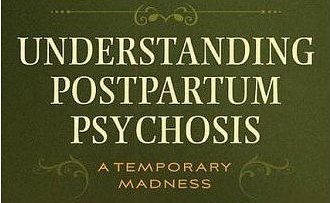
Click here to purchase Teresa's book
Tell us about yourself – who is Teresa when she’s not a mom or a Postpartum Advocate?
Before I had children I was a litigation attorney and a professional mediator. I am now beginning to re-enter the workforce as a professional mediator. I also do some business consulting. I am currently working on a turnaround project for a packaging company.
I also enjoy writing – I have several writing projects going at any given time. Right now I have three children’s stories finished and another two I’m working on. I also am doing some more non-fiction writing that I plan to develop into a book. (In addition to my postpartum book, I co-wrote a chapter on mediation in a newly-released textbook on Employment Law and have had several academic articles accepted as proceedings or for publication in journals.)
I am active in our PTA, our Newcomers Group, our church and I co-lead two Girl Scout troops.
I enjoy doing new things and my latest “hobby” is working with stained glass (the soldered with lead type). I enjoy designing and creating a variety of pieces.
Sometimes I teach as an adjunct at a local university. I’ve taught Business Law, Business Communication, and Introduction to Women and Gender Studies.
As many of the moms who visit this blog, you’ve traveled down the dark road of Postpartum Mood Disorders. Share your experience with us.
After the birth of my first daughter I began to experience many strange things – I had nightmares, hallucinations, I could not read, I was paranoid. I did not know something like that could happen to someone like me – I was totally blindsided. I did not get treatment at the time, although I told everyone who would listen that I could not cope. I had physical complications and I think those around me thought that was the basis for my frustration and complaints. And I think that even the medical professionals did not understand that something like postpartum psychosis could happen to someone like me (educated, smart, capable, personable, and dynamic). After the psychosis I went into a depression. But still I did not identify it and did not receive help. I did not learn the name for my experience until I was on bed rest during my second pregnancy (with twins!) I was frustrated about the lack of information and misinformation. But I was fortunate – I did not have postpartum psychosis following the birth of my twins. Then when Andrea Yates killed her children and I heard many hurtful and ignorant comments, I decided to do this book. (The more detailed version of my story is in the book.)
At what point in your journey did you realize you needed professional help?
I knew I needed some kind of help almost immediately – but I did not know there was help for what I was experiencing. I did not know there was a name for it. I thought maybe I was going crazy. I did keep telling people I could not cope – that I was a terrible mom – that I wanted someone there to help me all the time – but I was afraid (and paranoid) so I didn’t actually describe in detail what I was experiencing. I just remember telling myself “just hold on – just hold on.”
What roles did your husband and family members play in your recovery? How did they handle your diagnosis?
I was better by the time my family learned of it. They expressed shock, dismay, some denial, and concern — all in a loving way.
My husband, mom, dad and brothers have all been very supportive of my work with Postpartum Support International.
You’re now a Coordinator with Postpartum Support International. What made you decide to become an advocate?
I recognized a need. Plus I was profoundly grateful that we had not suffered any loss of life. It felt right to express my gratitude for that by turning around and helping others. Plus, Jane Honikman asked me to be a coordinator. (I sometimes joke that she roped me in – and am usually met with a response like “you and everyone else at PSI,” or “join the club!”) I am honored to be a part of such an amazing organization.
Earlier this week your book, Understanding Postpartum Psychosis: A Temporary Madness, released. Tell us about this book and the concept behind it. What is your hope for this book?
I was dismayed about how little information there is about the actual experience of women with postpartum psychosis and the amount of misinformation most of us have. I believe those contribute to the ongoing mental anguish many women have as a result of this disorder as well as the occasional loss of life. I passionately believe that professionals and the general public need to know more about this disorder. It strikes so seemingly randomly that if people do not become informed until faced with this disorder it may be too late.
Public ignorance and mis-perceptions lead to:
- Failure to identify and warn women (and their families) who are at high risk of having this disorder
- Failure to take measures to prevent the illness
- Failure to properly identify the illness
- Failure to provide adequate care
- Failure to take the steps necessary to prevent tragic outcomes
- Mistreatment at the hands of police and other law enforcement professionals
- Inequitable treatment by the legal system based on discredited science and societal myths
- Misinformation and inaccurate portrayals in the media
- Oppressive social stigma even for those who do not do any harm
In the short term my hope is twofold: First, I hope that this book will educate medical and legal professionals and the public to effect change regarding how we approach this illness. That this change will lead to aggressive steps to identify those at risk, to prevent the illness and when prevention fails, to adequately treat it and protect the woman and those around her. In the long term I hope this book helps to eradicate postpartum psychosis. I believe that could happen in my lifetime.
Secondly, I hope this book helps women (and their families and friends) who have had PPP to heal. I always say there are two levels of healing from this illness: There is the recovery from the psychosis and then there is the recovery from having had this illness — the learning to trust yourself again, dealing with the fear of a recurrence, being tormented by questions of “why me?” and so on. The illness is temporary – women recover from it relatively quickly. However, the emotional pain from having had this illness can last a lifetime. Just as these stories helped me to heal, to know I was not alone, to believe I could be completely well, I want them to be available to help others heal as well.
Name three things that made you smile today.
My girls singing.
Joking with the ladies in my aqua-aerobics class.
Seeing the sunshine.
I know my advocacy has affected those around me and increased their knowledge and understanding of Postpartum Mood Disorders. Have you found the same to be true about your loved ones?
Oh my, yes!
What do you find the most challenging about parenting? The least?
Most challenging: consistency and discipline.
Least challenging: loving, enjoying and genuinely liking my children.
If you had one chance to speak with an expectant mother (new or experienced) about Postpartum Mood Disorders, what would you tell her?
I would tell her that, unless she has a medical history that would indicate otherwise, it is unlikely that she will have a PPMD. But if she does, there is NOTHING she could experience that other women have not thought or felt and that ALL postpartum mood disorders are treatable. So if she does not feel right in any way, she should tell her doctor and contact me OR someone else through www.postpartum.net for peer support and information.
Thank you for this opportunity Lauren.
