Monthly Archives: August 2009

Low Omega-3 Fatty Acid Intake from Fish correlates with High Levels of Depressive Symptoms in Pregnancy

Published in the July issue of the Journal Epidemiology, researchers put to the test the relationship between fish intake and depression based on the observation that “Although common in western countries, depression appears to be virtually absent in countries with high seafood intake.” (Abstract, High Levels of Depressive Symptoms in Pregnancy with Low Omega-3 Fatty Acid Intake from Fish)

The researchers collected data from women as they progressed in their pregnancy during 1991-1992. At 32 weeks, the women then completed a questionnaire which included symptoms of depression as well as a food frequency questionnaire from which the amount of Omega-3 Fatty acid from fish was calculated.

The results? Both adjusted and unadjusted analyses showed that lower maternal intake of omega-3 from fish was associated with high levels of depressive symptoms.

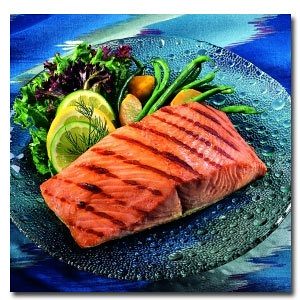
So just how much fish do you have to eat in order to achieve these results? Women consuming more than 1.5g of Omega-3 from seafood vs. those consuming none were less likely to have depressive symptoms. And how much fish equals 1.5g of Omega-3 fatty acids? FDA guidelines suggest women and children eat up to 12 oz of fish per week. Some of the healthier fish to eat (in order to avoid mercury build-up) are: Anchovies, Catfish, Crab, Herring, Mackerel, Mussels, Wild Salmon (Alaskan), Sardines, and Whitefish (source: Fish Intake During Pregnancy, Dietriffic.com)

What if you don’t like fish? You can take a supplement and there are non-fish sources of Omega 3 such as walnut, kiwi-fruit, flax seeds, pecans, hempseed, hazel nuts, and butternuts. Eggs and milk from grass fed chickens and cows are also higher in levels of Omega-3 fatty acids than other eggs and milk. But remember this particular study dealt specifically with Omega-3 from fish.

You can also check out the following blog, Rebuild from Depression, for additional sources and information regarding Omega-3 fatty acid sources.

I have been taking Omega 3/6/9 for quite some time now as part of my regular routine. I can tell when I forget to take my supplement as well. (So can my husband!) Make sure you talk to your physician before adding a supplement to your routine though. Also discuss adding more fish to your diet as well to make sure it fits with your particular situation.

Powered by ScribeFire.

Pregnant? Better avoid stress too!

Professor Vivette Glover, a prenatal studies expert at Imperial College in London, has just released new research showing that stress during pregnancy may affect children for years to come.

According to a recent article appearing in The Irish Times, Prof Glover’s study discovered 15% of the most anxious women in her study had double the rate of offspring with ADHD. Another study also revealed that if mom is stressed during pregnancy her child may perform poorly on infant IQ tests or be more fearful.

The most important relationship in this factor was the one the expectant mother had with her partner with emotional abuse seemed to be one of the red flags for behavioral issues later in the child’s life.

Based on Prof Glover’s research, it seems cortisol (that stress hormone) is at the basis of this issue. The Placenta is actually designed to block up to 90% of cortisol from the developing fetus. However, in mothers with additional stress, more cortisol seems to “leak” through and may be at the root of early delivery as well as affecting the development of the brain. Animal research has shown that cortisol “can kill nerve cells in the hippocampus area of the brain which is important for learning and memory.” (Irish Times, August 4, “Don’t Mix Stress with Pregnancy”) Glover hopes to translate these findings in animals to people.

The most noted statement by Glover in this article for me was the following:

“Physical care of pregnant women has improved enormously in the past 100 years but emotional care has not.”

I’d have to agree. Through all three of my pregnancies, the only time anyone really seemed to care about how I was feeling emotionally was when I advocated for attention to that particular area. The myth that all pregnant women are automatically happy is just that – a myth. (And FYI, not all of us like it when you complete strangers approach us to pat our belly and offer your sage advice either!)

So if you’re stressed and pregnant, what can you do? You can talk about anything causing you stress. Back off from making large decisions about life such as moving, going back to school, or finding a new job unless these things are absolutely necessary. Recruit family members to help keep things as even and calm for you as possible. Have that one pessimist in your life? Minimize contact with him/her while you’re pregnant. Don’t watch the news or read the paper if negativity stresses you out. I still filter the news I read and hardly ever watch CNN or the 6 o’clock news. In fact, I can’t even tell you who the anchors are anymore which I think is a great thing. While you can’t control everything around you, you CAN control what reaches you. My husband knows not to tell me about certain news items and I only receive certain topics on my phone – Politics, Entertainment, Health & Wellness, Science, Strange News (hey, I like to laugh), and Technology (yeah, I’m a closet geek).

Also remember that life will happen. It is literally impossible to protect yourself from ALL stress. But when you can minimize, make a concerted effort to do so. Your body (and your child) will thank you.

(You can read the complete article “Don’t Mix Stress with Pregnancy” @ The Irish Times by clicking here.)

Just Talkin’ Tuesday 08.04.09: Seeking Help – How did you do it?

Base photo: "Call" by barejon @ flickr

Base photo: "Call" by barejon @ flickr

Any mom who has made the phone call to her doctor’s office or timidly admitted to another person that things are not all glowy like the Johnson & Johnson commercial’s make them out to be will tell you that it’s a very hard thing to do.

It took me three months to seek help after the birth of my first daughter. 10 days after the birth of my second (but hers included NICU and major surgery so things were sped up a bit in that situation) and when I was ultimately hospitalized it took me 4 days of calling and hanging up before I would admit things had taken a turn for the worse.

That phone call was the hardest phone call I’ve ever made in my entire life. I mean, c’mon – I just had a baby. She was healthy, she was home from the NICU, doing well – why the hell weren’t things getting better? I thank GOD every day I had the courage to make the call. It completely changed my life for the better. Looking back I see how all of it fit together now. It makes sense. At the time though, I felt adrift, like a random puzzle piece left out in a horrific rain storm.

So today I’d like to ask you to share your story of how you first asked for help. What led you to do so? What were some of the difficulties you experienced when you did ask for help? Share with us! Let’s get to Just Talkin!

Eli Lilly Releases “Faculty Registry”

Today Eli Lilly released a list of doctors who received payment from them for various activities including Patient Education, Healthcare Professional Education and Advising/Consulting. In Q1 of this year, Lilly paid out a total of $22 million to those on this list.

I am hopeful other pharmaceutical companies will follow in Lilly’s footsteps. After this past year filled with failed disclosures from faculty members across the country it is encouraging to see a movement towards transparency. As patients and consumers, we should be aware of the finances which may affect our treatment. If our physician has been paid by a pharmaceutical company we should be made aware of this.

Lilly’s site also includes a guide explaining how to read the Registry although it seemed pretty straightforward to me.

You can see the registry by clicking here.